 B2B Data Strategies
 Aug 27, 2026
7 min read
Aug 27, 2026
7 min read
Event Planner Lead Generation Data helps startups find verified prospects, improve B2B sales, target planners and grow efficiently across India.
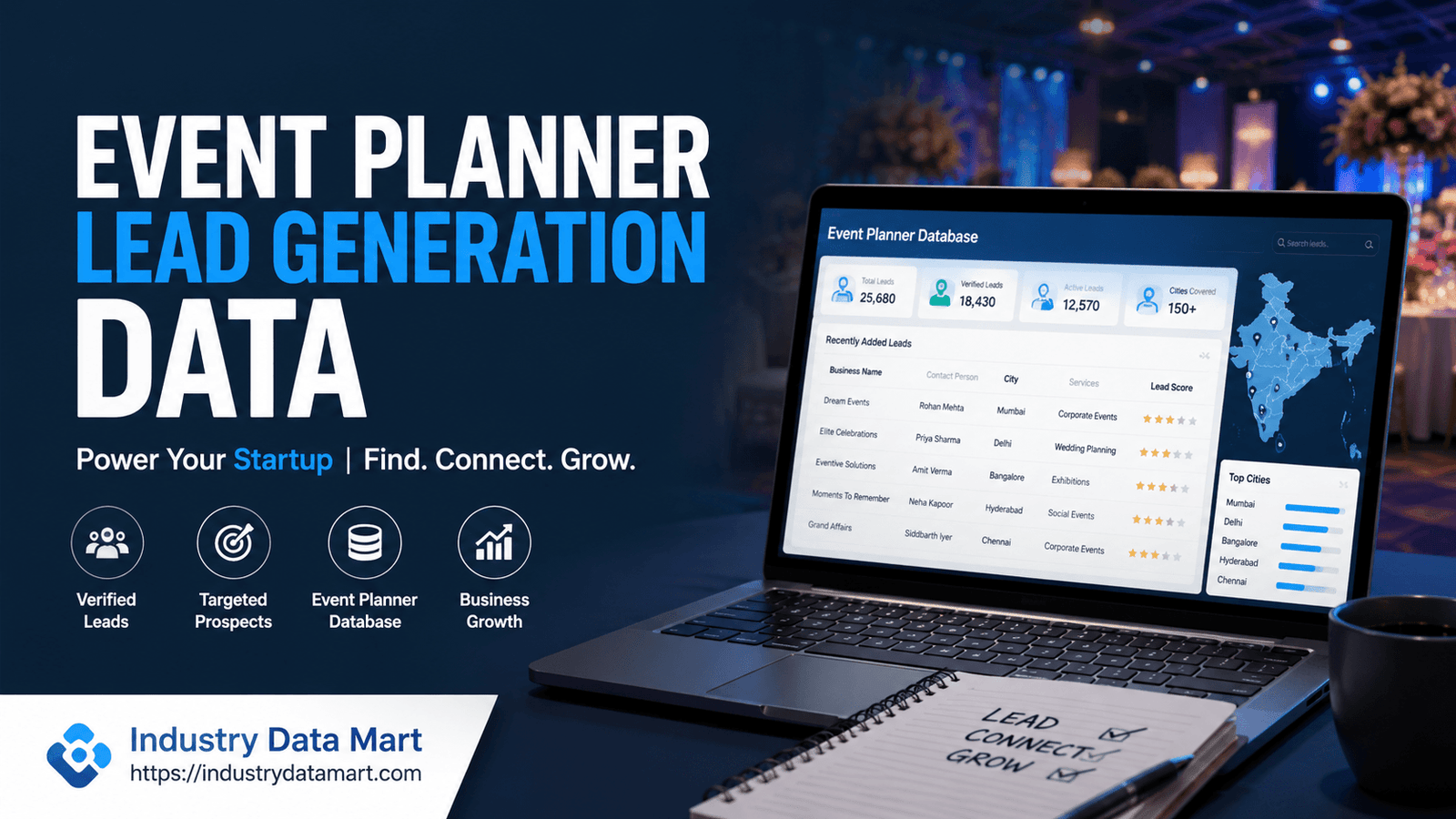
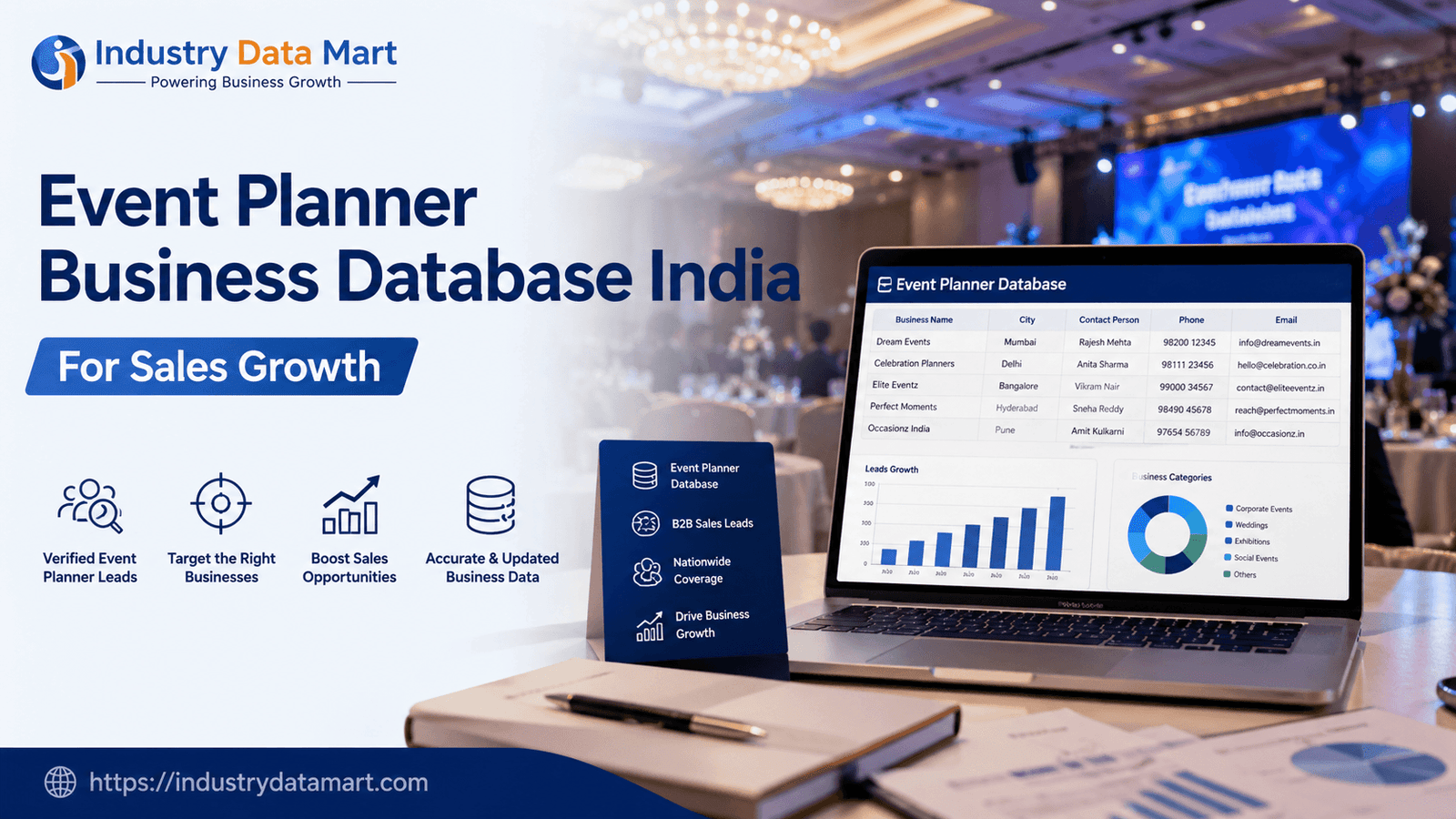
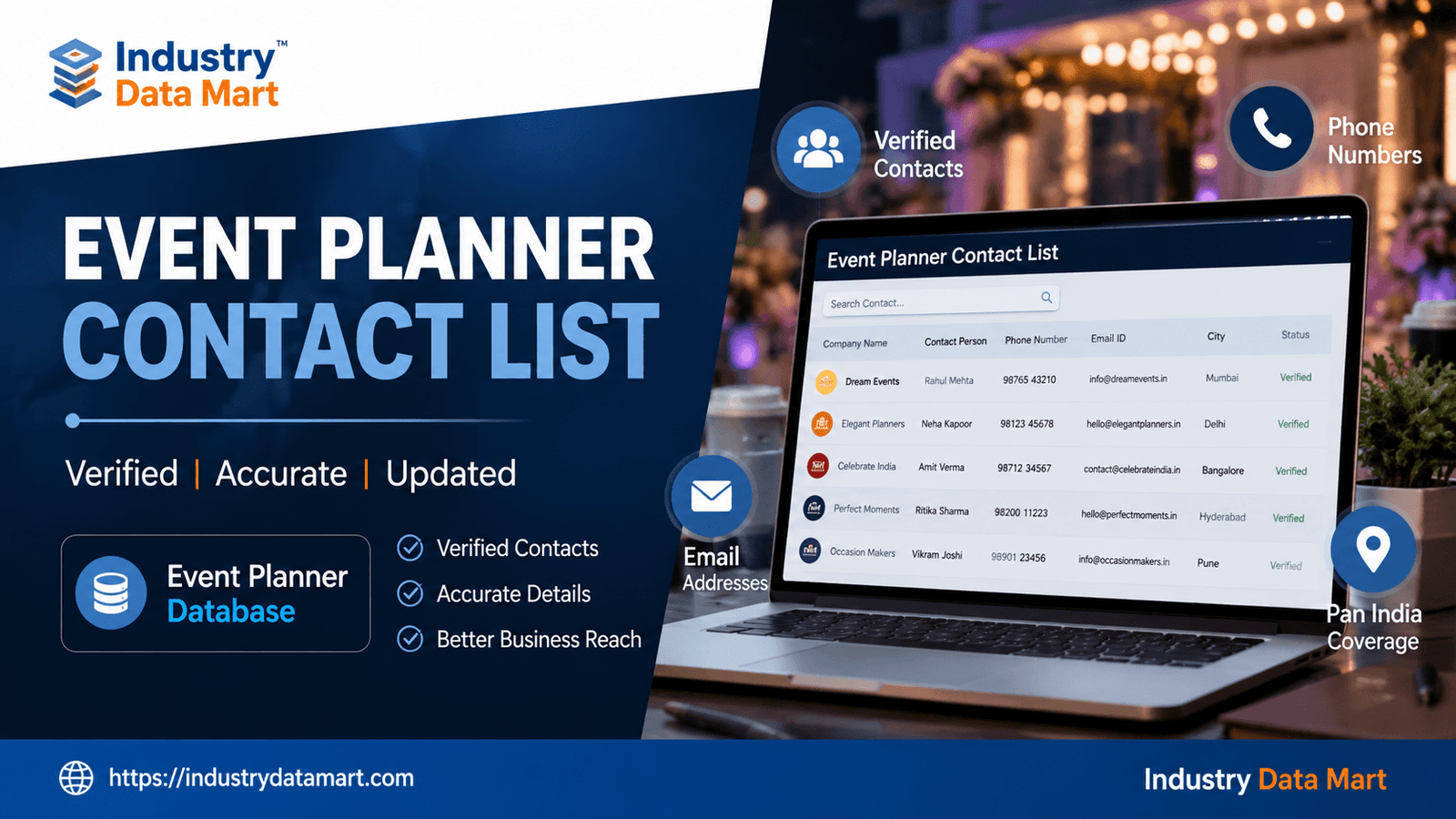
Starting a new business is exciting, but getting consistent customers is one of the biggest challenges for any startup. For companies selling event technology, venue services, catering, printing, decoration, software, transportation, photography, or corporate solutions, event planners can be valuable business customers. This is where Event Planner Lead Generation Data can make a practical difference. A properly organised Event Planner Database helps startups identify relevant businesses and approach decision-makers with a more focused sales strategy.
For a startup, the objective should not simply be to collect thousands of contacts. The real objective is to identify businesses that have a genuine requirement, understand their profile, and build a systematic approach for converting prospects into paying customers. From my experience advising businesses on commercial planning and growth, good data combined with disciplined follow-up generally delivers better results than random calling or broad advertising.
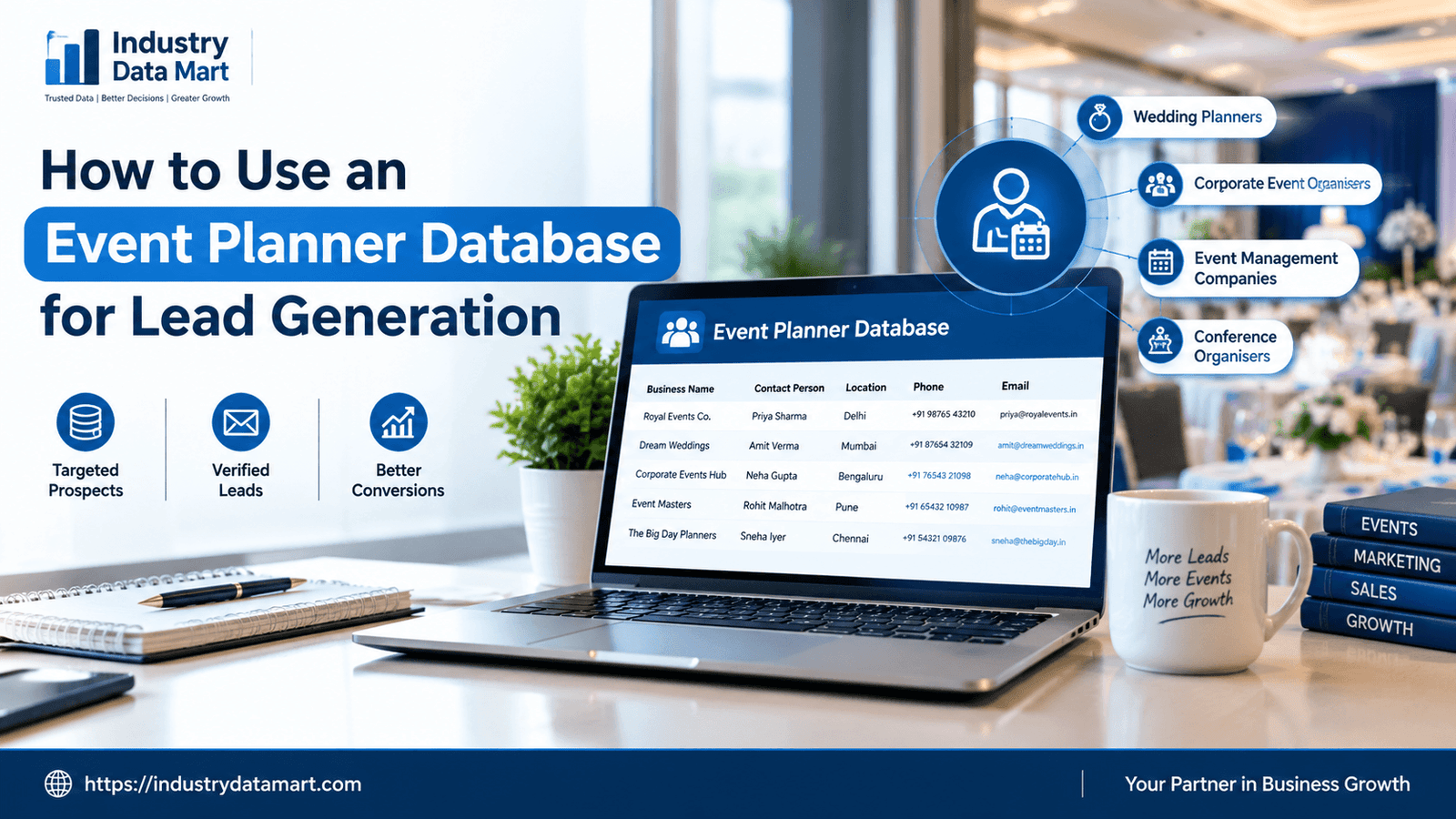
Event Planner Lead Generation Data refers to structured business information that can help a company identify and approach event planners for B2B sales and business development.
Depending on the source and purpose, the information may include details such as:
For startups, this information can become the foundation of a targeted prospecting process. Instead of spending valuable time searching for potential customers one by one, the sales team can organise prospects according to location, service type, and business potential.
Startups usually operate with limited budgets and smaller sales teams. Every sales activity therefore needs to be measurable. Event Planner Lead Generation Data can help reduce wasted effort by giving salespeople a defined group of potential customers to approach.
Suppose a startup provides event management software. Its ideal customers may include wedding planners, corporate event organisers, exhibition organisers, and independent event agencies. Contacting unrelated businesses would consume time without creating meaningful opportunities.
With a targeted Event Planner Database, the startup can segment prospects and develop different sales messages for each category.
The same principle applies to businesses offering:
The more closely the prospect matches the product, the greater the possibility of generating a meaningful business conversation.
One of the main advantages of Event Planner Lead Generation Data is that it can turn an undefined market into an actionable prospect list.
A startup can begin by identifying its ideal customer profile. For example, a company selling premium event lighting may want to target established planners operating in Delhi NCR, Mumbai, Bengaluru, Hyderabad, or other major commercial markets.
The business can then divide its Event Planner B2B Leads India into segments based on geography, event type, and potential purchasing capacity.
This makes the sales process more organised.
Before purchasing or collecting data, decide exactly whom you want to target.
Ask questions such as:
This prevents the common mistake of buying a large database without knowing how it will be used.
Once the target market is clear, use Event Planner Lead Generation Data to create a prospecting list aligned with your customer profile.
For example, a company selling corporate event software should prioritise planners handling conferences, exhibitions, seminars, product launches, and corporate meetings rather than treating every event planner equally.
An Event Planner Marketing Database becomes more useful when prospects are divided into logical groups.
You could create segments based on:
Segmentation allows startups to create more relevant sales pitches instead of sending the same message to every prospect.
Having Event Planner Lead Generation Data is only the first step. The next challenge is execution.
A practical startup sales process can look like this:
Research → Segment → Contact → Follow Up → Qualify → Demonstrate → Negotiate → Convert
During the first interaction, avoid immediately pushing for a sale. Instead, understand the prospect's current requirement.
For example, if you sell event registration software, ask whether the planner currently uses a manual registration process, another software platform, or a combination of spreadsheets and different tools.
This conversation can reveal a business problem. Once the problem is understood, your product can be positioned as a solution rather than simply another item being sold.
Even good Event Planner Lead Generation Data can produce poor results if the sales process is weak.
One common mistake is contacting every prospect with exactly the same script. An event planner specialising in weddings may have very different requirements from an agency managing corporate conferences.
Another mistake is failing to follow up. B2B purchases often require multiple conversations before a decision is made. A prospect may be interested today but may not have an immediate project. Proper follow-up can bring that prospect back when the requirement arises.
Startups should also maintain data hygiene. Duplicate records, outdated numbers, irrelevant businesses, and incomplete information can reduce sales productivity. Regular verification and updating of the Event Planner Database is therefore important.
From a financial planning perspective, startups should measure the return generated from their prospecting activity.
Track metrics such as:
For example, if a startup spends ₹25,000 on prospecting and sales activities and generates ₹2 lakh in gross sales from the resulting customers, the campaign deserves further analysis and potentially more investment.
This is much better than judging marketing success only by the number of contacts purchased.
India has a large and diverse events ecosystem, ranging from wedding planning and private celebrations to exhibitions, conferences, corporate functions, and promotional events. This creates opportunities for businesses that supply products and services to event professionals.
However, startups need to approach this market intelligently. Event Planner B2B Leads India should be evaluated according to relevance, business fit, geography, and purchasing potential.
A smaller, well-targeted prospect segment can sometimes produce better commercial results than a very large unsegmented list.
Event Planner Lead Generation Data is structured business information used to identify and approach event planners for sales and business development. It may contain business names, locations, contact details, categories, and other relevant business information.
Startups can use an Event Planner Database to identify prospects, divide them into market segments, plan sales campaigns, conduct targeted outreach, and maintain a structured follow-up process.
Yes. Small businesses can use Event Planner B2B Leads India to focus their limited sales resources on relevant event professionals instead of spending time searching for prospects individually.
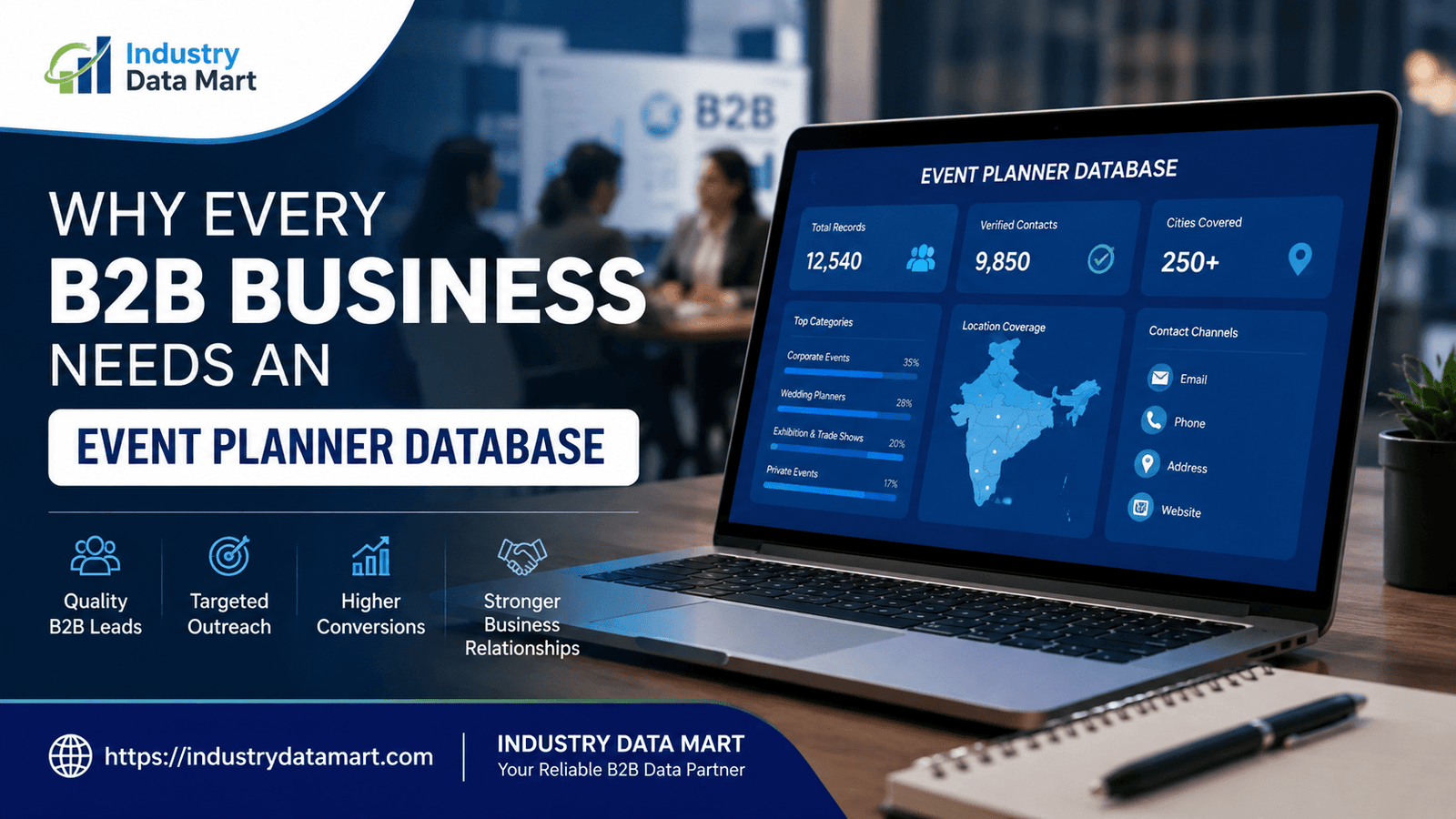
An Event Planner Marketing Database should ideally contain accurate and relevant business information that helps sales teams identify, segment, contact, qualify, and follow up with potential customers.
Startups can improve conversion by defining an ideal customer profile, using relevant Event Planner Lead Generation Data, personalising their sales approach, following up consistently, and measuring conversion at every stage of the sales funnel.
For a startup, successful lead generation is not about having the biggest database. It is about having relevant Event Planner Lead Generation Data, a clear target market, a practical sales process, and consistent follow-up.
An organised Event Planner Database can help businesses identify potential customers, segment the market, and create a more efficient B2B sales pipeline. When combined with proper qualification and relationship-building, Event Planner Lead Generation Data can become a valuable commercial asset rather than simply a list of contacts.
If your startup is looking to expand its reach among event professionals, Industry Data Mart can help you access business data designed to support focused prospecting and B2B growth. Start with the right audience, use the data responsibly, and build your sales strategy around genuine business needs.

Lorem ipsum dolor sit amet consectetur. Nec nunc pellentesque massa pretium. Quam sapien nec venenatis vivamus sed cras faucibus.