 B2B Data Strategies
 Sep 09, 2026
5 min read
Sep 09, 2026
5 min read
Discover why an Event Planner Database helps B2B businesses find quality leads, improve marketing, and build stronger event industry sales pipelines.
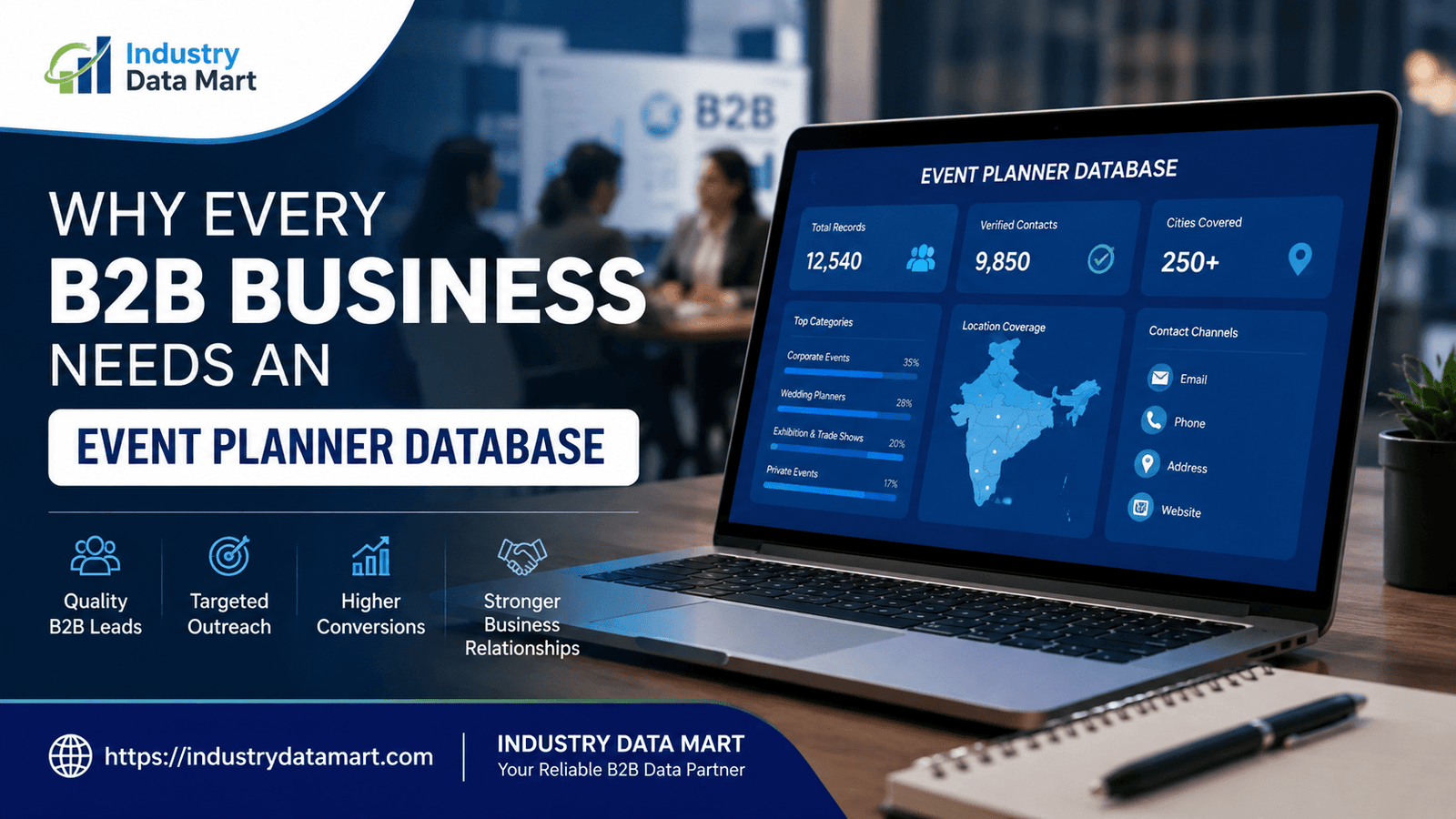
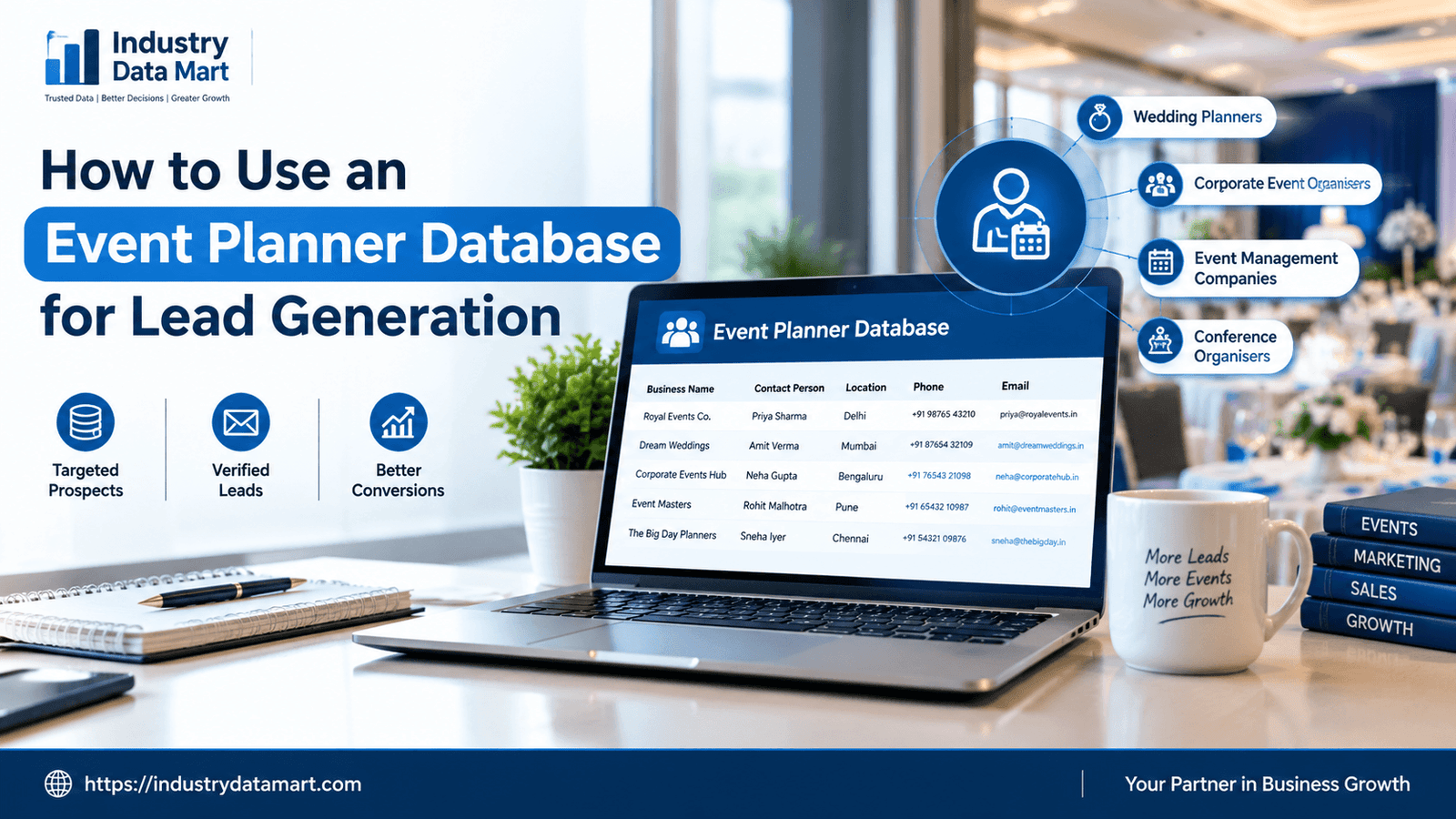
For many B2B businesses, finding the right prospects is not difficult because there are no companies in the market; the real challenge is identifying who is ready to buy. This is particularly true when selling products or services to event planners, wedding planners, corporate event organisers, and related businesses. A well-structured Event Planner Database can give sales and marketing teams a more organised way to identify prospects, segment audiences, and build meaningful business relationships.
At Industry Data Mart, we regularly see businesses spend money on broad advertising campaigns when a more focused prospecting strategy could deliver better results. Whether you sell event technology, catering supplies, venue solutions, printing services, software, financial services, or professional services, event planners can represent a valuable B2B customer segment.
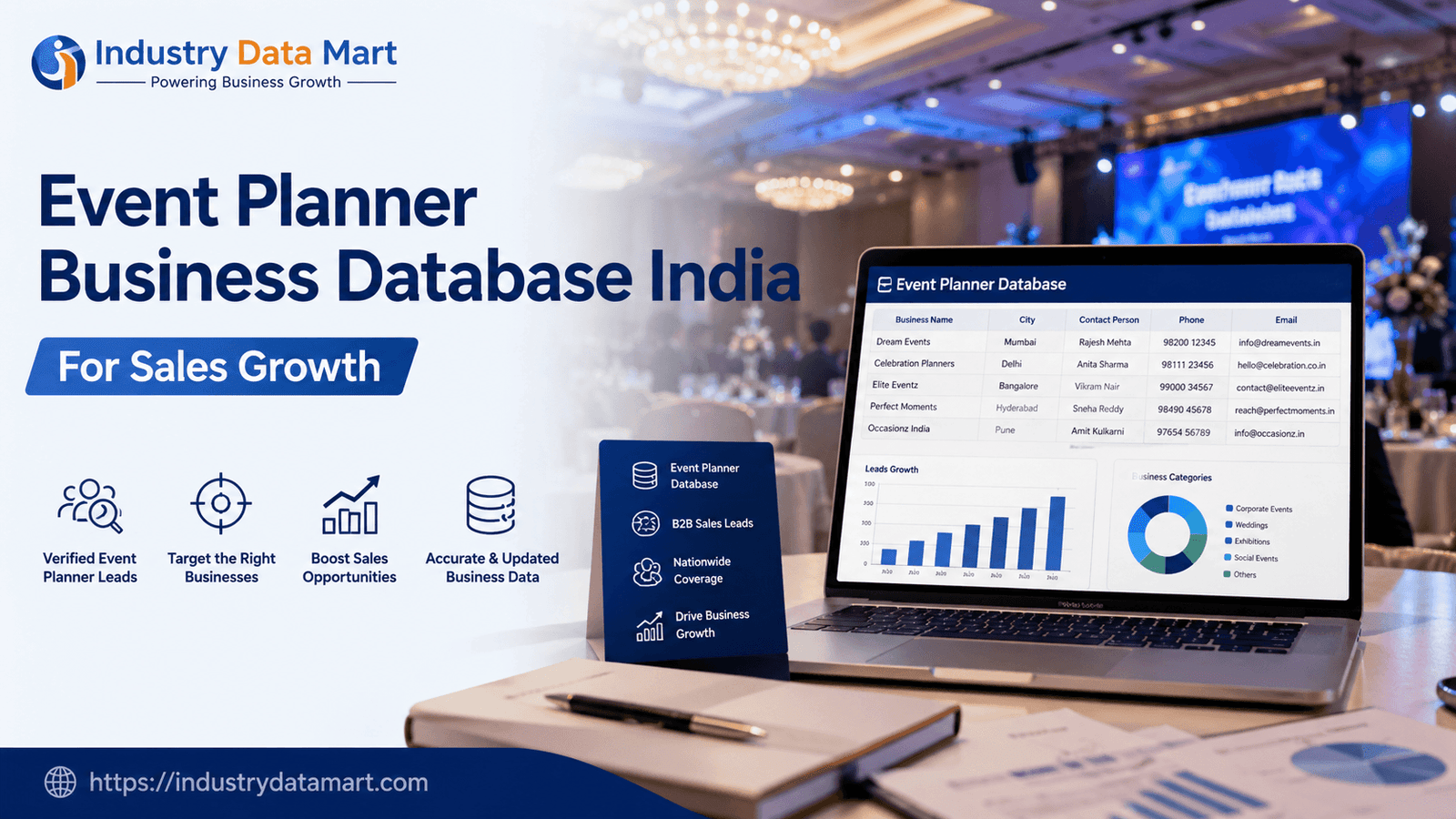
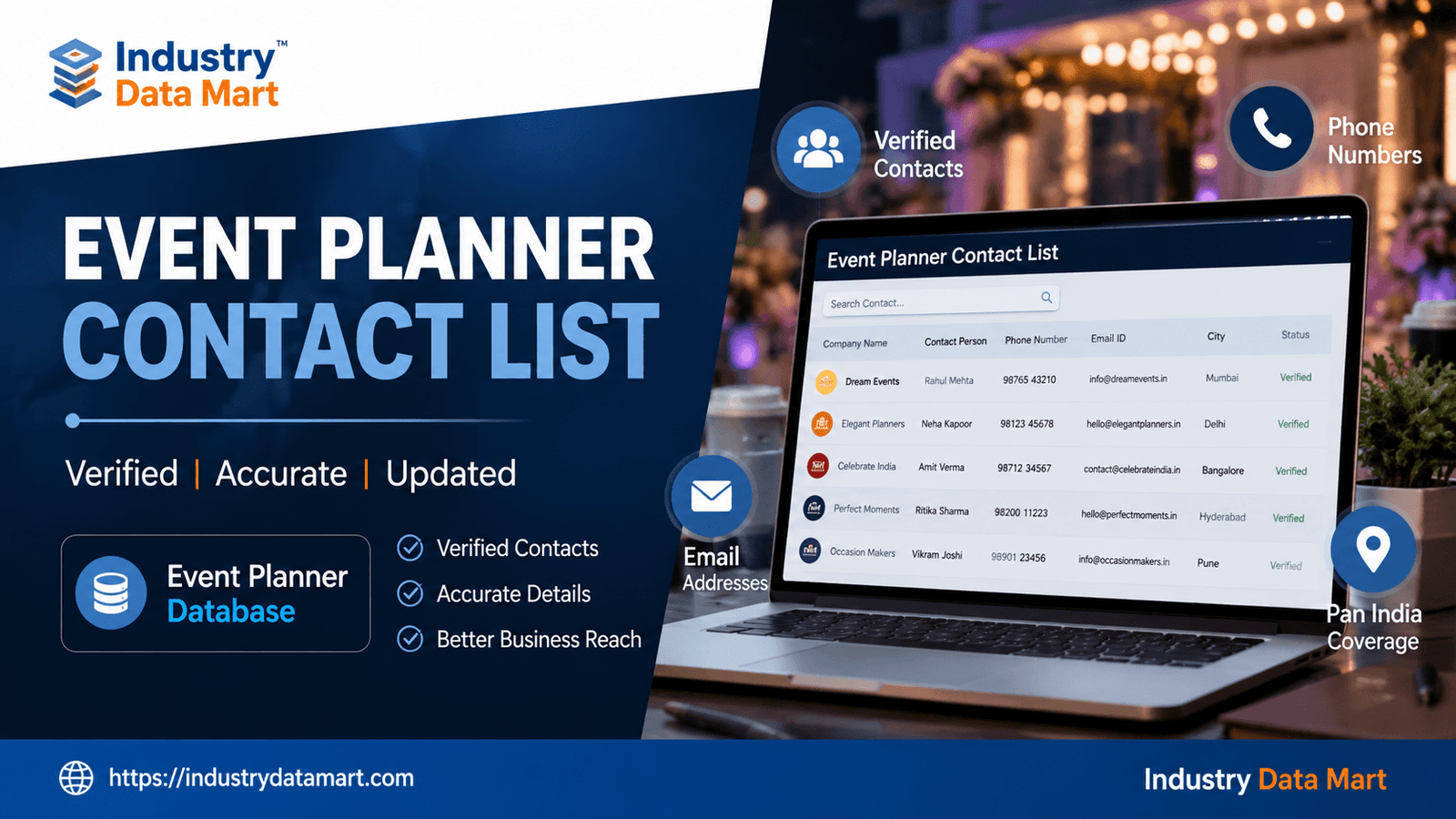
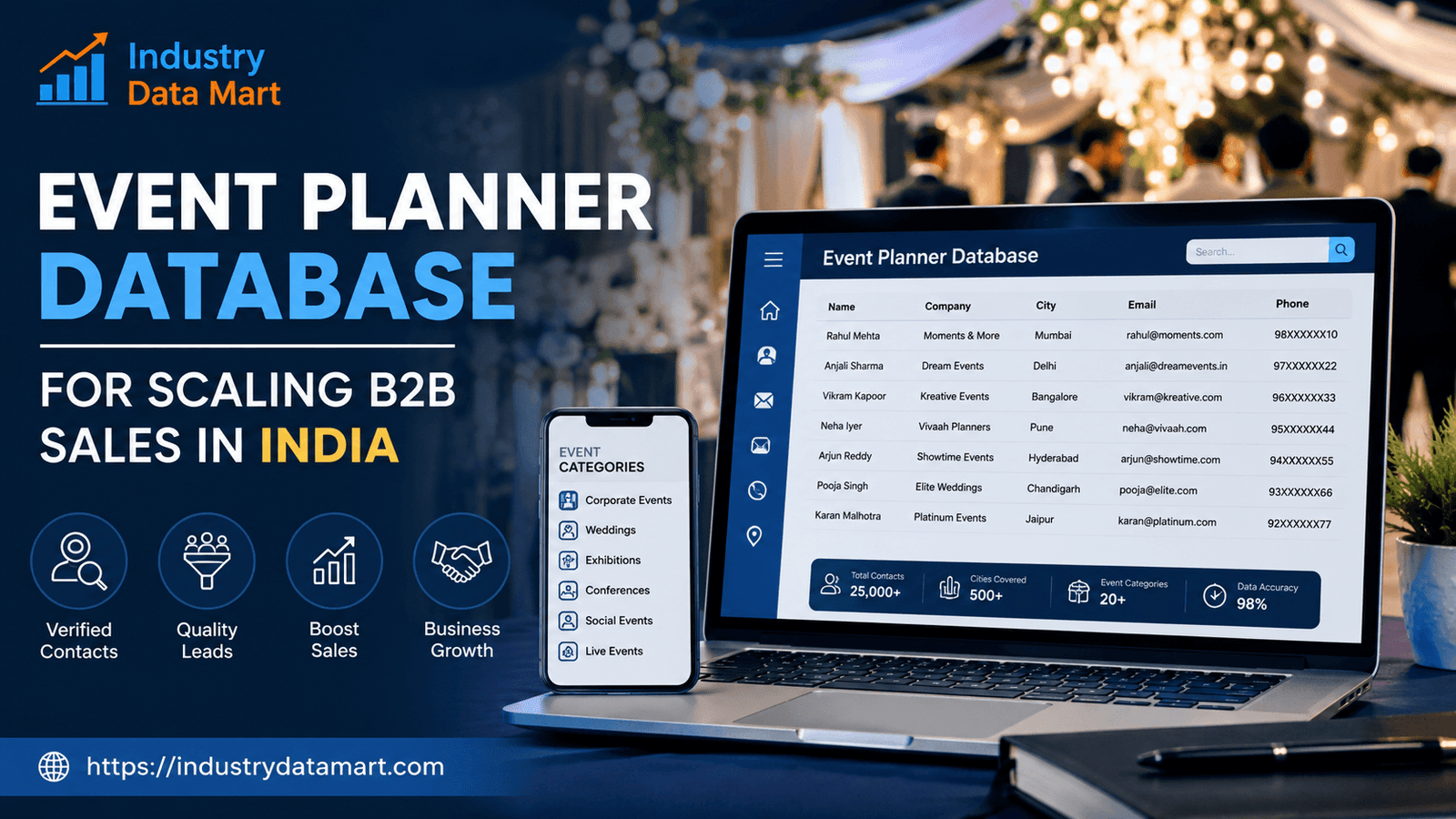
An Event Planner Database is a structured collection of business information relating to event planners and event management companies. Depending on the purpose, it may contain details such as company names, business locations, contact information, business categories, and other useful segmentation fields.
For a B2B sales team, this information is more than a list of contacts. It can become a practical prospecting resource.
Instead of asking, "Who should our sales team contact", businesses can start with a defined target audience and develop a systematic outreach process.
A useful database can help businesses:
One of the biggest advantages of an Event Planner Database is audience precision.
Suppose a company provides premium event management software. Advertising to every small business in India may generate thousands of impressions, but only a small percentage may actually need the product.
A targeted database changes the approach.
The business can identify event planners and event management companies as a specific audience. Sales representatives can then focus their time on prospects whose business activities are more closely connected to the product.
This is especially useful for companies operating with limited sales teams or marketing budgets.
B2B lead generation becomes more effective when businesses know exactly whom they want to approach.
An Event Planner Business Database India can help companies identify potential prospects across important Indian markets. Instead of relying entirely on random searches, businesses can work from a structured prospect pool.
For example, a supplier of customised event merchandise could segment prospects into:
Each category may have different purchasing requirements. Segmentation allows the sales message to be adjusted accordingly.
Having contact data alone does not generate revenue. The real value comes from using information intelligently.
Businesses should treat Event Planner B2B Leads India as the starting point of a sales process rather than the final objective.
Before contacting prospects, identify your ideal customer profile.
Consider:
A clear customer profile prevents sales teams from wasting time on poorly matched prospects.
Not every event planner should receive the same message.
For instance, a software provider may create separate campaigns for corporate event agencies and wedding planners. A printing company may prioritise agencies handling conferences, exhibitions, and large-scale brand activations.
Segmentation makes communication more relevant.
Generic messages often receive limited attention.
Instead of sending the same email to every contact, explain how your product or service can solve a problem relevant to that particular type of event business.
For example, a supplier could highlight faster delivery, bulk pricing, customisation, or reliable support depending on the prospect's requirements.
A good B2B sales process requires consistency.
Maintain records of:
This simple process can significantly improve sales team discipline.
An Event Planner Marketing Database can also support marketing activities beyond direct sales.
Businesses can use segmented prospect information to plan:
The key is relevance.
If a company sends every promotion to every contact, its communication can quickly become noise. But when campaigns are built around business categories and customer requirements, the same marketing budget can potentially produce better engagement.
Consider an Indian company that manufactures customised promotional materials.
Its sales team could spend hours searching Google, social media platforms, directories, and individual websites for event agencies.
A structured Event Planner Database provides a more organised starting point.
The company could divide prospects by location, identify agencies that handle corporate events, create a tailored introductory campaign, and then have sales representatives follow up with interested businesses.
The database itself does not guarantee a sale. What it provides is focus.
From a business-management perspective, that distinction is important. Good data improves the efficiency of the sales process, while strong products, pricing, service, and follow-up ultimately determine conversions.
Before purchasing or using any database, businesses should assess its practical usefulness.
Look for:
It is also important to use business contact information responsibly and comply with applicable privacy, marketing, and communication requirements.
Data quality should always take priority over simply having a large number of records.
Many companies invest in databases but fail to use them effectively.
Common mistakes include:
The objective should not be to collect the largest possible list. The objective should be to create a relevant and actionable prospecting system.
It is primarily used by B2B businesses to identify and organise potential event industry prospects for sales, marketing, partnerships, and business development activities.
Software companies, suppliers, printers, caterers, venues, financial service providers, technology companies, advertising agencies, and many other B2B businesses can use event planner data for targeted prospecting.
It can support better sales performance by helping teams identify relevant prospects and organise outreach. However, actual results depend on data quality, product-market fit, messaging, follow-up, and sales execution.
Segmentation allows businesses to create more relevant messages for different types of event planners, locations, and business categories. This can make prospecting more focused and efficient.
Start by defining the ideal customer, segmenting prospects, creating personalised outreach, tracking responses, and consistently following up with qualified opportunities.
In today's competitive B2B environment, reaching the right prospect at the right time matters more than simply increasing the number of leads. An Event Planner Database can give businesses a structured foundation for targeted prospecting, focused marketing, and systematic sales development.
The best results come when businesses combine reliable data with relevant messaging, disciplined follow-up, and a clear understanding of their ideal customers.
At Industry Data Mart, our goal is to help businesses approach B2B prospecting with greater clarity and efficiency. If event planners are an important part of your target market, a properly structured Event Planner Database can be a practical step toward building a stronger and more focused sales pipeline.

Lorem ipsum dolor sit amet consectetur. Nec nunc pellentesque massa pretium. Quam sapien nec venenatis vivamus sed cras faucibus.