 Healthcare Industry Data
 Sep 14, 2026
4 min read
Sep 14, 2026
4 min read
Discover how a Cardiologist Database helps healthcare businesses reach the right doctors, improve marketing, generate leads, and build stronger partnerships.
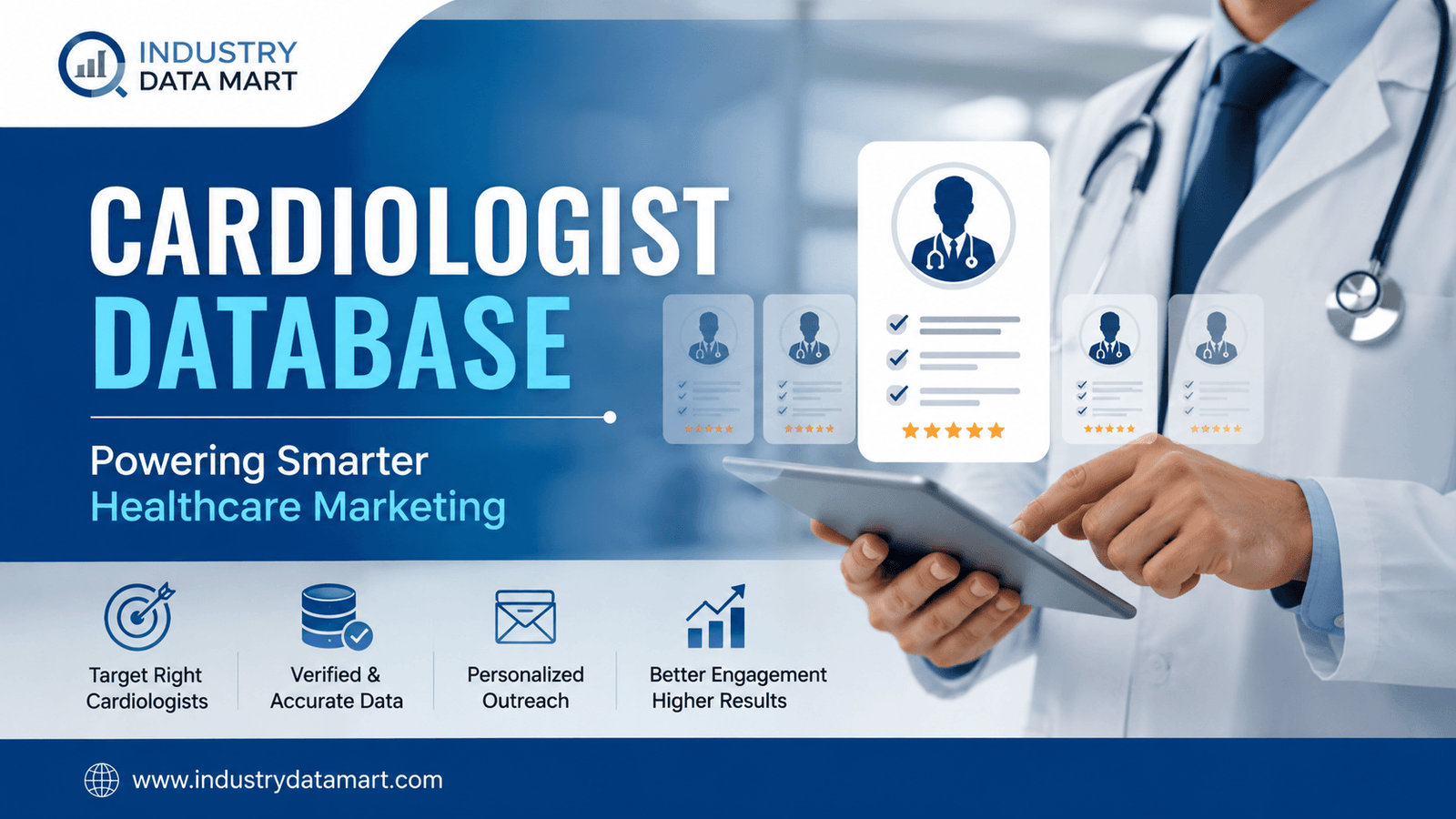
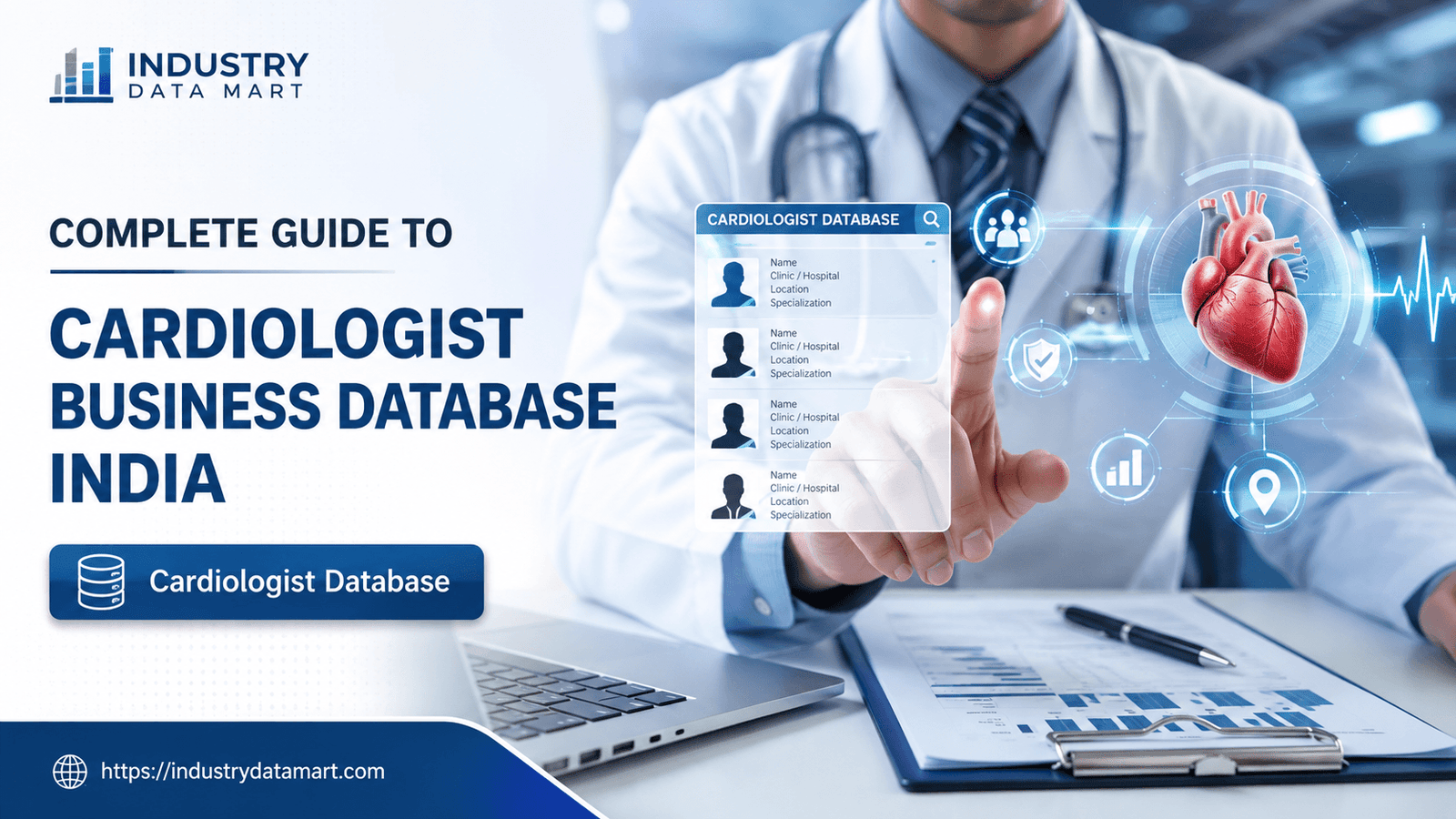
Healthcare marketing is no longer about reaching the largest possible audience. It is about reaching the right healthcare professionals with the right message at the right time. A well-organised Cardiologist Database can help pharmaceutical companies, medical equipment suppliers, diagnostic businesses, hospitals, and healthcare service providers connect with relevant cardiologists more efficiently. Businesses looking for reliable doctor information can explore a professionally prepared Cardiologist Database to support targeted marketing and sales activities.
From an industry and business perspective, the value of a database goes beyond having names and phone numbers. A useful Cardiologist Database brings relevant information together so marketing teams can segment prospects, personalise communication, reduce wasted advertising spend, and improve sales follow-ups.
Cardiologists are highly specialised professionals. A medical device company selling cardiac monitoring equipment, for example, should not spend its entire marketing budget communicating with general practitioners or unrelated medical specialists.
A properly structured Cardiologist Database allows businesses to identify professionals based on useful criteria such as:
This segmentation makes marketing more focused. Instead of sending the same campaign to a broad healthcare audience, businesses can develop messages specifically for cardiology professionals.
For example, a company introducing a new ECG device may use relevant cardiologist information to identify potential institutional buyers and distributors. The result can be a more focused campaign and a better use of sales resources.
One of the biggest advantages of a Cardiologist Database is the ability to divide prospects into meaningful groups.
A healthcare company may want to target cardiologists in Delhi, Mumbai, Bengaluru, Hyderabad, or other major healthcare markets. Another company may focus on cardiologists associated with private hospitals rather than independent clinics.
Segmentation helps marketing teams create campaigns around actual business objectives instead of relying on broad assumptions.
Doctors receive a large amount of professional communication. Generic promotional emails and messages can easily be ignored.
A segmented Cardiologist Database makes it easier to create relevant campaigns. For instance, a medical technology company can communicate information about cardiac imaging equipment to cardiologists and healthcare organisations that are more likely to have an interest in that category.
Personalisation does not necessarily mean writing a different message for every doctor. It means making the campaign relevant to the audience receiving it.
Marketing and sales should work together. A good Cardiologist Database can provide the foundation for building a structured prospecting process.
Sales teams can use database information to:
This process helps sales representatives spend more time on qualified prospects instead of manually searching for contact information.
The Indian healthcare market is large and diverse. Cardiologists operate across metropolitan cities, emerging healthcare hubs, private hospitals, speciality centres, and independent practices.
A Cardiologist Marketing Database India can therefore be particularly useful for companies expanding into new territories. Instead of building a prospect list entirely from scratch, marketing teams can begin with structured data and then validate and refine it according to their campaign requirements.
For example, suppose a medical equipment manufacturer wants to expand its cardiac product distribution in North India. The marketing team can identify relevant healthcare professionals and organisations in selected cities, develop a regional campaign, and provide qualified prospects to the sales team.
This approach can make market expansion more organised and measurable.
A Cardiologist Sales Leads Database should not simply be treated as a spreadsheet of contacts. Its real value comes from how a business uses the information.
Before purchasing or using any database, identify your target audience. Consider:
Create different groups based on your sales strategy. A company selling premium cardiac equipment may have a different target segment from a pharmaceutical or healthcare software business.
Use the segments to develop focused email, calling, digital marketing, or sales outreach campaigns. The message should explain a genuine business or professional benefit rather than simply promoting a product.
Measure important indicators such as enquiries, meetings, responses, conversions, and follow-up status. This allows the marketing team to understand which segments are generating meaningful results.
Healthcare professionals may change hospitals, clinics, roles, or contact details. Regular data validation is therefore essential. Businesses should also follow applicable privacy, consent, and communication regulations when conducting outreach.
The quality of information matters as much as quantity. Thousands of outdated or irrelevant records may provide less value than a smaller list containing accurate and relevant prospects.
This is where Verified Cardiologist Leads India can support a more disciplined marketing strategy. When businesses work with appropriately validated information, sales teams can potentially reduce time spent dealing with incorrect records and focus more heavily on relevant opportunities.
However, businesses should remember that database information is a starting point, not a guarantee of a sale. A successful campaign still depends on product-market fit, communication quality, pricing, service, follow-up, and compliance.
Even a high-quality Cardiologist Database can deliver poor results if it is used incorrectly.
Common mistakes include:
A better strategy is to combine structured prospect information with useful content, professional communication, proper follow-up, and clear performance measurement.
A Cardiologist Database is a structured collection of relevant professional and business information about cardiologists and, depending on the dataset, their associated healthcare organisations. Businesses can use it for targeted marketing, sales prospecting, and market research.
Pharmaceutical companies, medical equipment manufacturers, diagnostic businesses, healthcare technology providers, hospitals, distributors, and other B2B healthcare organisations may find such databases useful for professional outreach.
It helps businesses identify relevant prospects, segment audiences, personalise campaigns, organise sales outreach, and measure marketing performance more effectively.
Yes. A structured database can help sales teams build prospect lists, prioritise accounts, plan follow-ups, and reduce the time spent searching for potential business contacts.
Businesses should consider data accuracy, relevance, freshness, source quality, and applicable privacy and communication regulations. They should also use professional information responsibly and avoid misleading or unsolicited communication practices.
A Cardiologist Database can become a valuable business resource when it is combined with a clear marketing strategy. It can help healthcare companies identify relevant professionals, organise prospecting, create targeted campaigns, and improve coordination between marketing and sales teams.
The key is not simply collecting more contacts. The objective is to build a relevant audience and communicate with that audience professionally and responsibly.
At Industry Data Mart, we help businesses approach B2B healthcare marketing with structured industry data and practical targeting solutions. If your organisation is looking to strengthen cardiology-focused prospecting, explore the right Cardiologist Database solution and build a more focused path from marketing outreach to meaningful business opportunities.

Lorem ipsum dolor sit amet consectetur. Nec nunc pellentesque massa pretium. Quam sapien nec venenatis vivamus sed cras faucibus.