 B2B Data Strategies
 Sep 28, 2026
6 min read
Sep 28, 2026
6 min read
Discover how a Cardiologist Companies Database helps healthcare vendors find verified prospects, improve B2B outreach, and grow sales across India.
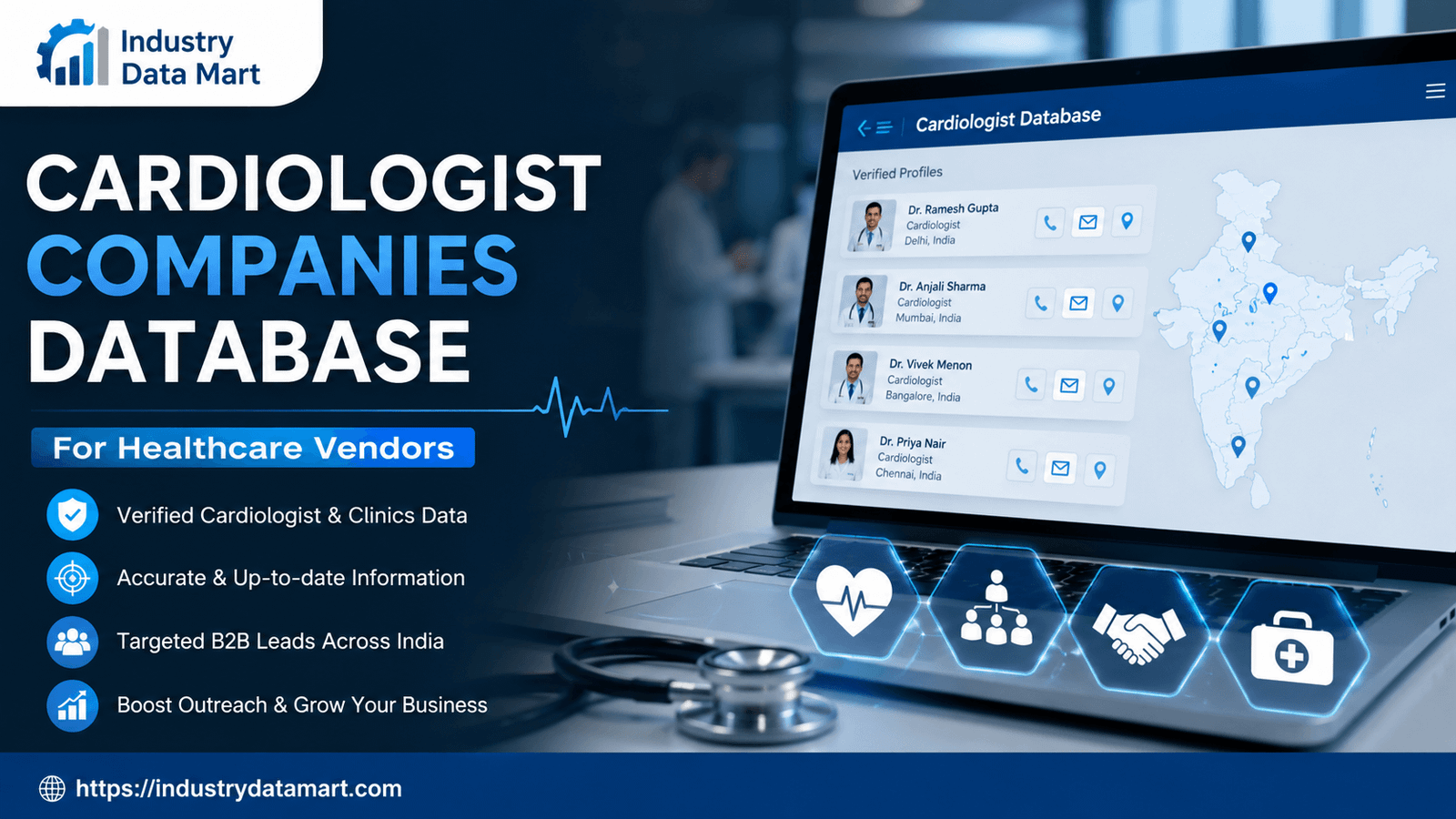
For healthcare vendors, reaching the right cardiologists and cardiac-care businesses is often more difficult than simply finding names online. Hospitals, clinics, diagnostic centres, medical distributors, and specialised cardiac-care organisations operate across different cities and markets, making targeted prospecting a time-consuming process. A reliable Cardiologist Companies Database can help healthcare vendors organise their sales efforts and connect with relevant decision-makers more efficiently. Businesses looking for a focused Cardiologist Database can use structured data to reduce manual research and create a more systematic B2B marketing process.
At Industry Data Mart, we understand that good business data is not just about having a large number of contacts. The real value lies in relevance, accuracy, segmentation, and usability. Whether you supply medical equipment, pharmaceuticals, hospital software, diagnostic products, insurance services, or professional solutions, the right database can make your outreach more productive.
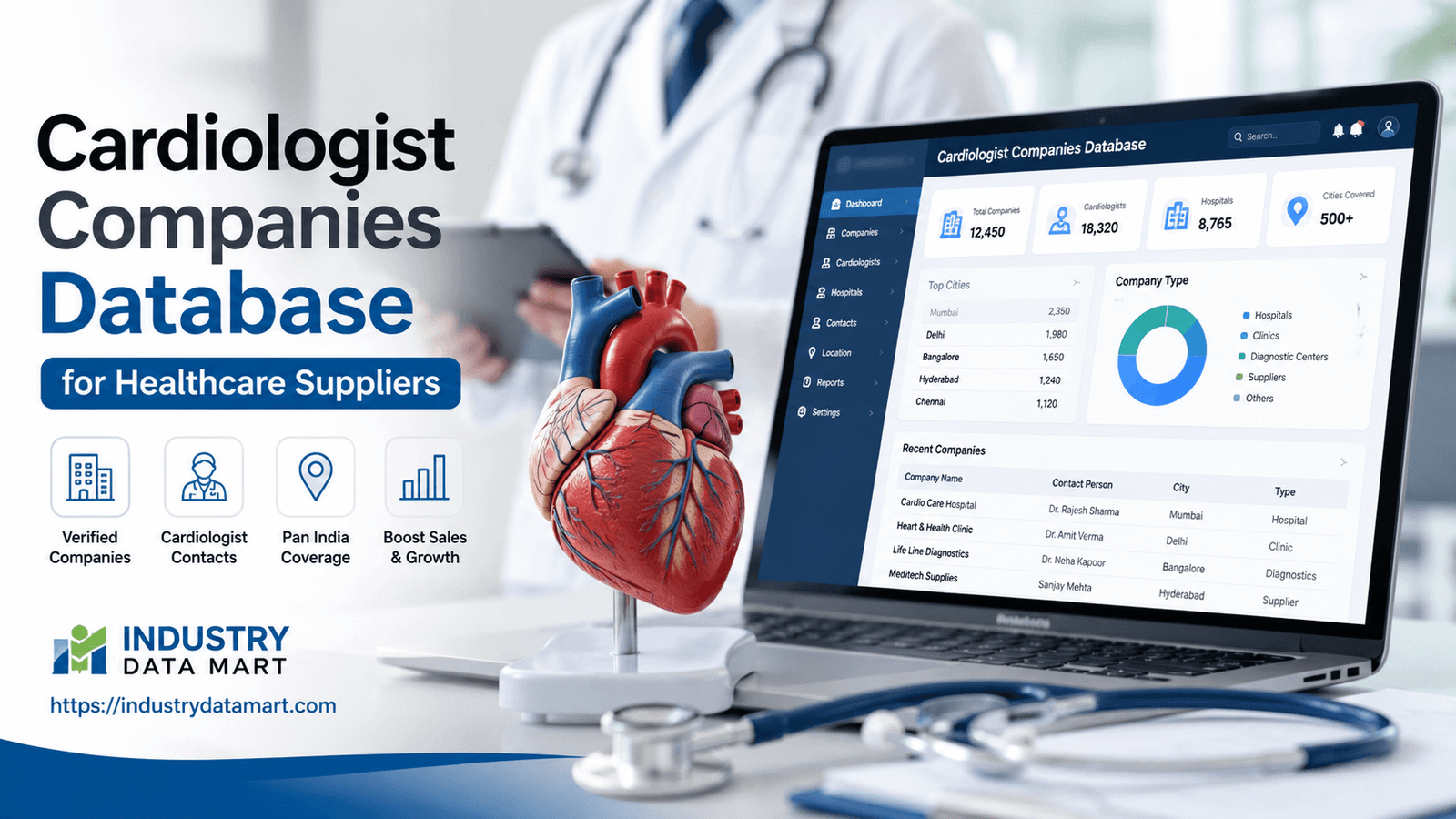
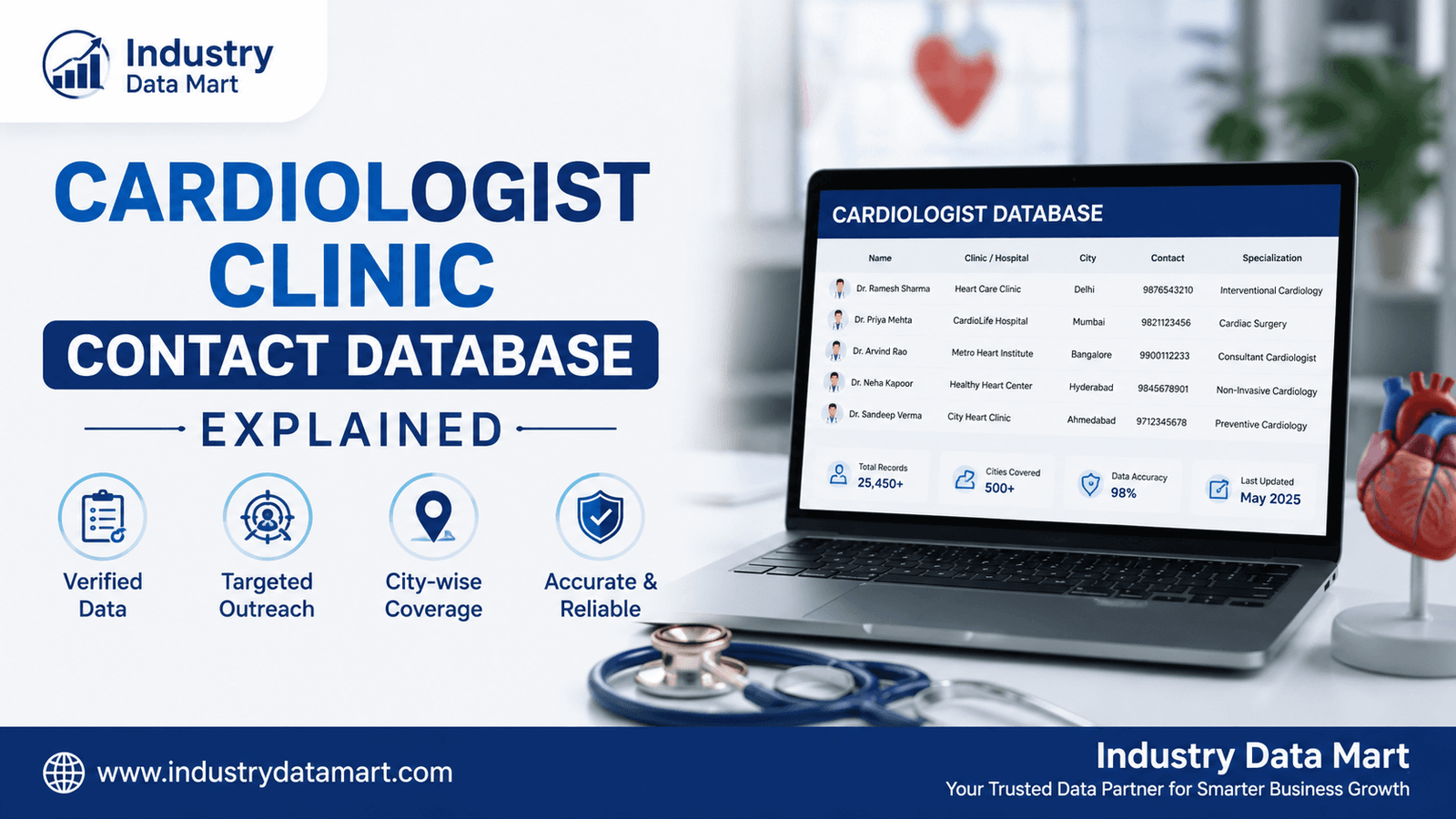
A Cardiologist Companies Database is a structured collection of business and professional information related to cardiologists, cardiac clinics, hospitals, healthcare companies, and other organisations operating in the cardiology ecosystem.
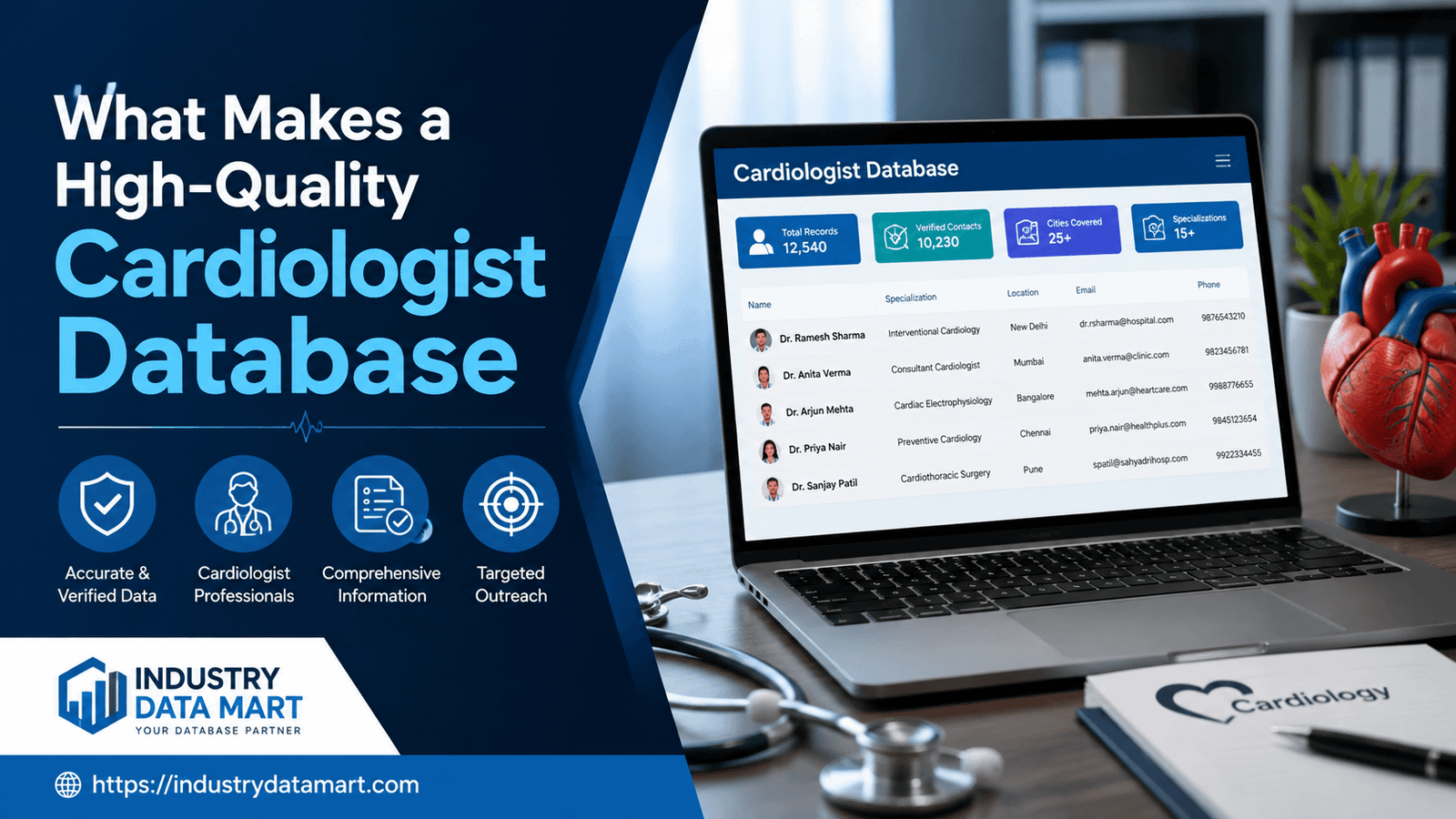
Depending on the purpose of the campaign, useful database fields may include:
For a healthcare vendor, this information provides a starting point for identifying suitable prospects instead of approaching an entire market without clear targeting.
Healthcare sales are usually relationship-driven. A vendor selling cardiac monitoring equipment, surgical supplies, medical software, or diagnostic solutions needs to speak with the right people—not just any healthcare organisation.
A well-organised Cardiologist Companies Database can support several important business activities.
Instead of spending hours searching websites and directories, sales teams can work from a structured prospect list. This allows them to prioritise organisations that match their products and geographical strategy.
A healthcare vendor can segment prospects according to city, organisation type, specialty, or business size. This makes email marketing, telemarketing, and sales campaigns more relevant.
Manual prospecting can consume considerable employee time. A properly prepared Cardiologist Database gives sales representatives a practical foundation for starting conversations.
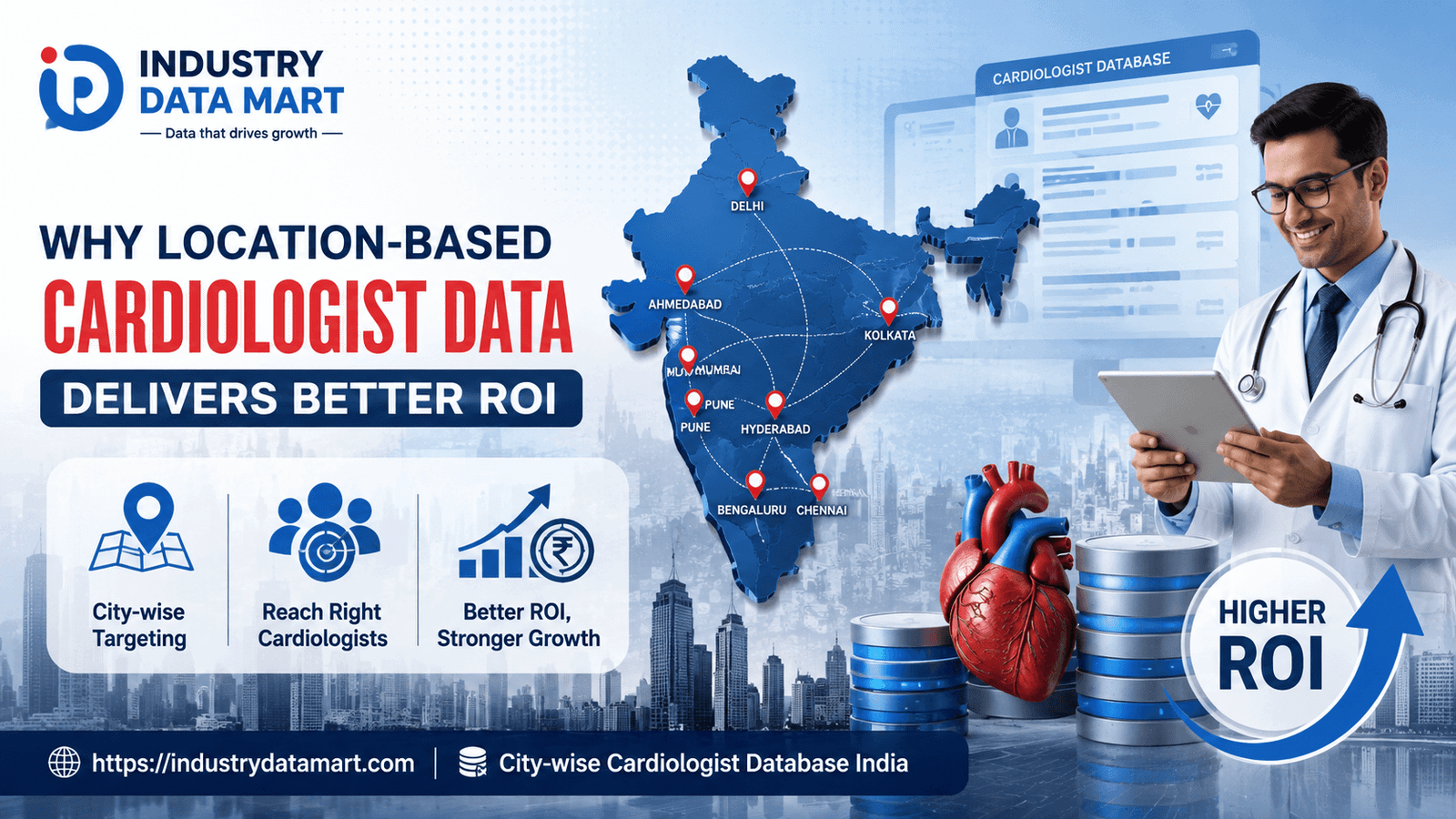
India has a large and diverse healthcare market. A vendor operating in Delhi-NCR may eventually want to expand into Mumbai, Bengaluru, Hyderabad, Chennai, Pune, Ahmedabad, or other healthcare markets. Geographic segmentation makes such expansion easier to plan.
Lead generation becomes more effective when businesses clearly define whom they want to reach.
For example, imagine a company selling advanced cardiac monitoring devices. Instead of sending the same promotional message to thousands of unrelated healthcare businesses, its sales team could identify cardiology clinics, hospitals, cardiac centres, and relevant purchasing departments.
This is where Cardiologist B2B Leads India can become useful. The objective is not simply to increase the number of contacts but to create a prospect pool that has a reasonable connection with the vendor's offering.
A practical B2B process can look like this:
This process turns a contact list into a more useful sales resource.
When evaluating a Cardiologist Business Database India, businesses should look beyond the total number of records.
A database containing thousands of unrelated contacts may produce weaker results than a smaller, carefully targeted list. Make sure the data matches your product and ideal customer profile.
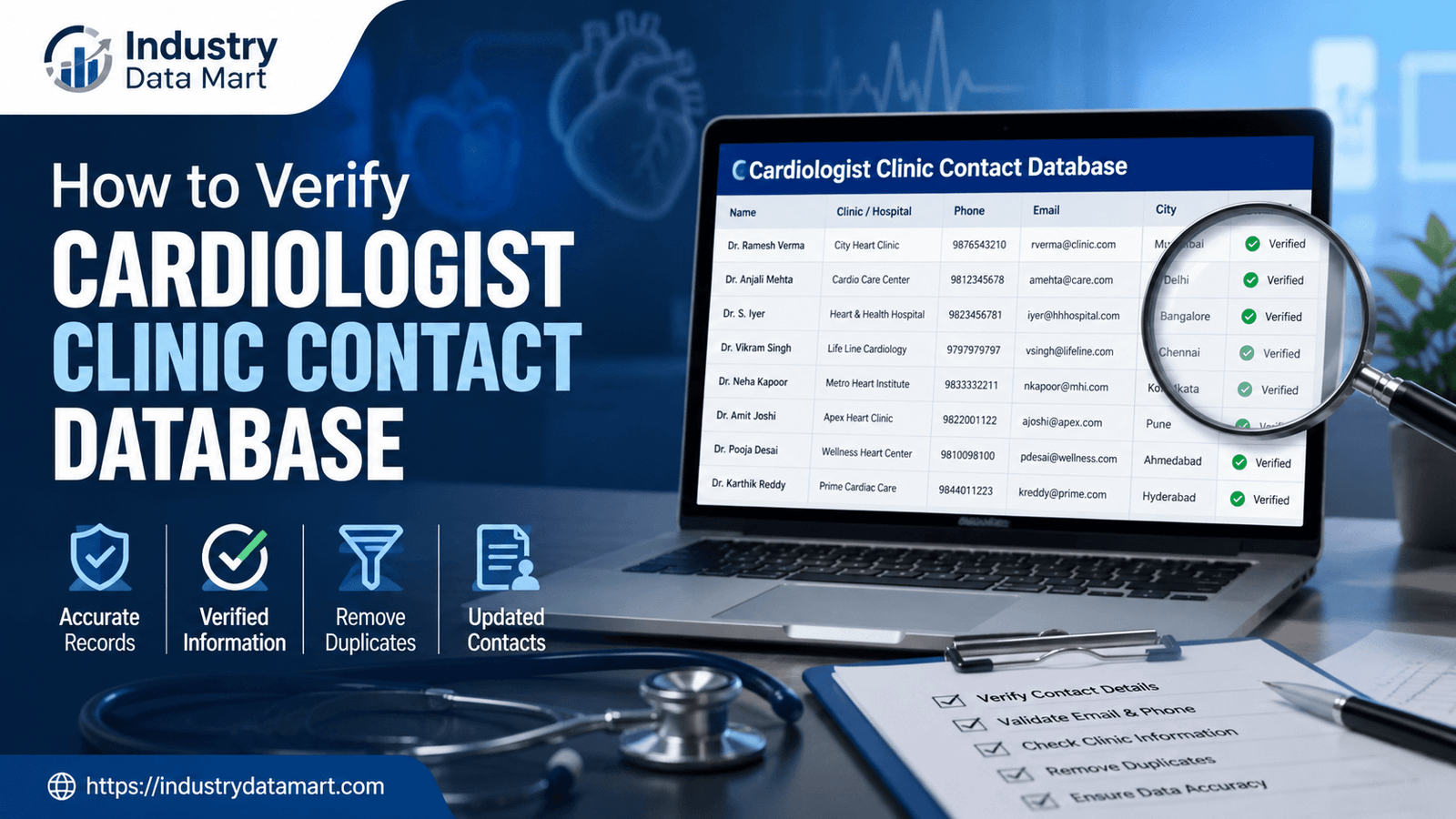
Contact information can change as professionals move organisations, businesses relocate, or communication channels are updated. Vendors should therefore consider how recently the database was compiled or verified.
A good database should allow businesses to identify prospects based on practical criteria such as geography, specialty, organisation type, or business category.
Healthcare marketing requires professionalism and responsible handling of business information. Vendors should follow applicable privacy, marketing, and communication requirements when using contact databases. Data should be used for legitimate business purposes, with appropriate respect for consent and communication preferences.
Consider a medical technology company introducing a new cardiac diagnostic solution.
Rather than asking its sales team to find prospects one by one, the company can begin with a targeted Cardiologist Companies Database. The team can then divide prospects into metropolitan hospitals, independent cardiology clinics, diagnostic centres, and other relevant healthcare organisations.
The sales manager might assign different approaches to each segment. Large hospitals could receive a detailed product presentation, while smaller clinics might receive information focused on affordability, implementation, and after-sales support.
The database itself does not close the sale. What it does is help the sales team spend more time on meaningful prospects and less time on basic prospect discovery.
At Industry Data Mart, we believe business data should support an actual commercial objective. Healthcare vendors can use targeted databases to organise prospecting, develop regional campaigns, identify new markets, and create structured follow-up processes.
Before purchasing or using any database, we recommend asking:
Answering these questions can help businesses get greater value from their investment.
It is a structured business data resource containing relevant information about cardiologists, cardiac-care organisations, hospitals, clinics, and related healthcare businesses for B2B prospecting and marketing activities.
Medical equipment manufacturers, pharmaceutical businesses, healthcare technology companies, diagnostic providers, insurance firms, medical suppliers, and other B2B healthcare vendors may find such data useful for prospecting.
A cardiology-focused database concentrates on a specific medical specialty and its related organisations. This can make targeting more precise than using a broad healthcare database.
Yes. When data is appropriately segmented by location, vendors can develop campaigns for specific states, cities, or healthcare markets and prioritise areas with stronger commercial potential.
No. Data is only one part of the sales process. Results also depend on product-market fit, data quality, messaging, outreach frequency, sales skills, follow-up, and responsible communication practices.
A targeted Cardiologist Companies Database can give healthcare vendors a more organised way to identify prospects, segment markets, reduce research time, and build focused B2B campaigns. The key is to treat database information as a sales-enablement resource rather than simply a collection of contacts.
For companies looking to expand their healthcare customer base in India, Industry Data Mart can help provide a structured starting point for targeted business outreach.

Lorem ipsum dolor sit amet consectetur. Nec nunc pellentesque massa pretium. Quam sapien nec venenatis vivamus sed cras faucibus.