 Healthcare Industry Data
 Sep 26, 2026
7 min read
Sep 26, 2026
7 min read
Discover why City-wise Cardiologist Database India helps businesses improve targeting, reduce marketing waste, and achieve better ROI.
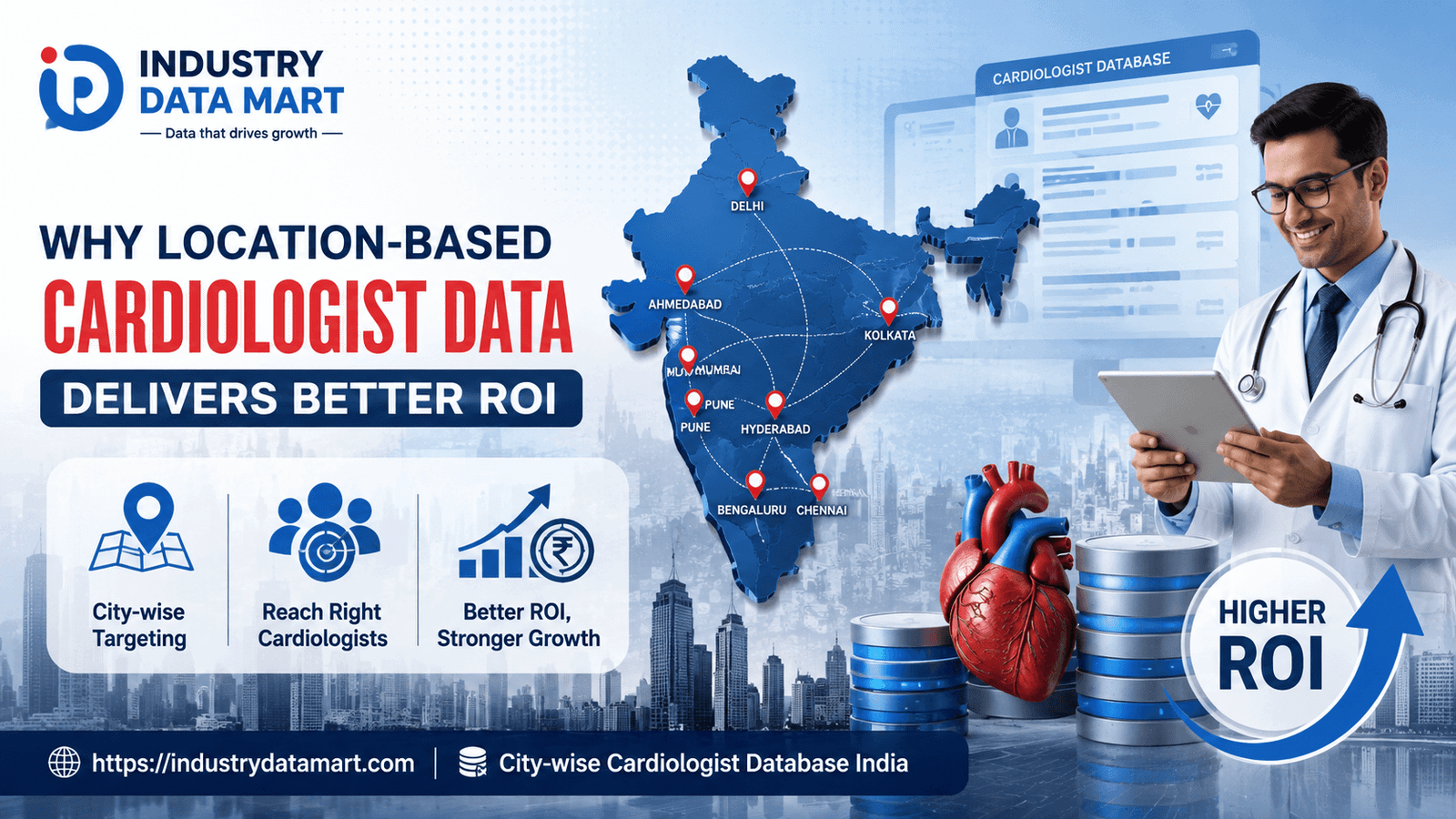
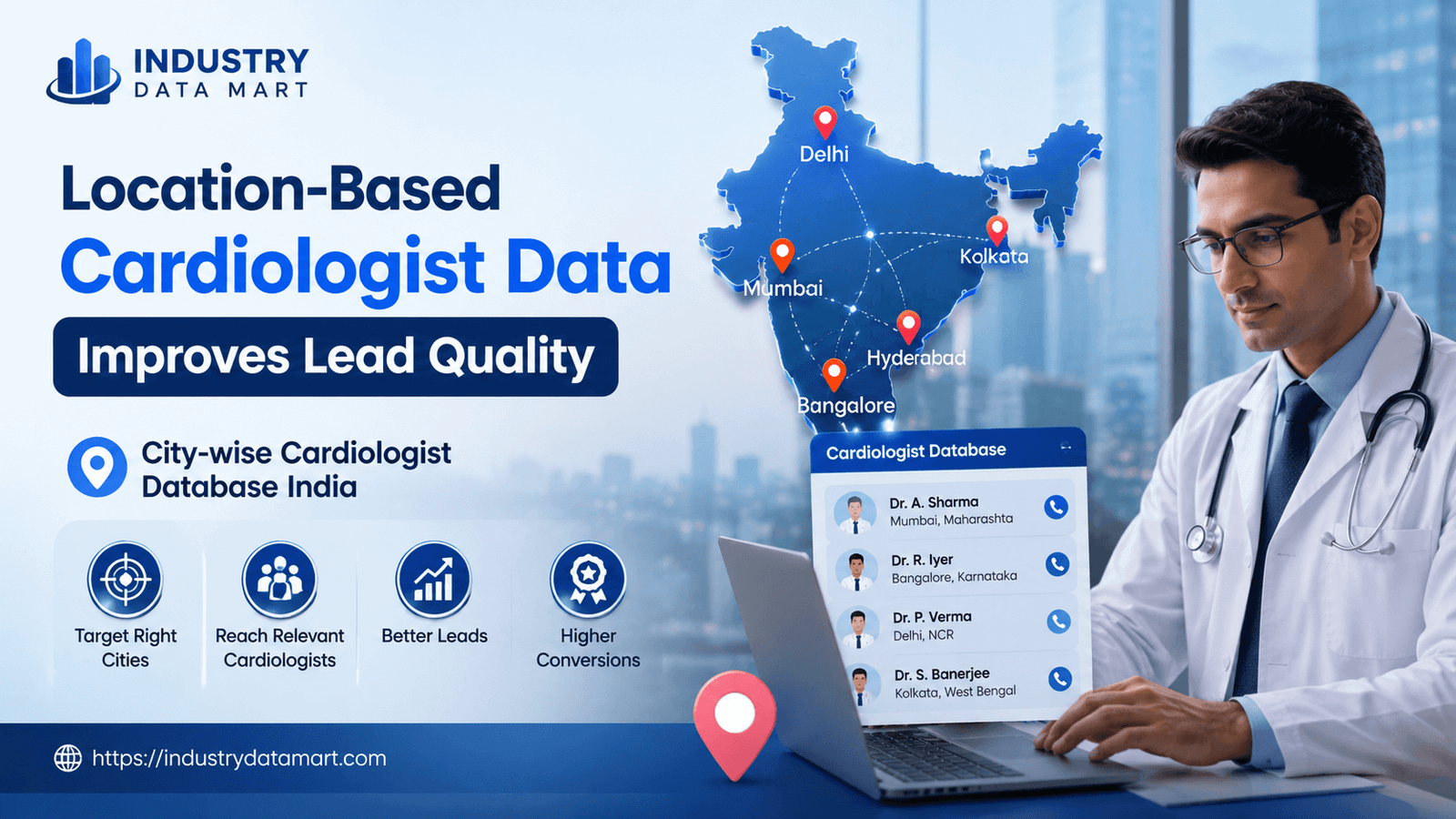
In healthcare marketing, reaching the right cardiologist is only half the job. The other half is reaching the right professional in the right location at the right time. This is where a reliable City-wise Cardiologist Database India can make a meaningful difference. Instead of spending money on broad campaigns with uncertain results, businesses can focus their efforts on specific cities, medical hubs, and markets where their products or services have stronger potential.
At Industry Data Mart, we understand that useful business data must support practical decision-making. A well-structured Cardiologist Database can help pharmaceutical companies, medical equipment suppliers, healthcare service providers, research organisations, and B2B marketers identify relevant cardiologists and plan location-specific campaigns more efficiently.
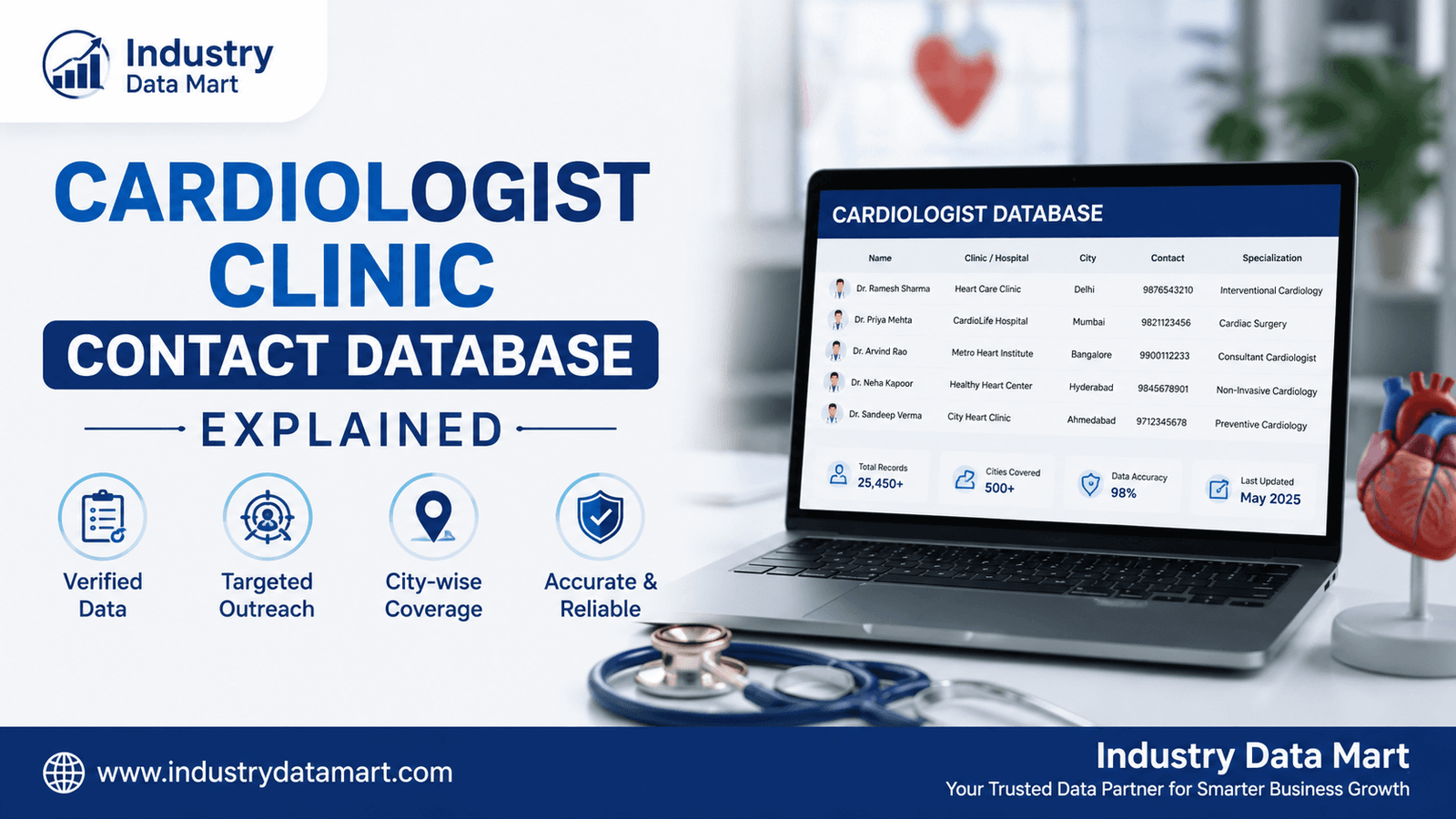
A City-wise Cardiologist Database India is a geographically organised collection of cardiologist-related business information. Rather than treating the Indian healthcare market as one large audience, the data is segmented according to cities and locations.
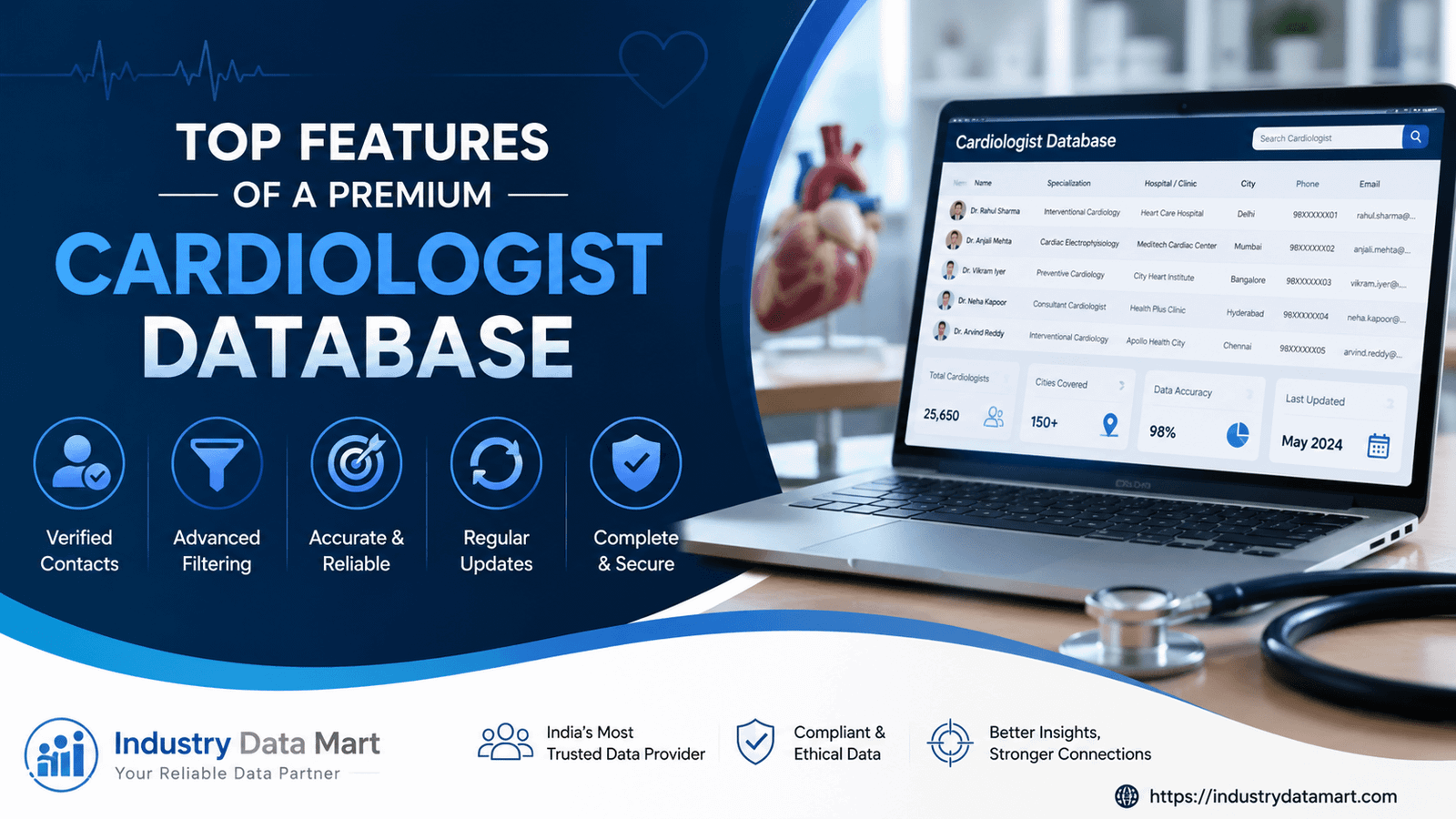
Depending on the source and database structure, records may include information such as:
The key advantage is segmentation. A company planning a campaign in Delhi does not necessarily need thousands of records from Mumbai, Bengaluru, Chennai, or Kolkata. Location-based data allows the marketing team to concentrate resources where they are most relevant.
India has a highly diverse healthcare ecosystem. Cardiologists in metropolitan cities may have different professional environments, patient volumes, hospital networks, and purchasing requirements compared with specialists working in smaller cities.
For example, a medical device distributor launching a cardiac monitoring product may initially want to focus on established healthcare markets such as Delhi NCR, Mumbai, Bengaluru, Hyderabad, Chennai, Pune, or Ahmedabad.
A City-wise Cardiologist Database India makes this type of planning easier because marketers can divide their audience geographically instead of sending the same campaign across the country.
This creates three important benefits:
ROI is not simply about generating more leads. It is about generating relevant opportunities while controlling acquisition costs.
Suppose a healthcare company has a marketing budget of ₹2 lakh. Instead of distributing the entire budget equally across hundreds of locations, the company can identify priority cities and allocate more resources to markets showing stronger commercial potential.
For instance, a campaign could begin with 5–10 major healthcare markets. Performance can then be compared before expanding into additional cities.
This approach reduces unnecessary expenditure and gives management clearer visibility into where marketing money is producing results.
Location provides valuable context.
A campaign aimed at cardiologists in a major metropolitan hospital network may use a different message from one aimed at independent clinics in developing healthcare markets.
With City-wise Cardiologist Database India, marketers can customise:
Personalisation does not always require complicated technology. Even changing the campaign according to location can make communication more relevant.
One of the biggest advantages of location-based data is measurement.
Imagine a company runs campaigns in Mumbai, Delhi, Bengaluru, and Hyderabad. After the campaign, it can compare:
This helps management identify which locations deserve additional investment.
From a financial perspective, this is important because marketing expenditure becomes easier to evaluate against measurable outcomes.
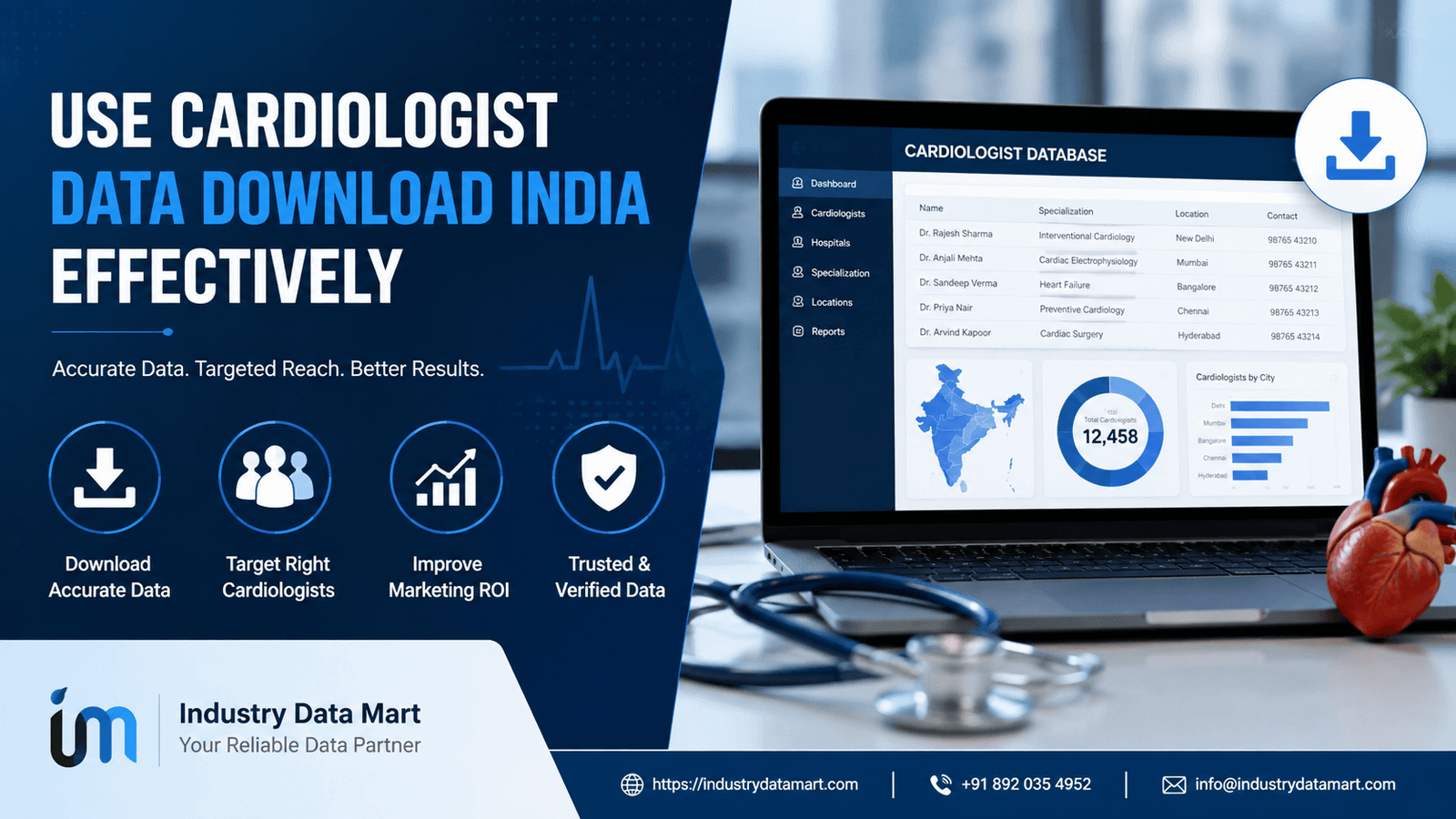
A Cardiologist Data Download India resource can be useful when marketing teams need structured information for campaign planning, CRM management, or internal analysis.
However, downloading data is only the beginning. Businesses should first determine what they actually need.
A practical process is:
Step 1: Define the target market
Identify the cities, states, specialties, or healthcare segments relevant to your business.
Step 2: Establish data requirements
Decide which fields are essential for your campaign.
Step 3: Validate the records
Check whether contact information and professional details are sufficiently current and usable.
Step 4: Segment the audience
Organise records according to city, institution, specialty, or other relevant business criteria.
Step 5: Launch a controlled campaign
Start with selected markets rather than immediately contacting the entire database.
Step 6: Measure ROI
Compare campaign costs with qualified responses, opportunities, and actual business outcomes.
This approach helps transform raw information into a practical marketing asset.
Generic databases can provide a large number of records, but quantity alone does not guarantee business value.
Consider two scenarios.
Scenario A: A company receives 20,000 cardiologist records covering every state in India but has limited sales coverage in only six cities.
Scenario B: The company receives a smaller, location-focused dataset covering relevant cardiologists in those six target cities.
The second dataset may generate better ROI because the sales team can concentrate on prospects it can realistically serve.
This is an important business principle: the most valuable database is not necessarily the largest one; it is the one that best matches your commercial objective.
A properly segmented Cardiologist Marketing Database India can support several stages of the B2B healthcare sales process.
For example, a company can use location-based segmentation to:
It can also help sales teams avoid spending excessive time on geographically irrelevant prospects.
For businesses operating with field sales representatives, this can be particularly valuable. Sales personnel can plan visits around concentrated groups of prospects, potentially improving productivity and reducing travel-related costs.
Not every database offers the same business value. Before purchasing, businesses should evaluate:
Does the database cover the cities and cardiologist segments you actually need?
Are contact and professional details reasonably current and usable?
Can the information be filtered and segmented easily?
Does the database provide meaningful coverage of your target markets?
Businesses should use professional contact information responsibly and follow applicable privacy, communication, and marketing requirements.
A low-cost database with poor-quality records can ultimately become more expensive because it wastes sales and marketing resources.
Consider a medical equipment company targeting cardiologists in three cities.
Instead of contacting 10,000 unrelated records, it identifies 2,000 relevant prospects in its priority locations.
Suppose the targeted campaign produces:
The company can then calculate its acquisition cost and revenue contribution more accurately.
If the same campaign had been sent indiscriminately to a much larger audience, the company might have generated more total activity but weaker efficiency.
This is why City-wise Cardiologist Database India can contribute to better ROI: it supports a more focused relationship between marketing expenditure and commercial opportunity.
It is a geographically segmented database containing professional and business information related to cardiologists across Indian cities and markets.
Pharmaceutical companies, medical equipment businesses, healthcare service providers, research organisations, B2B marketers, and other relevant healthcare businesses may use such data for legitimate professional outreach and market analysis.
No. Relevance, accuracy, coverage, segmentation, and usability are often more important than the total number of records.
It allows businesses to focus campaigns on selected cities, customise their approach, coordinate sales activity, and compare performance between different markets.
Review data relevance, geographic coverage, available fields, freshness, usability, and responsible data-use considerations before making a purchase.
In a competitive healthcare market, effective targeting can make a major difference to marketing efficiency. A City-wise Cardiologist Database India helps businesses move from broad outreach to focused, measurable campaigns.
For Industry Data Mart, the objective is not simply to provide large volumes of data. The real objective is to help businesses identify relevant professional audiences, organise their outreach, and make better-informed marketing decisions.
If your company is planning a cardiologist-focused campaign, territory expansion, product launch, or B2B healthcare outreach programme, explore Industry Data Mart's solutions and build a more focused strategy around reliable, location-based cardiologist data.

Lorem ipsum dolor sit amet consectetur. Nec nunc pellentesque massa pretium. Quam sapien nec venenatis vivamus sed cras faucibus.