 B2B Data Strategies
 Sep 17, 2026
7 min read
Sep 17, 2026
7 min read
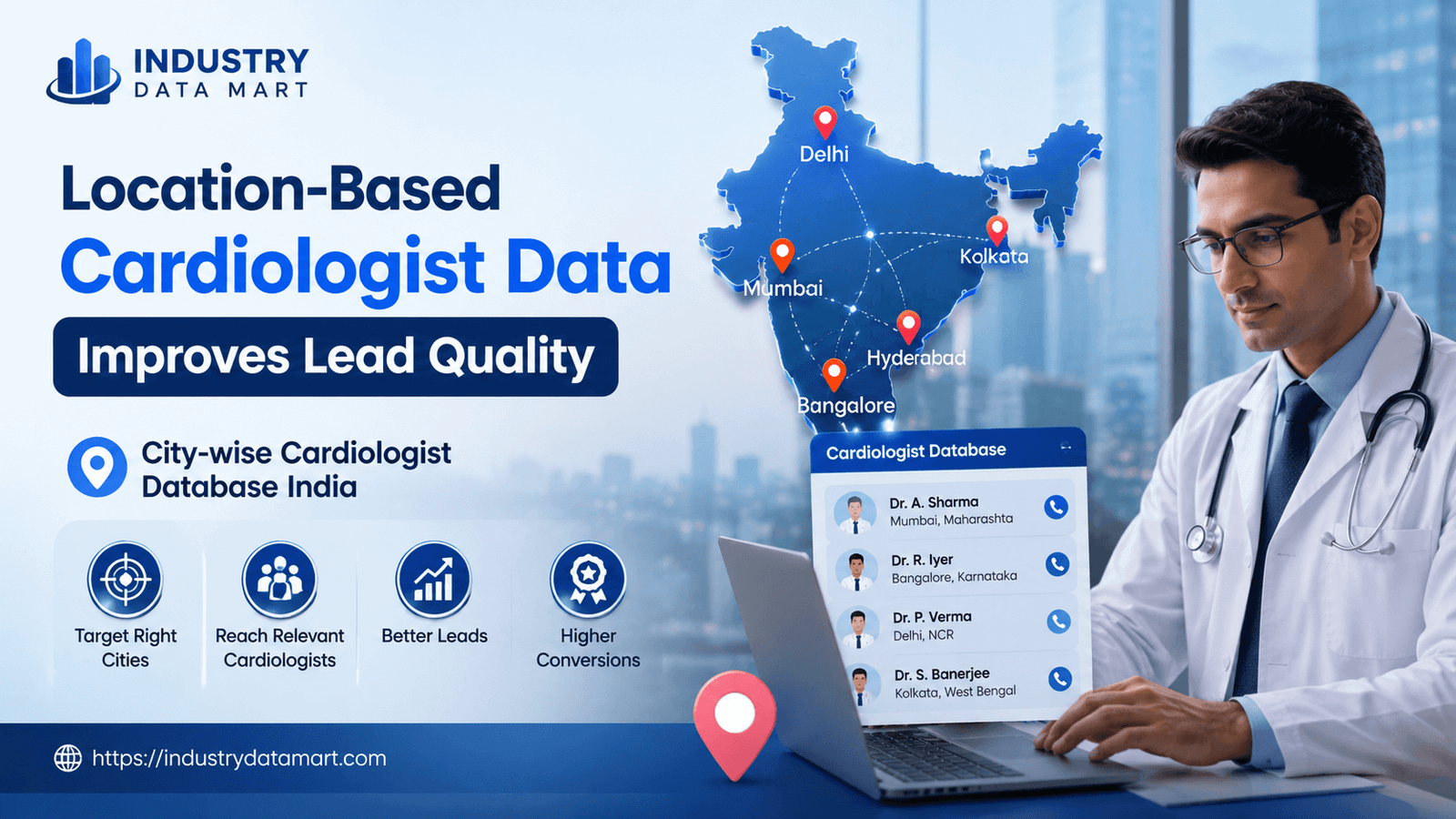
City-wise Cardiologist Database India helps businesses target cardiologists by location, improve outreach, and build more effective healthcare marketing campaigns.
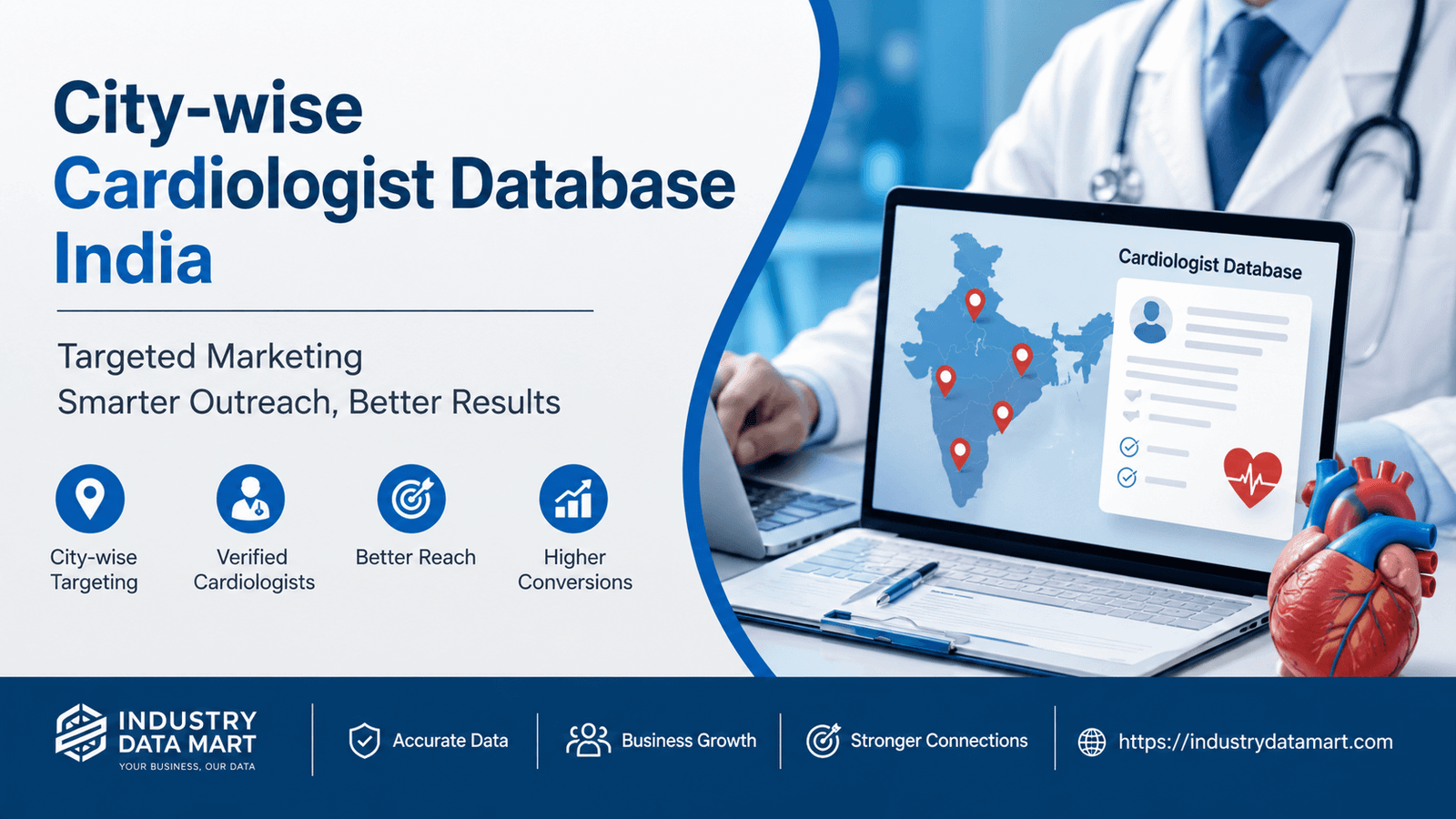
In today’s competitive healthcare market, reaching the right medical professionals at the right time can make a significant difference to business growth. A City-wise Cardiologist Database India gives pharmaceutical companies, medical equipment suppliers, healthcare service providers, and B2B marketers a practical way to organize their outreach by geography. Instead of sending the same campaign to thousands of contacts, businesses can focus on relevant cardiologists in specific cities and markets. A reliable Cardiologist Database can make this process more structured, helping marketing teams plan campaigns based on location, business priorities, and target markets.
India has a large and diverse healthcare ecosystem. Cardiologists working in Mumbai may have different professional networks and market requirements compared with specialists in Delhi, Bengaluru, Hyderabad, Chennai, or smaller emerging cities.
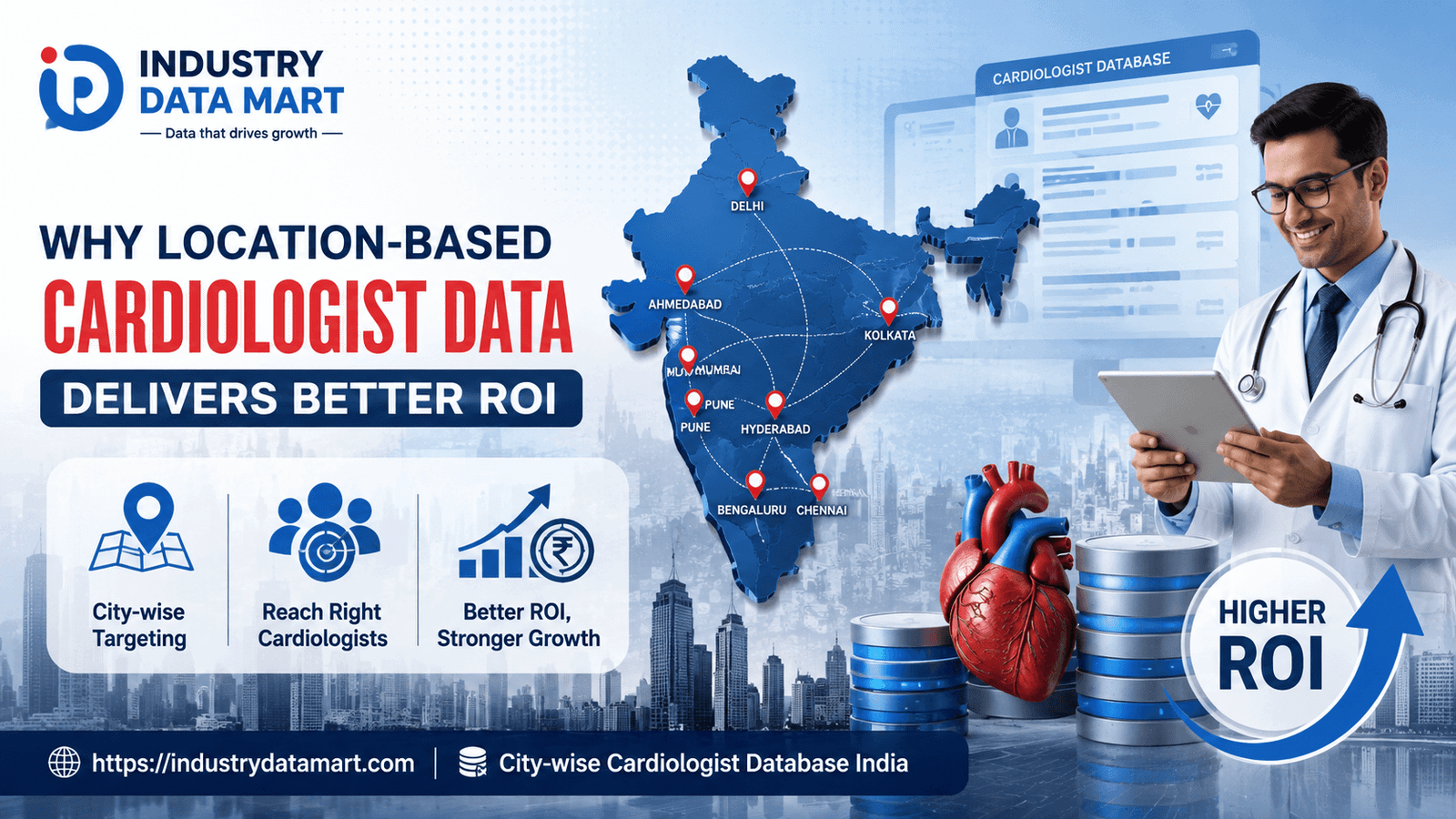
This is where a City-wise Cardiologist Database India becomes useful. By arranging professional information according to cities, marketers can identify where their potential customers are concentrated and allocate their resources accordingly.
For example, a medical device company launching a cardiac monitoring product may initially want to approach cardiologists in metropolitan cities. Rather than conducting a broad nationwide campaign, the company can segment its Cardiologist Marketing Database India by city and create a focused outreach strategy.
The key advantages include:
Targeted marketing is not simply about having more contacts. It is about having useful and organized information that supports better business decisions.
A properly structured City-wise Cardiologist Database India can help a marketing team answer important questions:
Where are our potential customers located?
A city-wise structure allows businesses to identify markets with a higher concentration of cardiologists.
Which cities should receive priority?
Companies can compare target cities based on their commercial objectives and sales coverage.
How should campaigns be customized?
Different cities can be assigned different campaign messages, sales teams, or promotional schedules.
This approach can reduce unnecessary outreach and allow sales representatives to concentrate on prospects that are more relevant to their territory.
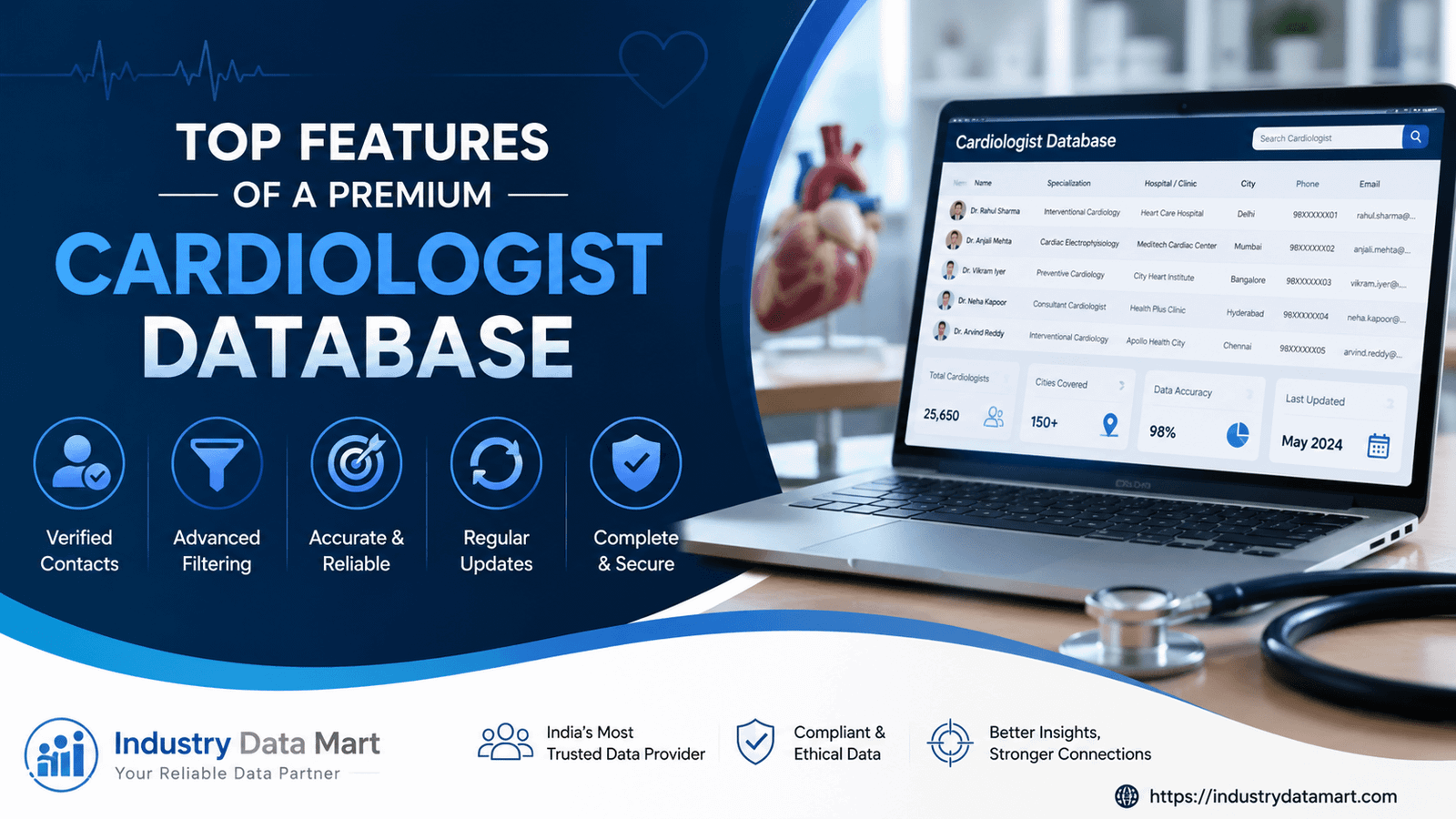
Not every contact list provides the same business value. Before using a Cardiologist Contact Details List, companies should consider the quality, relevance, and organization of the information.
Depending on the intended campaign, useful fields may include:
The exact data required depends on the marketing objective. A pharmaceutical distributor may need a different set of information from a diagnostic equipment company.
For this reason, businesses should first define their target audience and campaign requirements before selecting a database.
Start by identifying the cities that matter most to your business. Consider existing sales coverage, market opportunities, customer demand, and expansion plans.
For example, a company operating in North India might initially prioritize Delhi NCR, Jaipur, Chandigarh, Lucknow, and nearby markets.
Once the cities are identified, divide the database geographically. This creates smaller and more manageable prospect groups.
Instead of treating 5,000 contacts as one audience, a business might create separate city-level segments. This makes campaign planning and sales follow-ups much easier.
Different segments can receive different marketing approaches.
A product launch may require awareness-focused communication, while an established product may benefit from relationship-based follow-ups. City-level segmentation allows businesses to coordinate these activities more efficiently.
The database should not remain only with the marketing department. Sales teams can use geographic segmentation to organize calls, meetings, territory assignments, and follow-ups.
This creates a more connected sales process.
Finally, measure results city by city. Look at response rates, qualified leads, meetings, conversions, and other relevant business metrics.
This helps identify which locations deserve additional attention.
Consider a medical technology company selling cardiac diagnostic equipment.
The company has a nationwide prospect base but limited sales resources. Instead of approaching every cardiologist simultaneously, it divides its City-wise Cardiologist Database India into regional groups.
The company then starts with selected high-priority cities, assigns sales representatives to those territories, and runs customized outreach campaigns.
After a few months, the company reviews the results. If one city produces significantly better engagement and sales opportunities, management can consider increasing resources in that market.
The database, therefore, becomes more than a list of contacts. It becomes a tool for territory planning and commercial decision-making.
Even a large Cardiologist Database may deliver poor results if it is used without a proper strategy.
Some common mistakes include:
Businesses should focus on data relevance and usability rather than simply database size.
It is also important to follow applicable privacy, communication, and data-protection requirements when conducting professional outreach. Responsible marketing builds trust and protects long-term business relationships.
It is a geographically organized database containing professional information about cardiologists across different Indian cities. It can help businesses segment prospects and plan location-focused marketing campaigns.
Pharmaceutical companies, medical equipment manufacturers, diagnostic businesses, healthcare technology providers, medical distributors, and other B2B healthcare organizations may use such databases for professional outreach and market development.
City-wise segmentation makes it easier to assign sales territories, customize campaigns, prioritize markets, and measure results by location.
Check the relevance, organization, accuracy, freshness, and intended use of the information. Businesses should also ensure that their outreach practices comply with applicable laws and professional standards.
No. A smaller, relevant, well-organized database can be more valuable than a very large collection of poorly targeted or outdated contacts.
A City-wise Cardiologist Database India can give healthcare-focused businesses a more practical foundation for targeted marketing. By organizing prospects according to location, companies can improve territory planning, coordinate sales and marketing activities, and focus resources on markets that matter most.
At Industry Data Mart, we understand that successful B2B marketing depends on having relevant information and using it intelligently. If your business wants to strengthen healthcare outreach and build a more structured prospecting strategy, a well-organized City-wise Cardiologist Database India can be an important part of that process.
Connect with Industry Data Mart today to explore data solutions designed to support smarter healthcare marketing, better segmentation, and more focused business growth.

Lorem ipsum dolor sit amet consectetur. Nec nunc pellentesque massa pretium. Quam sapien nec venenatis vivamus sed cras faucibus.