 B2B Data Strategies
 Aug 21, 2026
6 min read
Aug 21, 2026
6 min read
Discover how Event Planner Industry Contact Data helps hotels, venues, caterers, media firms and other businesses generate qualified B2B opportunities.
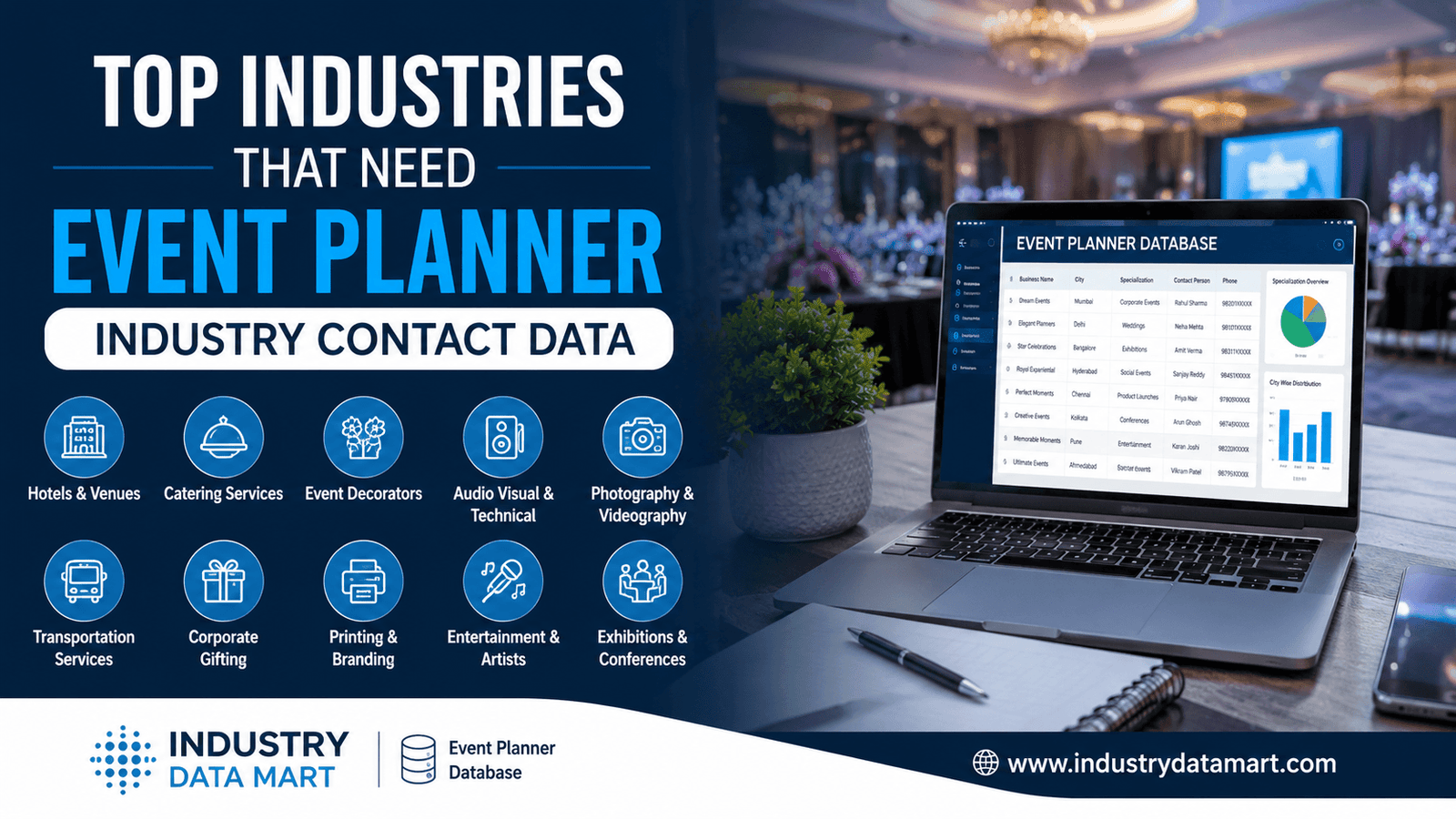
The event industry in India is growing rapidly, and behind every successful wedding, conference, exhibition, product launch, corporate meeting, or social gathering, there is usually an event planner coordinating multiple vendors and services. For businesses that supply products or services to this sector, Event Planner Industry Contact Data can become a practical business development resource. A properly organised Event Planner Database can help companies identify relevant planners, understand their business segment, and approach potential buyers with a more focused sales strategy.
From my experience working with Indian businesses, one common mistake is trying to sell to everyone. A hotel does not need the same prospects as an event decoration company, and a corporate gifting supplier has different requirements from an audiovisual equipment provider. This is where reliable Event Planner Company Contact Details can make prospecting more structured and commercially useful.
Event planners influence purchasing decisions across a surprisingly large number of industries. They may arrange venues, catering, transportation, lighting, entertainment, printing, security, photography, accommodation, gifts, promotional material, and several other services.
For a supplier, reaching the right event planner at the right stage can be more valuable than making hundreds of random sales calls.
Good Event Planner Industry Contact Data helps businesses create a targeted prospecting process. Instead of spending valuable sales time searching for businesses individually, sales teams can work with organised contact information and divide prospects according to location, business type, or potential requirement.
The objective should not simply be collecting contacts. The real objective is identifying businesses where there is a genuine commercial possibility.
Hotels and resorts are among the biggest beneficiaries of relationships with event planners. Corporate conferences, weddings, seminars, annual meetings, award ceremonies, and private functions can generate substantial bookings.
Event planners frequently compare multiple venues before finalising an event. Hotels can therefore use an Event Planner Contact List to introduce their banquet halls, conference facilities, accommodation packages, catering options, and event services.
A hotel sales team can segment planners by city and specialise its approach. For example, a resort near Jaipur may focus on wedding planners, while a business hotel in Bengaluru may prioritise corporate event organisers.
Independent banquet halls, convention centres, clubs, resorts, and other venues depend heavily on event bookings. Building relationships with planners can provide a steady source of enquiries.
Instead of waiting for customers to discover a venue online, management can proactively reach planners who regularly organise events in the same geographical market.
Using relevant Event Planner Industry Contact Data, venue owners can introduce their capacity, location, pricing structure, parking facilities, catering arrangements, and other differentiating factors.
Food is an essential part of almost every event. Catering companies therefore have strong reasons to develop relationships with professional event planners.
A planner may need catering for a small corporate meeting one week and a large wedding the next. This recurring requirement makes planners valuable B2B prospects.
A catering company can use Event Planner Company Contact Details to present its menus, cuisines, service capacity, customised packages, and previous event experience. The key is to offer useful information rather than repeatedly sending generic sales messages.
Decorators work closely with planners on stage design, floral arrangements, themes, lighting, backdrops, entrance decoration, furniture, and venue styling.
Wedding planners in particular may coordinate with several decoration specialists depending on the client's budget and theme.
For such businesses, an Event Planner Database can support systematic relationship building. Instead of approaching planners randomly, decorators can prioritise planners who specialise in weddings, corporate events, exhibitions, or other relevant categories.
Large events often require microphones, speakers, LED screens, projectors, stage lighting, live-streaming equipment, trussing, and technical staff.
Audio-visual companies can use Event Planner Industry Contact Data to identify planners who regularly organise conferences, exhibitions, product launches, concerts, and corporate events.
This is particularly useful because technical requirements can vary considerably between events. A supplier with the right equipment and professional support can become a preferred vendor for multiple planners.
Corporate events often involve employee gifts, conference kits, trophies, awards, branded merchandise, and promotional products.
Event planners can influence the selection of these items, especially when they manage complete event requirements on behalf of corporate clients.
A corporate gifting company can therefore use an Event Planner Contact List to introduce customised merchandise, bulk gifting solutions, branding options, and event-specific packages.
Invitations, banners, brochures, standees, certificates, badges, signage, menus, and promotional materials are common event requirements.
Printing companies that build relationships with planners may receive recurring orders instead of relying only on individual customers.
Relevant Event Planner Company Contact Details can help printing businesses identify potential partners and present their production capabilities according to the type of events those planners manage.
Photography and videography are essential for weddings, corporate events, conferences, exhibitions, launches, and celebrations.
Professional planners often need dependable photographers who understand timelines and can work alongside other vendors.
A targeted Event Planner Industry Contact Data strategy can help photography companies approach planners with suitable portfolios and packages. Rather than focusing only on price, businesses should demonstrate reliability, turnaround time, equipment quality, and experience.
Large events may require airport transfers, guest transportation, luxury vehicles, buses, hotel transfers, and local travel arrangements.
Travel agencies, fleet operators, car rental businesses, and transport companies can benefit from connecting with planners who organise events involving large groups.
For these businesses, location-specific Event Planner Industry Contact Data is especially valuable because transportation requirements are highly dependent on geography.
Music performers, DJs, anchors, dancers, comedians, celebrity management companies, and entertainment agencies frequently work through event planners.
A planner may need different entertainment options depending on the event's audience and budget. Maintaining a professional relationship can therefore generate repeat business.
Entertainment companies can use an Event Planner Database to identify planners and introduce their artist portfolio, availability, event categories, and commercial packages.
Simply purchasing or collecting data is not enough. Businesses need a practical process for turning contacts into opportunities.
First, decide which type of planner you want to reach. Consider:
Do not treat every planner as the same prospect. Divide your Event Planner Industry Contact Data into meaningful groups.
For example, a wedding photographer may prioritise wedding planners, whereas an LED screen supplier may focus more heavily on corporate event planners and exhibition organisers.
Before sales outreach, review the available Event Planner Company Contact Details and determine whether the business fits your target market.
Data quality matters because outdated or irrelevant contacts can increase sales costs and waste the team's time.
Your first conversation should be focused on the planner's business requirements.
Instead of saying, "We sell our services," explain how your company can solve a specific event-related problem. A supplier offering faster delivery, customised packages, dependable support, or competitive bulk pricing has a stronger reason for a planner to respond.
B2B sales rarely happen after one conversation. Maintain a structured follow-up process without becoming intrusive.
A planner who does not need your service today may require it for an upcoming event several months later. Consistent and professional communication can help build long-term vendor relationships.
The commercial value of Event Planner Industry Contact Data depends on relevance, accuracy, coverage, and usability.
Businesses should consider whether the information helps their sales team identify genuine prospects and whether it supports geographic and industry-specific targeting.
For example, a supplier operating only in North India does not necessarily benefit from an unsegmented national list. A focused database that helps the team identify relevant planners by market can make prospecting more efficient.
It is also important to follow applicable privacy, telemarketing, and data-protection requirements when using business contact information. Responsible data usage protects both the prospect and the reputation of the company conducting outreach.
Event Planner Industry Contact Data is organised business information related to event planners and event management companies. It can help suppliers, venues, hotels, caterers, decorators, and other B2B businesses identify potential commercial prospects and build targeted sales campaigns.
Hotels, resorts, banquet halls, caterers, decorators, photographers, AV companies, printers, corporate gifting businesses, transportation providers, entertainment agencies, and other event-related suppliers can use a relevant Event Planner Contact List for B2B prospecting.
An Event Planner Database gives sales teams a structured starting point for identifying prospects. Instead of searching for individual planners manually, businesses can organise their outreach based on location, event category, and other relevant business criteria.
Businesses should use Event Planner Company Contact Details responsibly and for relevant business communication. The strongest approach is to understand the planner's likely requirements, offer a useful solution, and maintain professional follow-up.
Yes. Small businesses often have limited sales resources, so targeted prospecting can help them spend their time more efficiently. Relevant Event Planner Industry Contact Data can help identify potential partners without requiring a large sales team.
The event ecosystem creates business opportunities for far more industries than hotels and decorators alone. Catering companies, venues, photographers, transport providers, printing companies, corporate gifting suppliers, AV specialists, and entertainment businesses can all benefit from stronger relationships with event planners.
For these businesses, Event Planner Industry Contact Data can provide a practical foundation for targeted B2B prospecting. The key is to combine relevant data with proper segmentation, professional communication, consistent follow-up, and responsible business practices.
At Industry Data Mart, our approach is focused on helping businesses find commercially relevant business information so their sales teams can spend less time searching and more time building genuine opportunities. If your business supplies products or services to the event industry, a well-targeted Event Planner Industry Contact Data strategy can be a valuable addition to your B2B sales process.

Lorem ipsum dolor sit amet consectetur. Nec nunc pellentesque massa pretium. Quam sapien nec venenatis vivamus sed cras faucibus.