 B2B Data Strategies
 Sep 23, 2026
6 min read
Sep 23, 2026
6 min read
Discover how a Cardiologist Database helps medical suppliers improve B2B lead generation, target clinics, and grow sales across India efficiently.
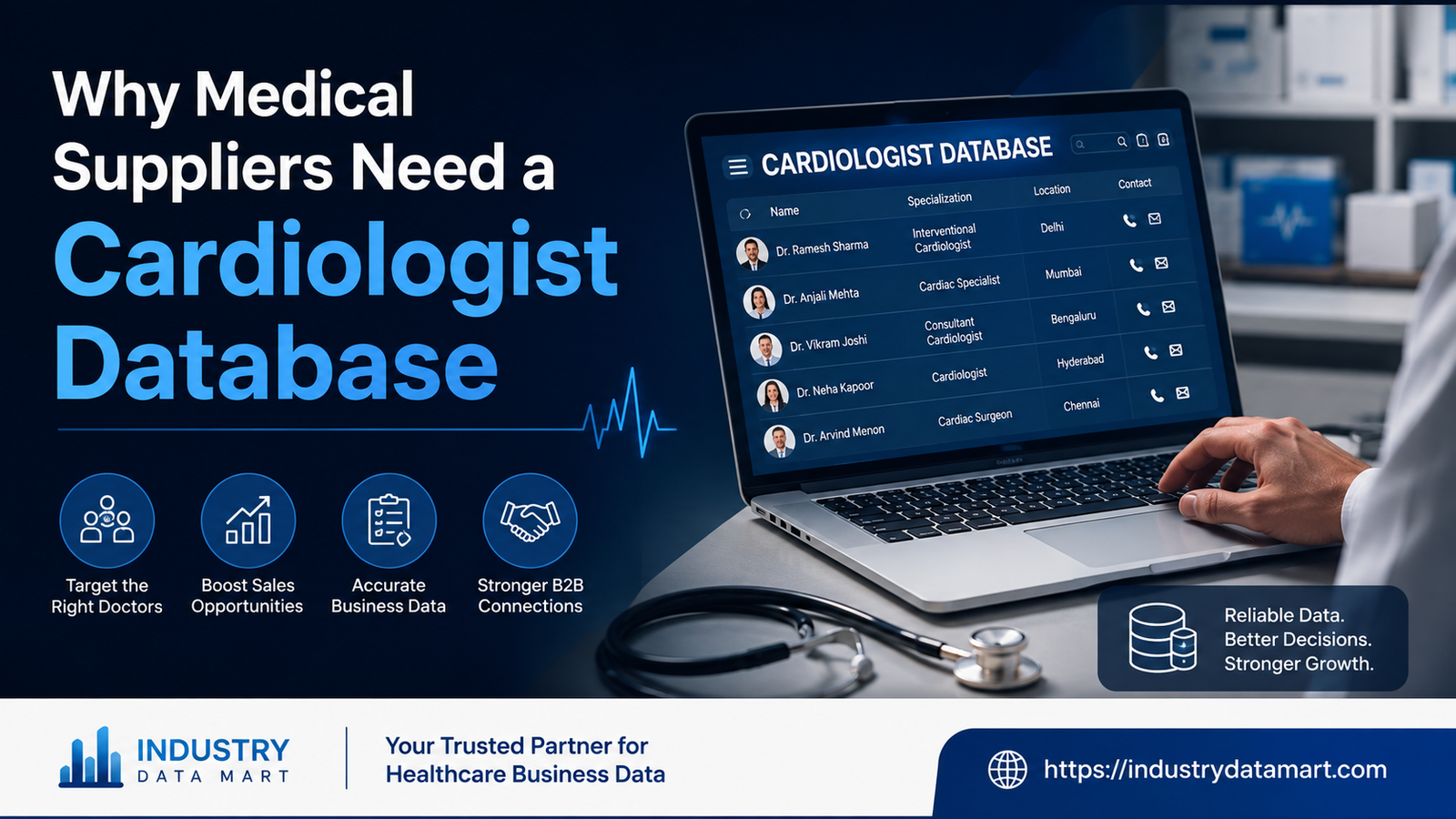
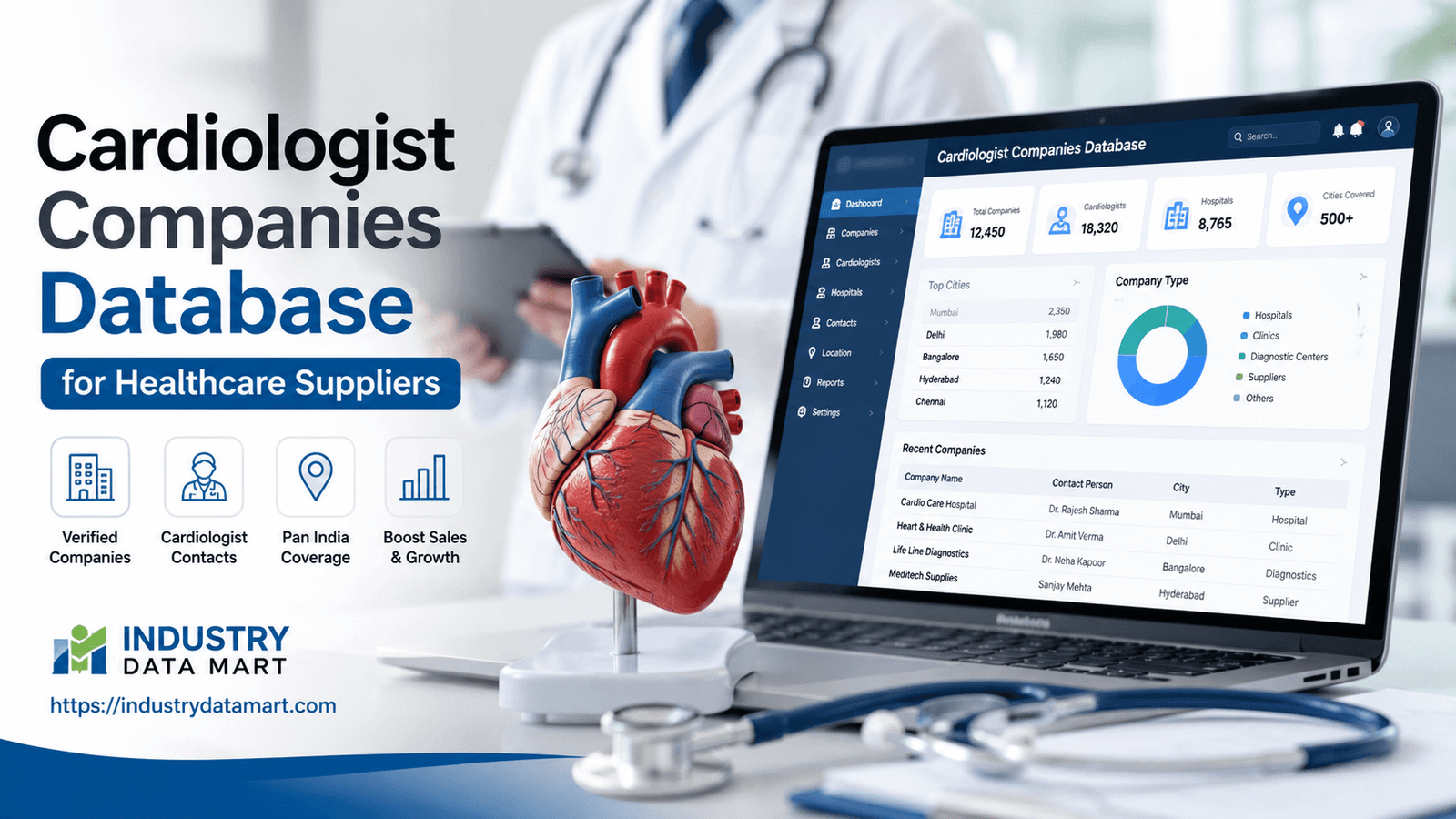
For medical suppliers, reaching the right healthcare professionals is often more important than simply reaching a large audience. Cardiologists are key decision-makers for a wide range of medical devices, diagnostic equipment, implants, pharmaceuticals, and hospital supplies. A reliable Cardiologist Database can help suppliers identify relevant prospects, build focused sales campaigns, and create stronger B2B relationships without wasting valuable time on unqualified contacts.
At Industry Data Mart, we understand that medical businesses need more than a long list of names. They need useful business information that supports practical sales and marketing decisions. This is where a well-structured Cardiologist Database can become an important business asset.
The medical supply industry is highly competitive. Suppliers may offer excellent products, but reaching the appropriate doctors, clinics, hospitals, and healthcare organisations can still be challenging.
A Cardiologist Database helps suppliers create a focused approach instead of depending entirely on broad advertising or random prospecting.
For example, a supplier selling cardiac monitoring equipment may want to contact cardiology clinics and hospitals with active cardiology departments. Searching for every healthcare organisation manually can take weeks. A structured database makes this process more organised.
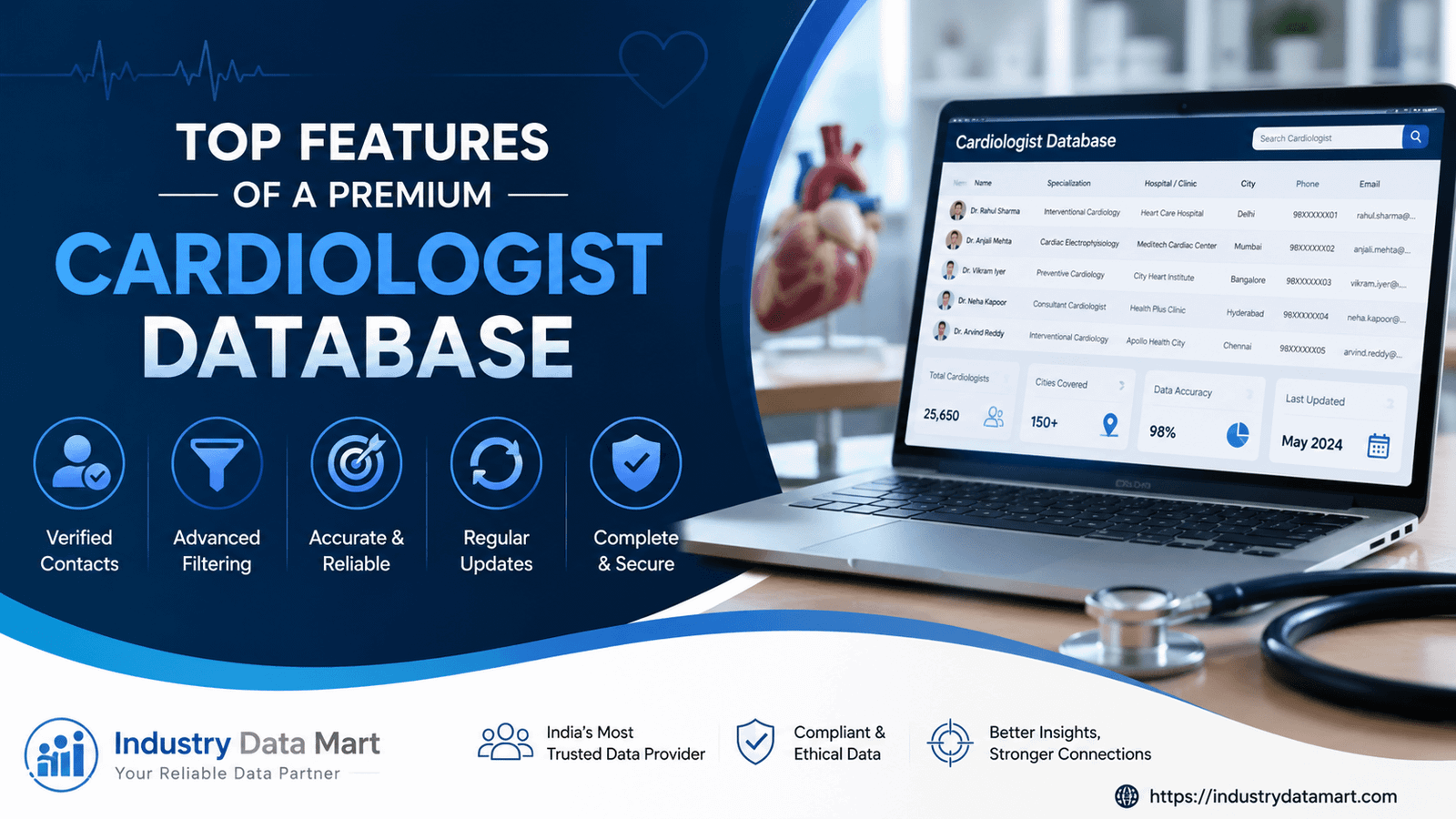
A useful Cardiologist Database can help businesses identify prospects based on factors such as:
The objective is simple: connect your product with businesses and professionals who are more likely to need it.
Medical suppliers generally operate through relationship-driven sales. A doctor, hospital administrator, procurement team, or clinic owner may require several interactions before making a purchasing decision.
A Cardiologist Database gives sales teams a defined prospecting base.
Instead of contacting a broad healthcare audience, suppliers can focus on cardiologists and cardiology-related businesses.
For example, imagine a company selling ECG machines. Its sales team could use a Cardiologist Database to identify cardiology clinics in selected cities and then develop a city-wise outreach strategy.
This improves efficiency because sales representatives spend more time talking to relevant prospects.
Email marketing, telemarketing, direct sales, and digital campaigns work better when the audience is properly defined.
A Cardiologist Database can support targeted campaigns around products such as:
Rather than sending the same message to every healthcare professional, suppliers can develop campaigns according to product relevance.
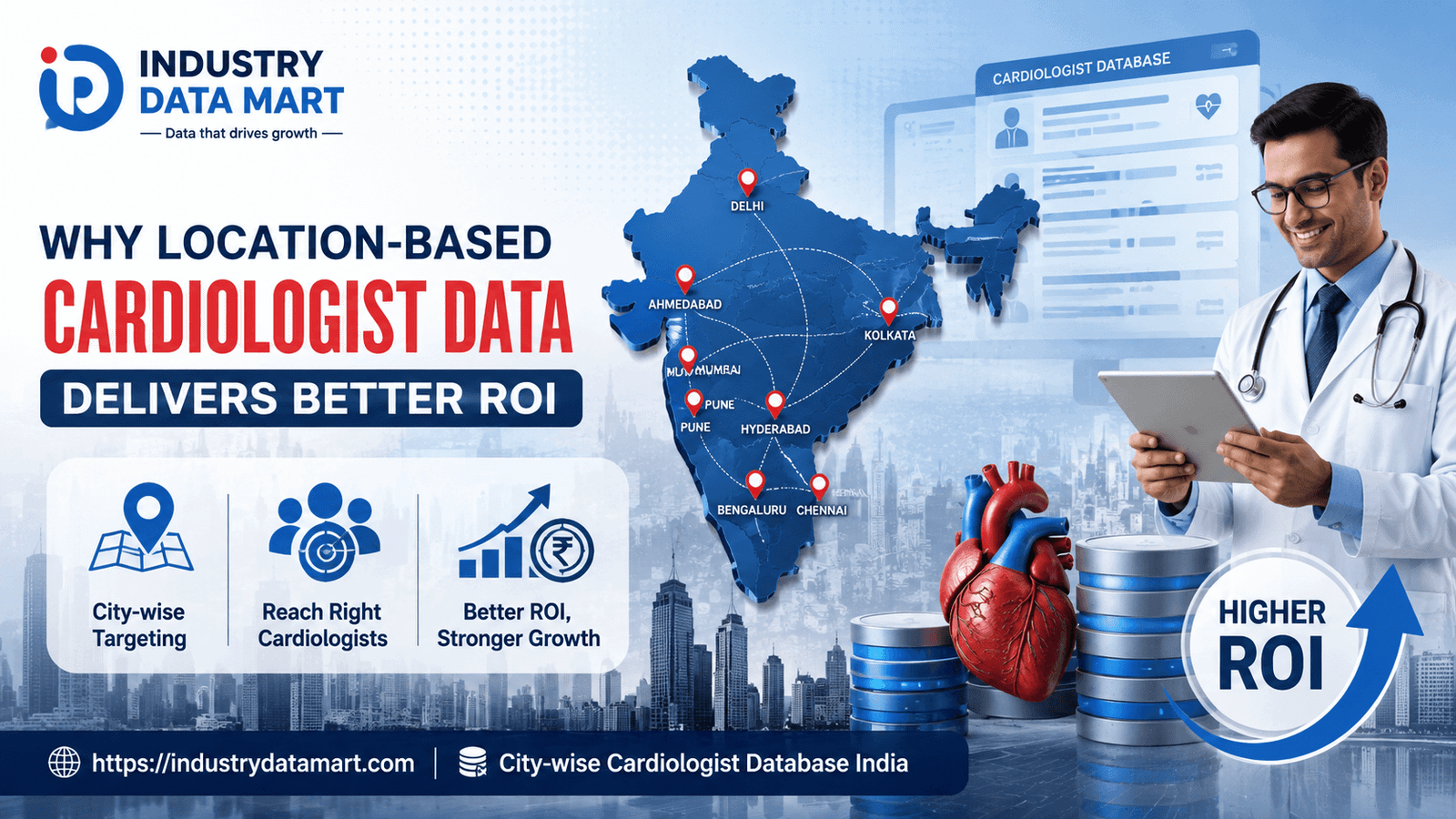
For suppliers operating across multiple states, a Cardiologist Business Database India approach can make geographical expansion easier.
India's healthcare market is diverse. Buying behaviour in a major metropolitan city may differ from that of a smaller city. Medical suppliers therefore need to understand where their potential customers are located.
A practical strategy can involve:
This approach helps management understand where sales resources are producing the best results.
Lead generation is one of the biggest challenges for medical suppliers. Sales teams often spend considerable time searching for prospects before they can even begin a conversation.
Relevant Cardiologist B2B Leads India can shorten this initial prospecting stage.
However, suppliers should remember that a lead is only the beginning of the sales process. The real value comes from what the business does after receiving the prospect information.
A good follow-up process should include:
The goal should not be to send hundreds of messages. The goal should be to start meaningful business conversations.
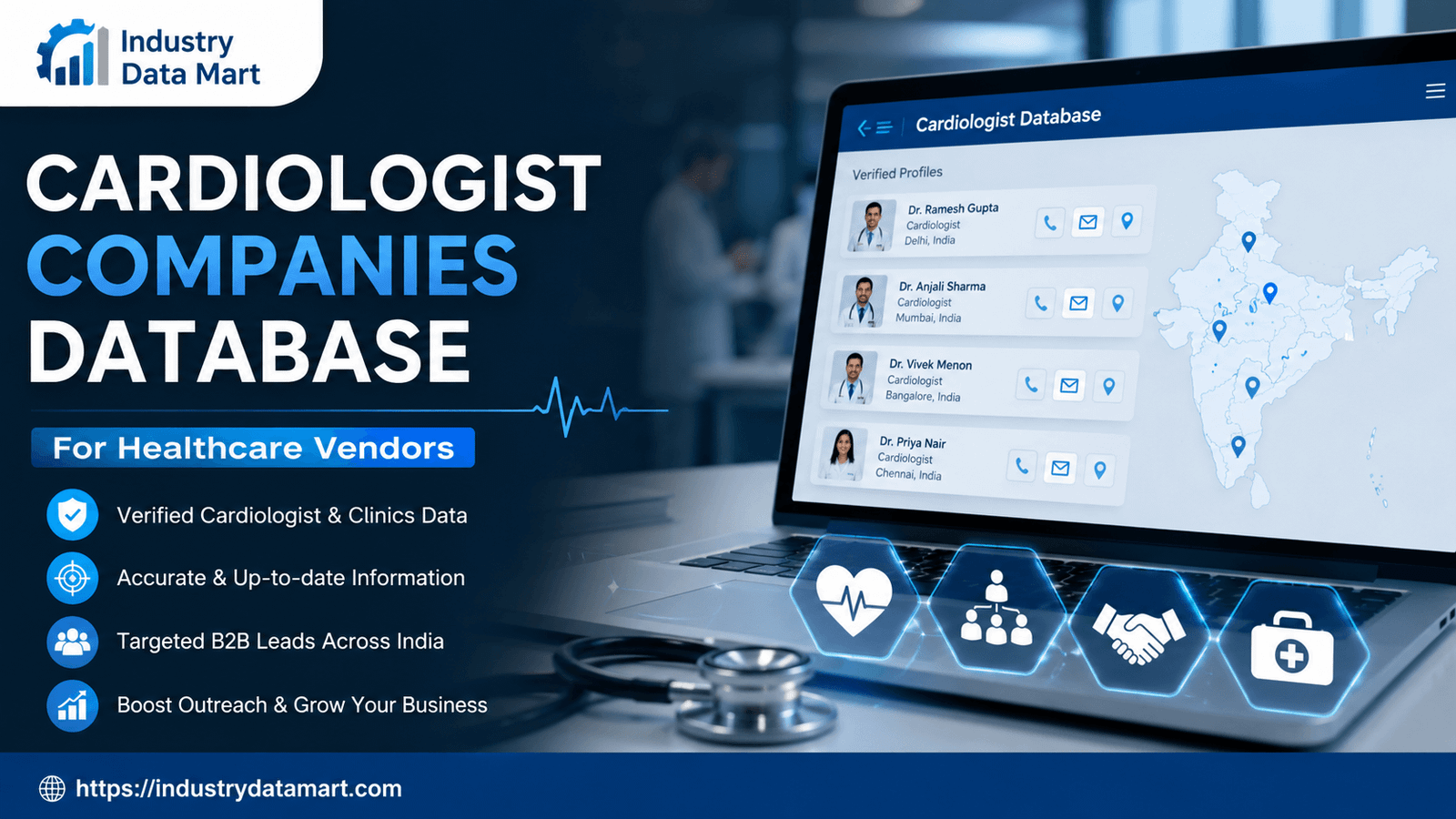
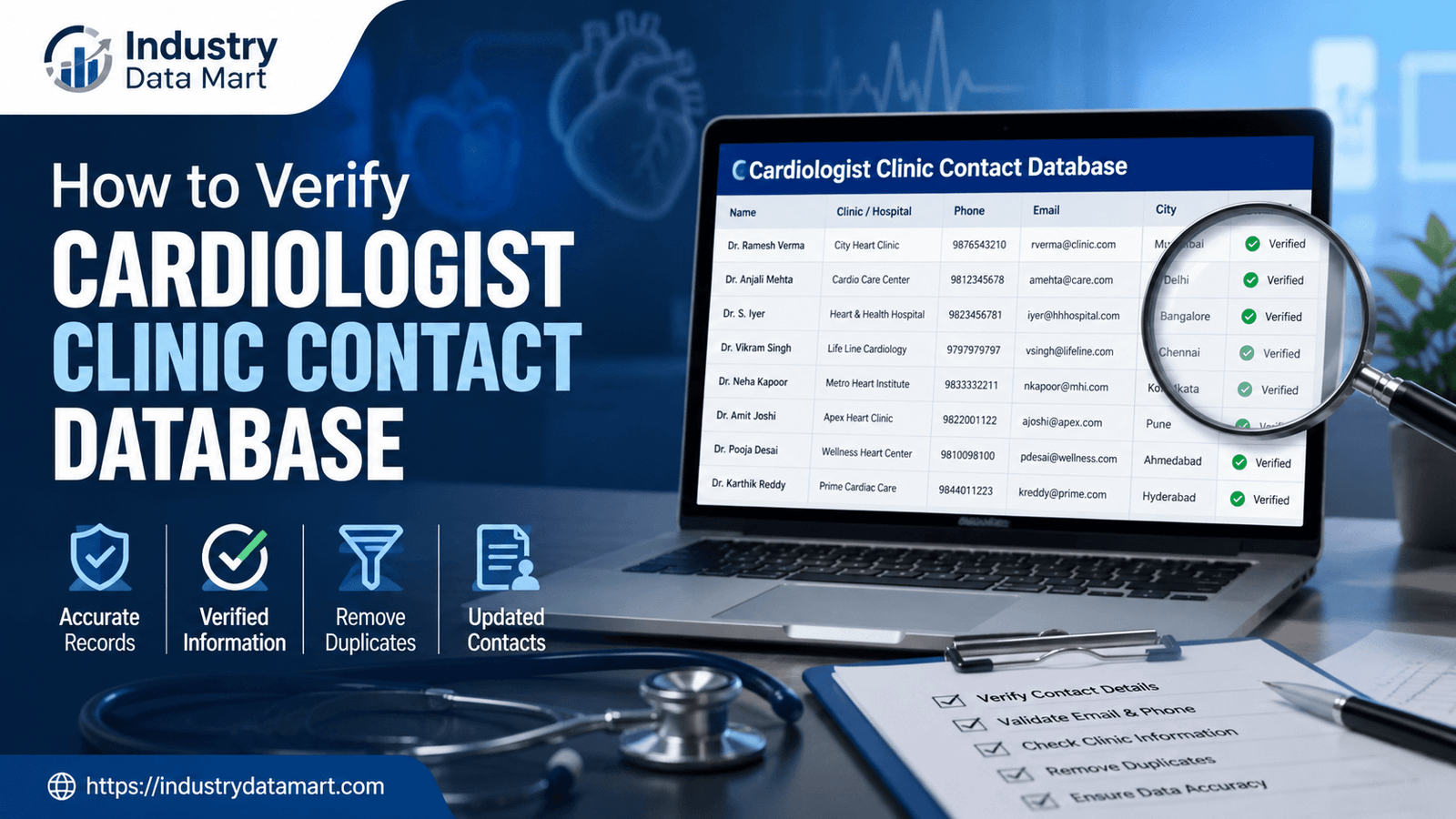
For companies selling directly to clinics, a Cardiologist Clinic Contact Database can be particularly useful.
Independent cardiology clinics often have different purchasing requirements compared with large hospitals. A supplier may need to approach the clinic owner, administrator, procurement contact, or another responsible decision-maker.
Having organised contact information can make this process more systematic.
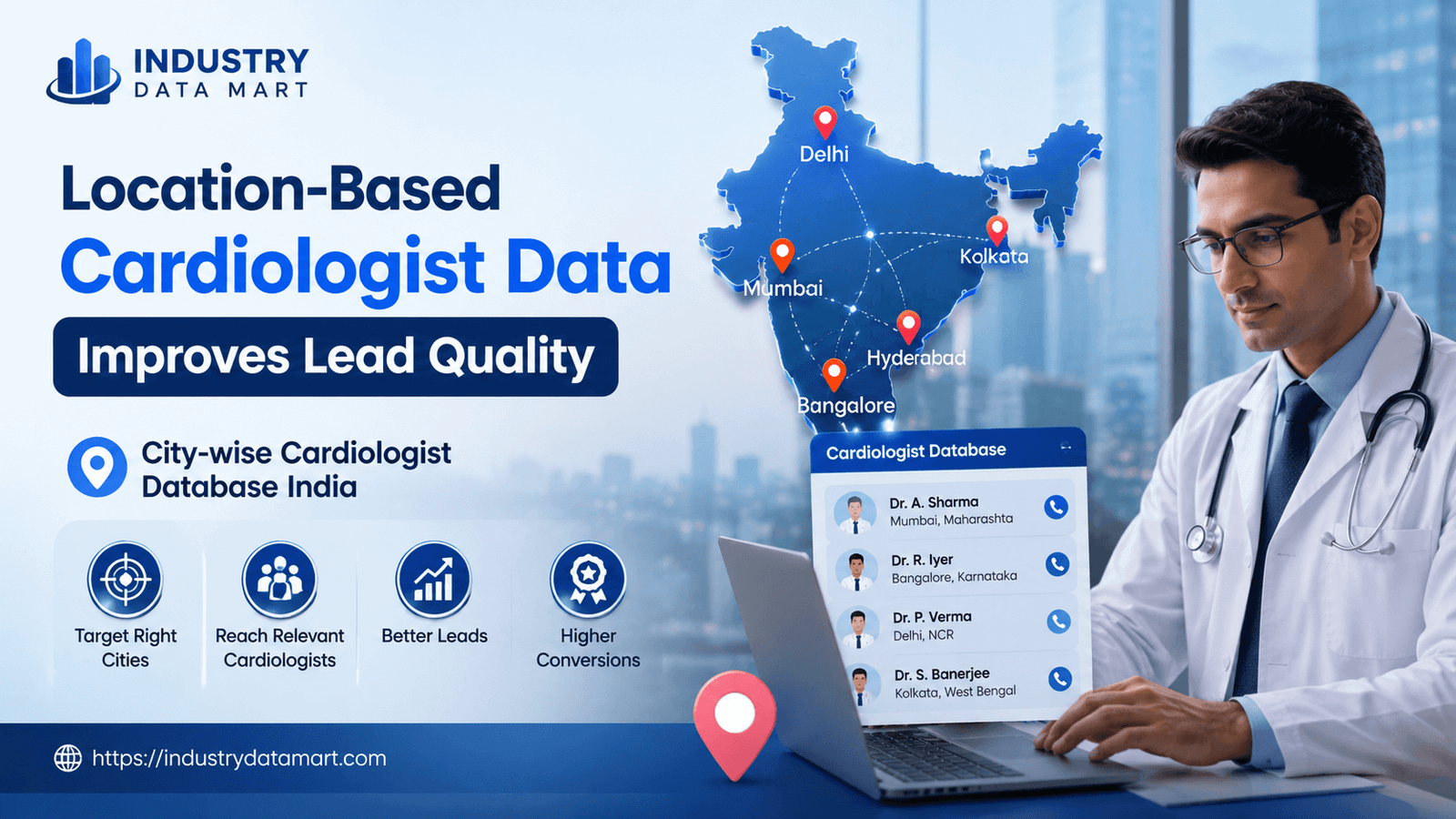
For example, a medical equipment distributor expanding into Delhi, Mumbai, Bengaluru, or Hyderabad could divide its Cardiologist Database by city. The sales team could then allocate specific territories to representatives and track performance separately.
This makes sales management easier and provides a clearer picture of market opportunities.
Simply purchasing or collecting data is not enough. Businesses should build a proper workflow around their Cardiologist Database.
First, decide exactly who you want to reach.
Consider:
Do not treat every prospect equally. Divide contacts into practical categories such as city, state, clinic type, or business segment.
A supplier selling cardiac equipment should communicate differently from a pharmaceutical distributor or medical consumables company.
Your message should explain how the product can solve a real business or clinical requirement.
Maintain records of calls, emails, quotations, responses, and follow-ups. This prevents sales representatives from repeatedly approaching the same prospect without context.
Track metrics such as:
This allows management to calculate whether its marketing investment is producing measurable returns.
Consider a company that distributes cardiac monitoring devices.
Instead of advertising to thousands of unrelated healthcare professionals, the company can use a Cardiologist Database to identify relevant cardiologists and clinics. It can then segment prospects by city and send product information according to the type of equipment offered.
Suppose the company receives 100 qualified enquiries from a targeted campaign and converts 15 into customers. The sales team can analyse which cities, products, and customer categories produced the strongest results.
This information can then guide the next campaign.
That is the real advantage of using a Cardiologist Database: it supports a repeatable and measurable sales process rather than one-time prospecting.
Medical suppliers should also approach business data responsibly. Contact information should be used for legitimate B2B communication, with appropriate attention to applicable privacy, consent, and communication requirements.
Businesses should also look for data that is:
Quality is generally more valuable than simply having a very large number of records.
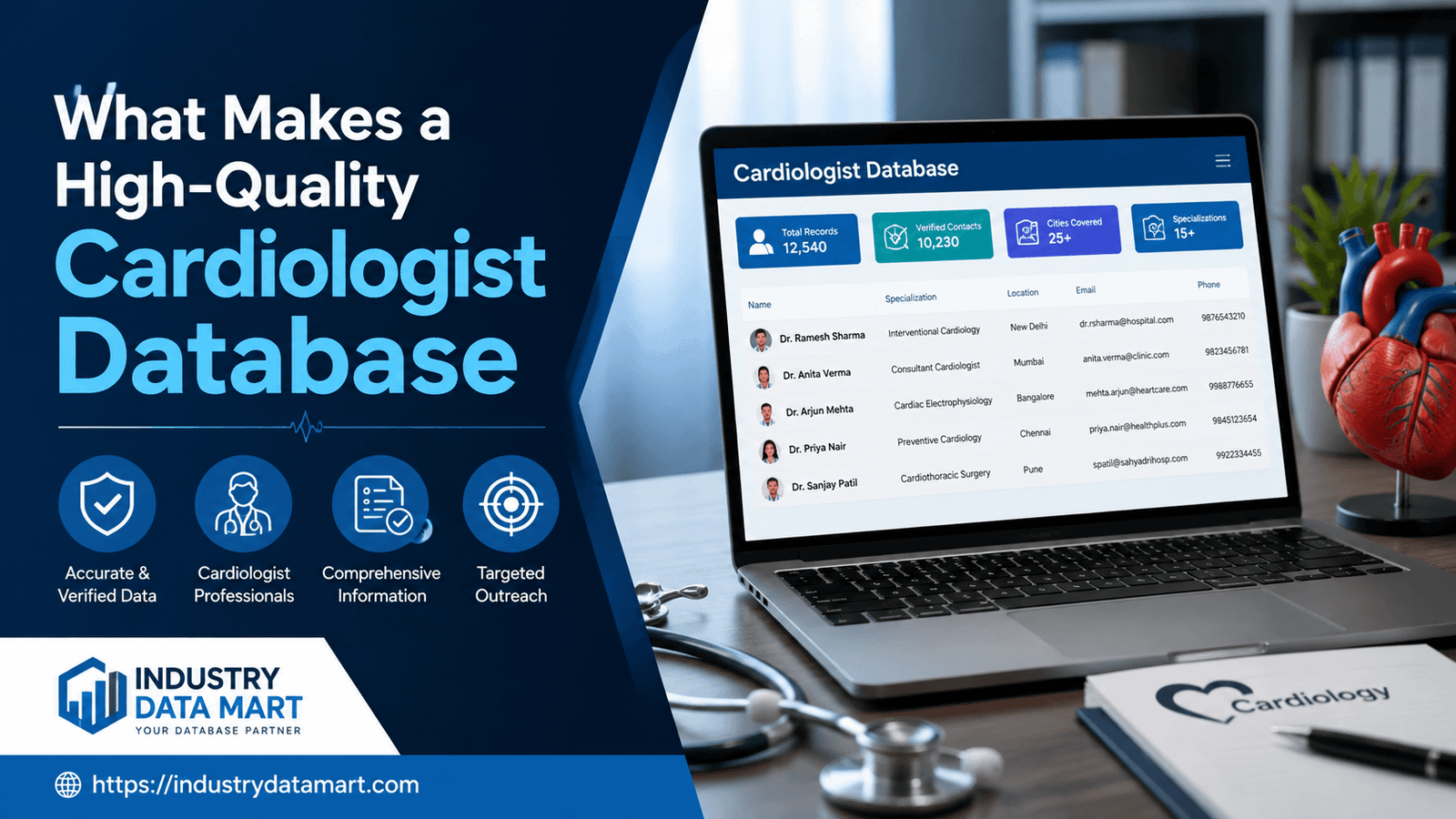
A Cardiologist Database is a structured collection of business and professional information related to cardiologists, cardiology clinics, hospitals, and other relevant healthcare prospects.
Medical suppliers can use it for B2B prospecting, targeted marketing, sales outreach, territory planning, lead generation, and customer relationship development.
Yes. Small suppliers can use targeted prospect information to focus limited sales and marketing budgets on potentially relevant customers instead of pursuing a broad audience.
Data relevance, organisation, usability, and appropriate freshness are important factors. Businesses should also have a clear sales process for turning prospects into meaningful conversations.
Yes. Suppliers can segment prospects by state, city, clinic type, or other business characteristics to create a structured market-expansion strategy.
For medical suppliers, growth is not simply about having a good product. It is also about reaching the right healthcare professionals at the right time with a relevant business proposition. A well-planned Cardiologist Database can help companies improve prospecting, organise sales territories, support targeted campaigns, and develop stronger B2B relationships.
At Industry Data Mart, our objective is to help businesses approach their target markets in a more structured and practical way. If your company is looking to expand its medical supply business and connect with relevant cardiology prospects, explore how a professionally prepared Cardiologist Database can support your sales strategy.

Lorem ipsum dolor sit amet consectetur. Nec nunc pellentesque massa pretium. Quam sapien nec venenatis vivamus sed cras faucibus.