 Healthcare Industry Data
 Sep 23, 2026
7 min read
Sep 23, 2026
7 min read
Discover how medical equipment companies use a Cardiologist Database to identify buyers, improve outreach, build partnerships, and grow sales across India.
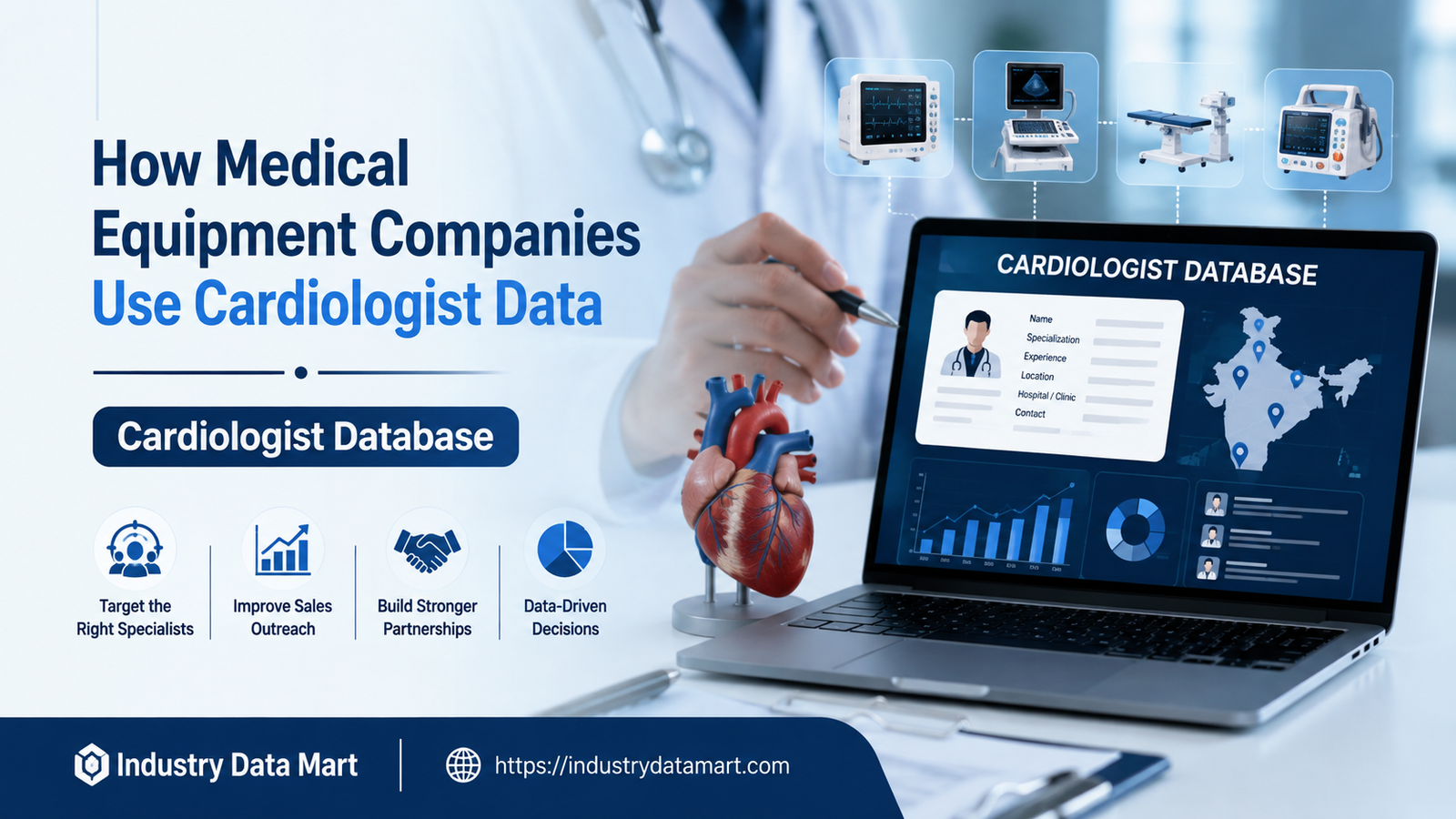
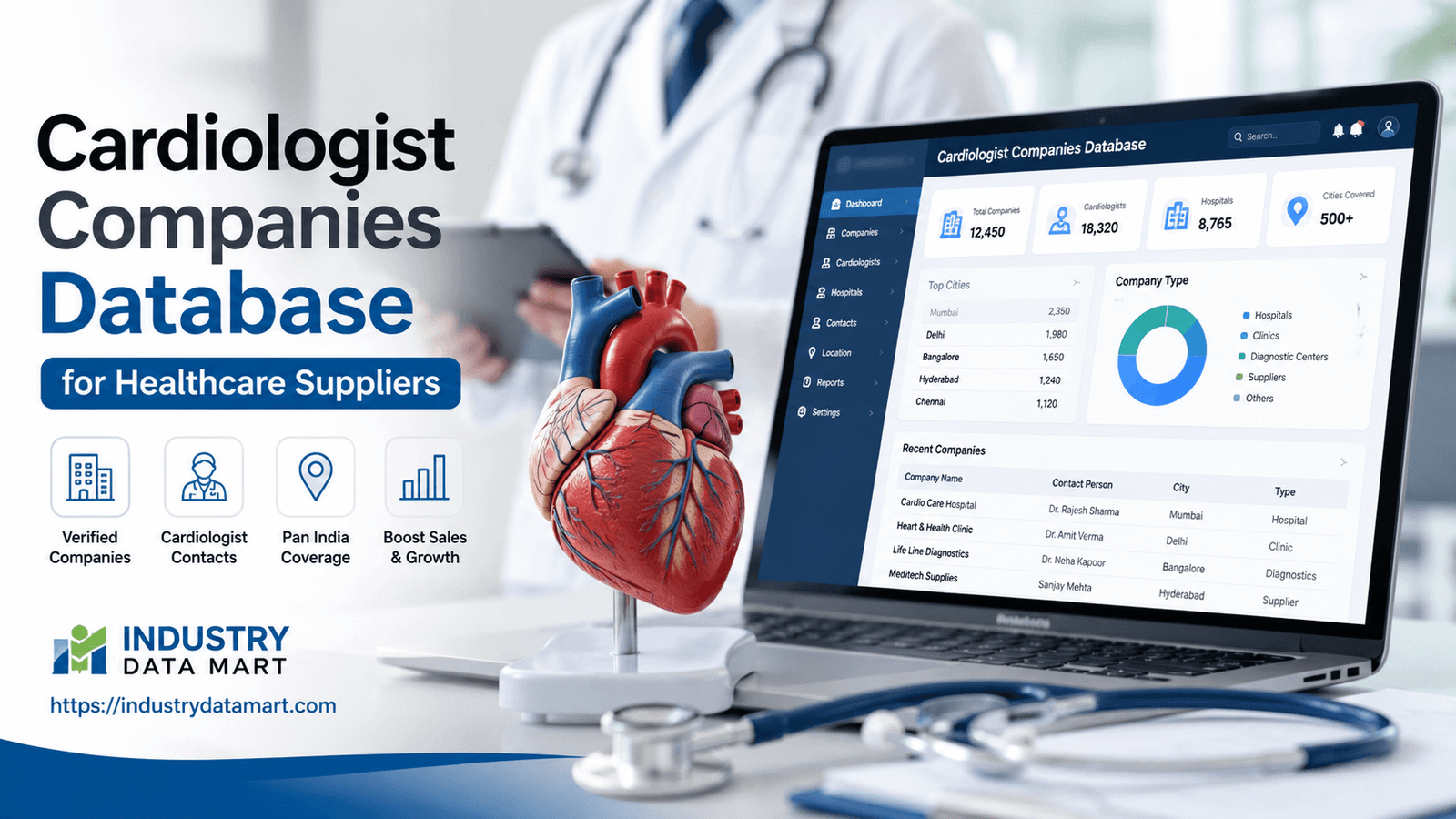
Medical equipment companies operate in a highly specialised market where reaching the right medical professionals can make a significant difference to sales. A reliable Cardiologist Database helps businesses identify relevant cardiologists, understand their professional profiles, and develop more focused B2B marketing campaigns. Instead of approaching hospitals and doctors randomly, companies can use structured cardiologist data to plan outreach with greater accuracy.
At Industry Data Mart, we believe good business decisions begin with relevant and usable information. For medical device manufacturers, diagnostic equipment suppliers, pharmaceutical companies, and healthcare service providers, a well-maintained Cardiologist Database can support prospecting, relationship building, market expansion, and sales planning.
Cardiologists influence purchasing decisions for many products, including ECG machines, cardiac monitors, stents, imaging systems, defibrillators, catheters, surgical equipment, and specialised diagnostic technologies.
However, finding a potential buyer is not simply about knowing a doctor's name. Companies need information that helps their sales teams understand:
A properly organised Cardiologist Database can bring these details together, helping sales teams spend less time searching and more time engaging with relevant prospects.
One of the most practical uses of a Cardiologist Database is lead identification. A medical equipment company launching a new cardiac monitoring device, for example, may want to reach cardiologists working in hospitals with advanced cardiac departments.
Instead of sending the same message to thousands of unrelated healthcare professionals, the company can segment prospects based on geography, institution, specialty, and business relevance.
This approach can improve campaign efficiency while reducing unnecessary communication.
Medical equipment sales often involve lengthy decision-making processes. A salesperson may need to communicate with doctors, hospital administrators, procurement teams, biomedical engineers, and department heads.
A Cardiologist Database helps companies develop targeted campaigns for different groups.
For example, a company selling cardiac imaging equipment could create separate outreach strategies for:
The result is a more organised sales pipeline rather than a broad, unfocused marketing campaign.
Not every cardiologist is directly responsible for purchasing equipment. Some may recommend a product, while procurement teams or hospital management may approve the final purchase.
This is where Cardiologist Decision Maker Contact Data becomes particularly useful. Medical equipment companies can use relevant professional information to understand who may influence product selection and who should be approached as part of the buying process.
For a high-value medical device, identifying the right stakeholders can save considerable time for the sales team.
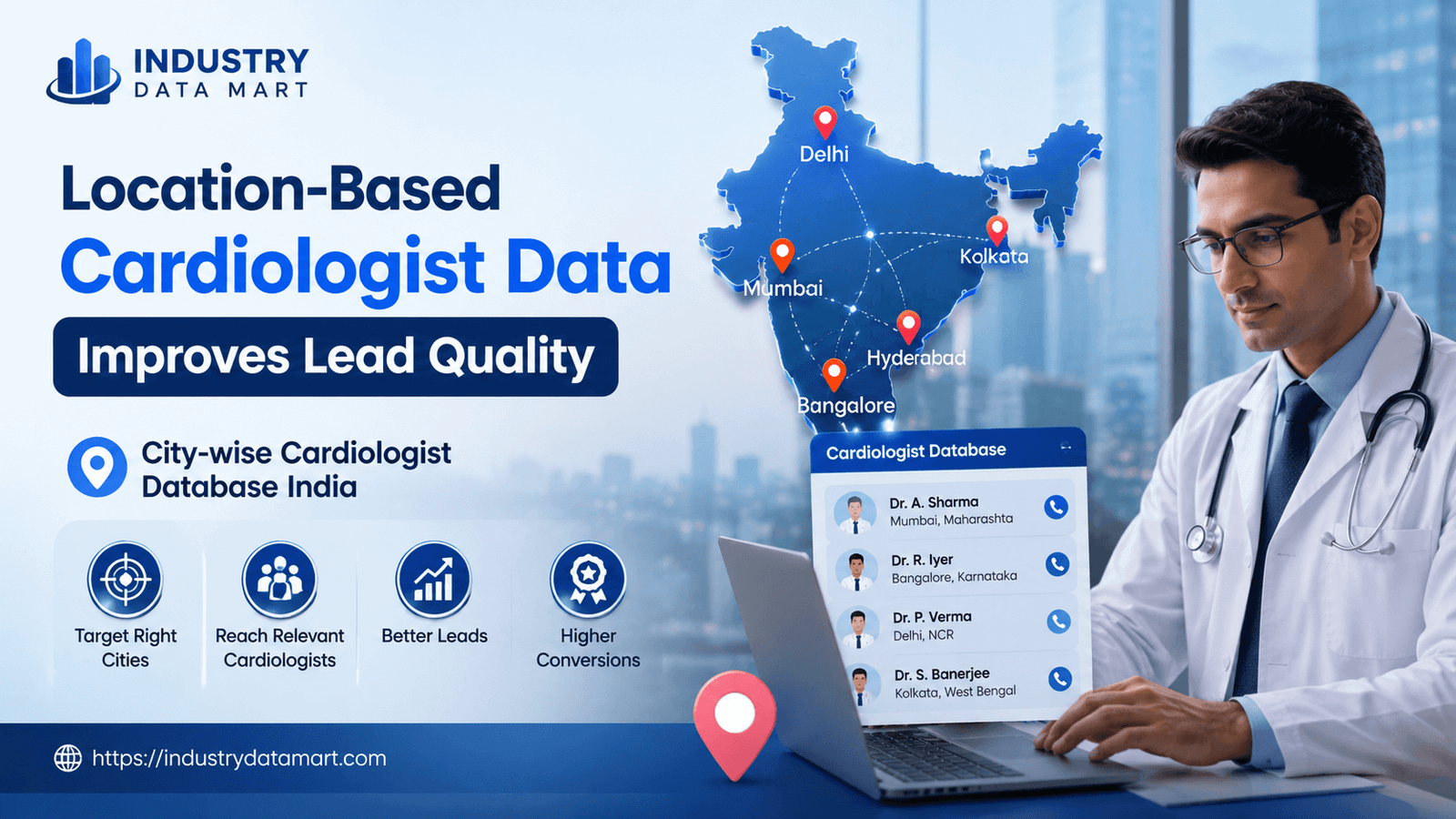
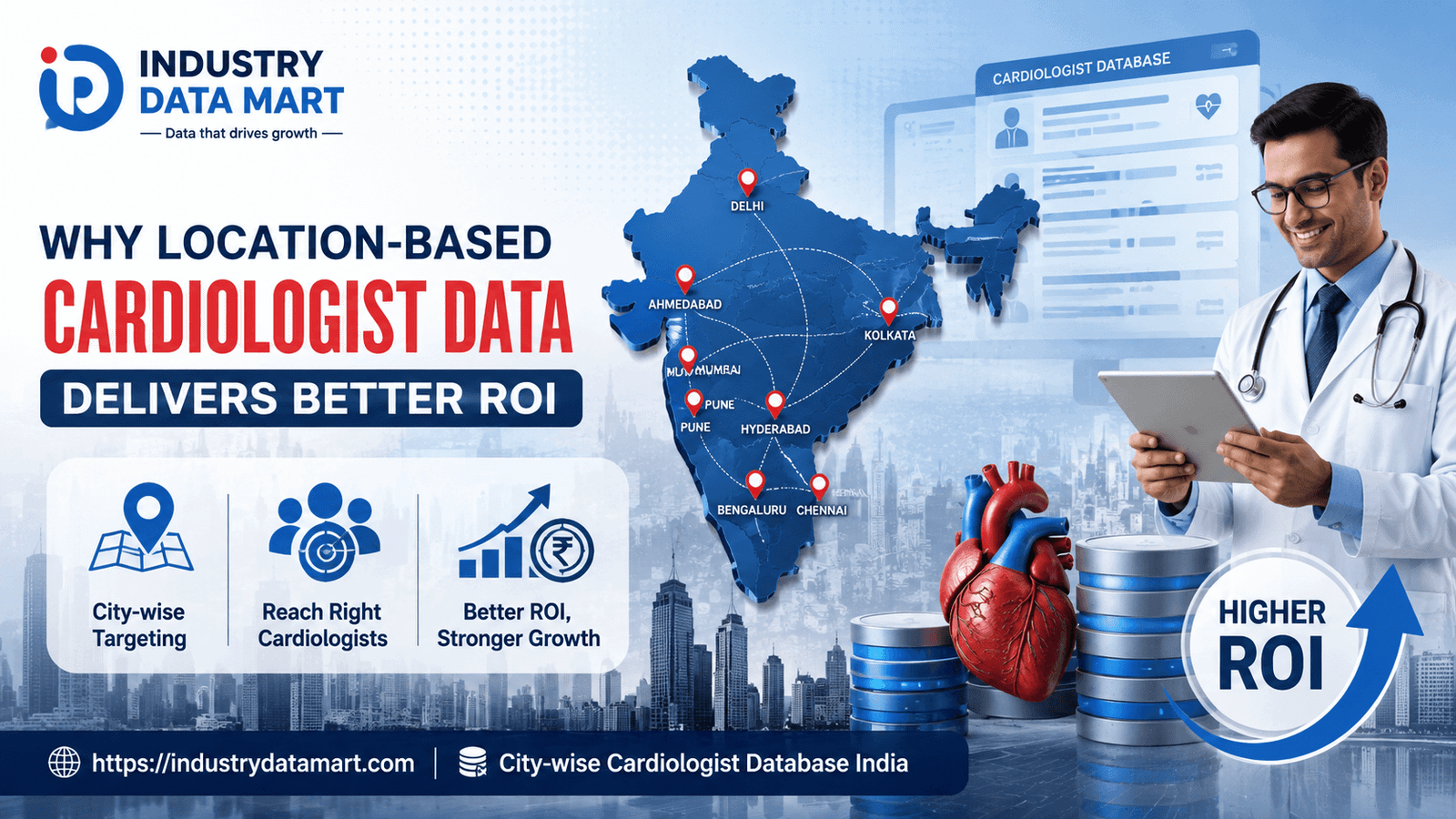
India's healthcare market is highly diverse. A medical equipment company that performs well in Mumbai may have completely different opportunities in Delhi NCR, Bengaluru, Hyderabad, Chennai, Pune, Ahmedabad, or other emerging healthcare markets.
A Cardiologist Business Database India can help companies analyse prospects geographically.
Suppose a medical device manufacturer wants to expand its cardiac equipment business into three new states. Rather than building a prospect list manually, the business can use structured cardiologist information to identify relevant healthcare professionals and institutions within those territories.
This makes market expansion more systematic.
Launching medical equipment requires more than advertising. Healthcare professionals often want demonstrations, technical explanations, clinical discussions, and product comparisons before considering a new solution.
A Cardiologist Database can support this process by helping companies identify suitable audiences for:
For instance, if a company introduces a new ECG system, it can identify cardiologists and cardiac centres that may have a genuine business interest in the technology. Sales representatives can then focus their efforts on qualified prospects.
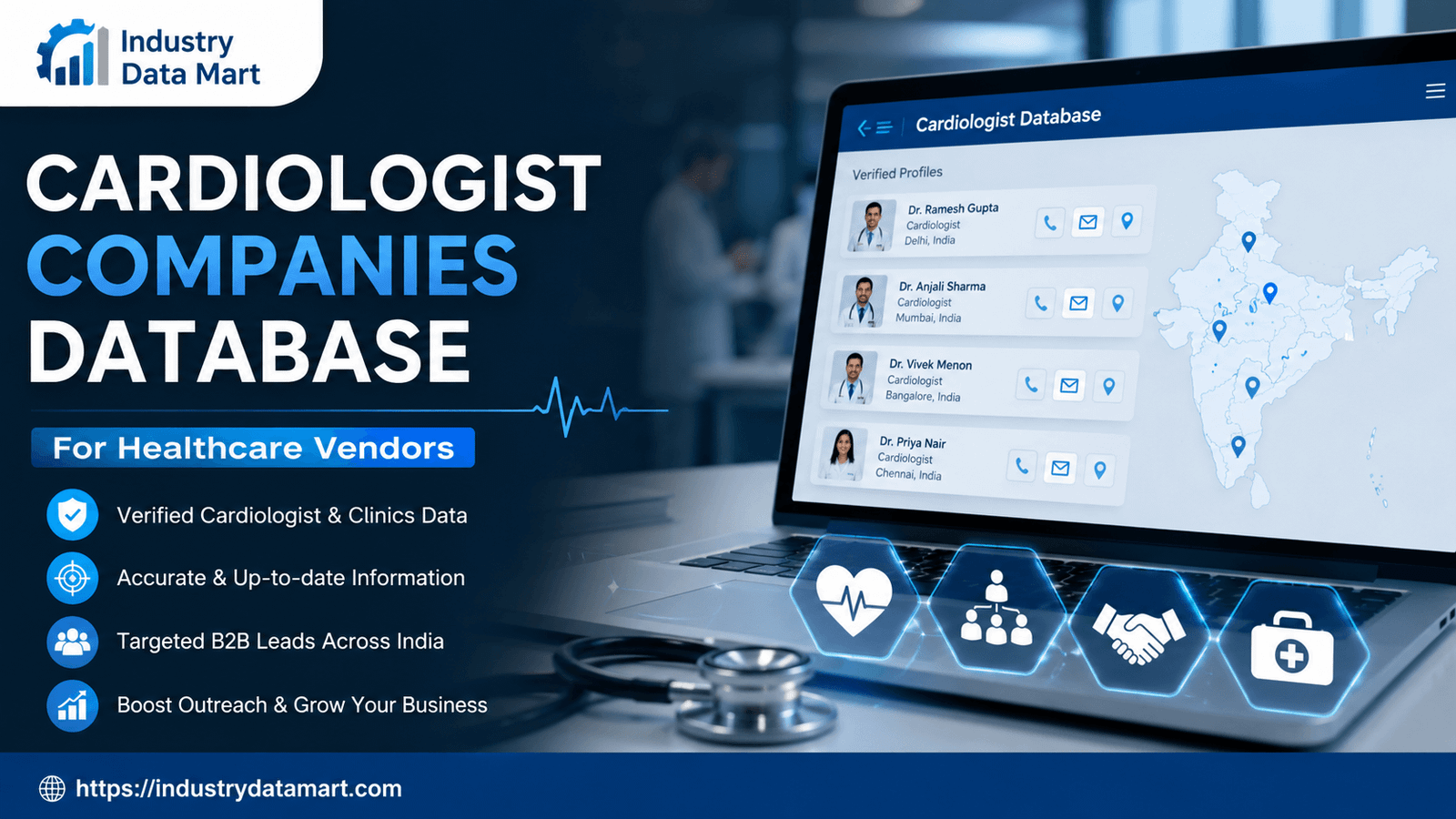
Medical equipment businesses also need information about organisations, not just individual doctors. A Cardiologist Companies Database can help companies understand the broader healthcare ecosystem surrounding cardiology.
This may include relevant hospitals, clinics, diagnostic centres, healthcare groups, and other organisations connected with cardiac care.
Combining company-level and professional-level information gives sales teams a more complete view of their potential market.
For example:
Medical equipment manufacturer → Cardiology hospital → Cardiologist → Procurement team → Product evaluation → Purchase decision
Understanding this chain allows a sales team to plan communication more effectively.
A practical approach is to follow a simple process:
Decide whether the objective is to target private clinics, hospitals, diagnostic centres, healthcare chains, or another segment.
Choose information that supports the sales objective. Depending on the campaign, this could include location, professional details, institution, specialty, and business contact information.
Separate prospects by city, hospital type, specialty, business size, or other relevant criteria.
Use the segmentation to create messages that are relevant to each audience instead of sending generic promotional material.
Track responses, meetings, demonstrations, qualified leads, and conversions. This helps determine which segments are generating the strongest business opportunities.
Consider an Indian company manufacturing cardiac patient-monitoring equipment.
The company wants to expand beyond its existing customer base. Its sales team could use a Cardiologist Database to identify potential prospects across selected cities. The team could then segment those prospects by healthcare institution and professional relevance.
Instead of making hundreds of random calls, sales representatives could prioritise hospitals and cardiology centres where the equipment is more likely to be relevant.
The company can then measure which regions produce the most enquiries and gradually increase investment in those markets.
This is a much more practical approach to B2B healthcare sales.
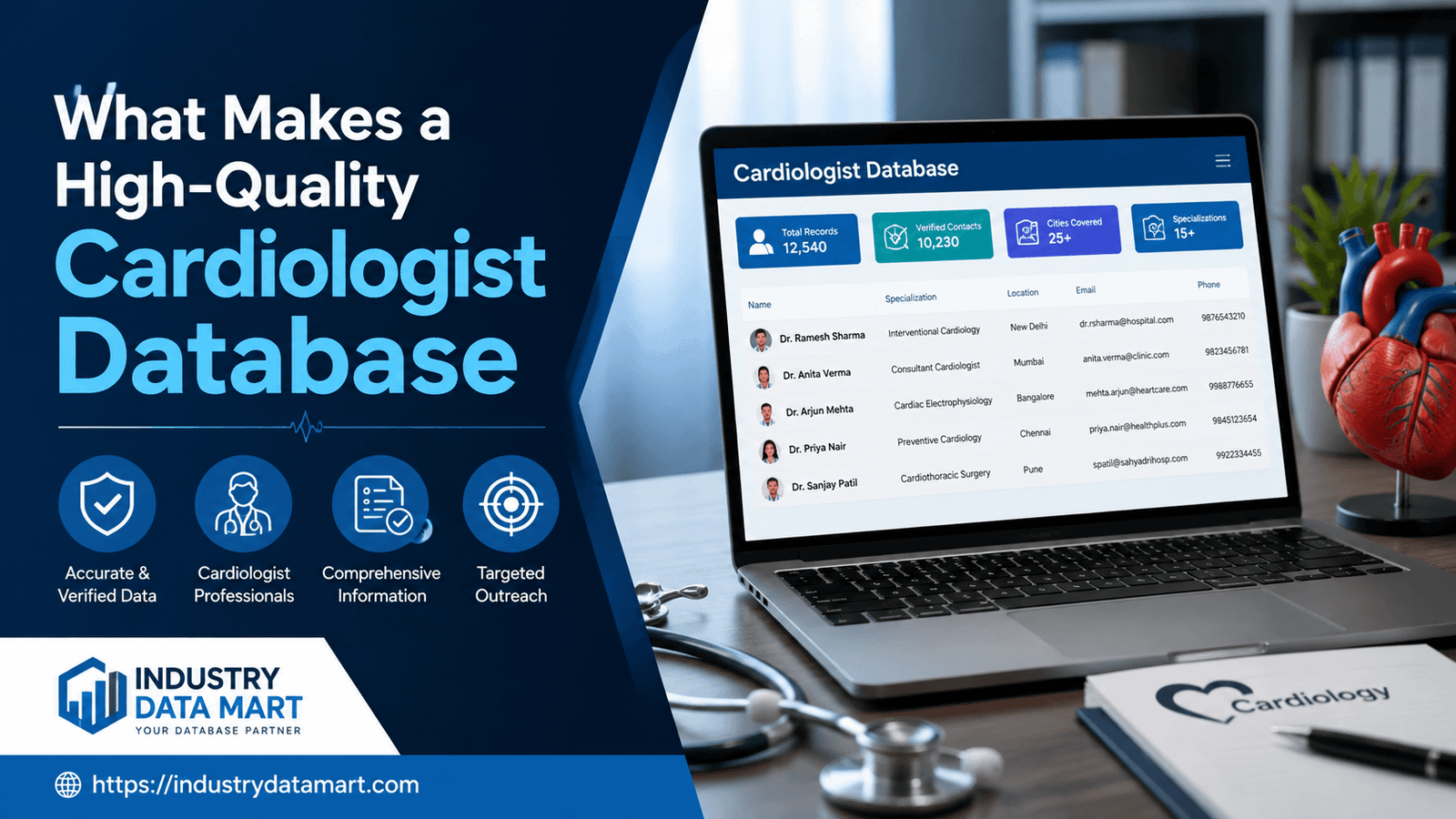
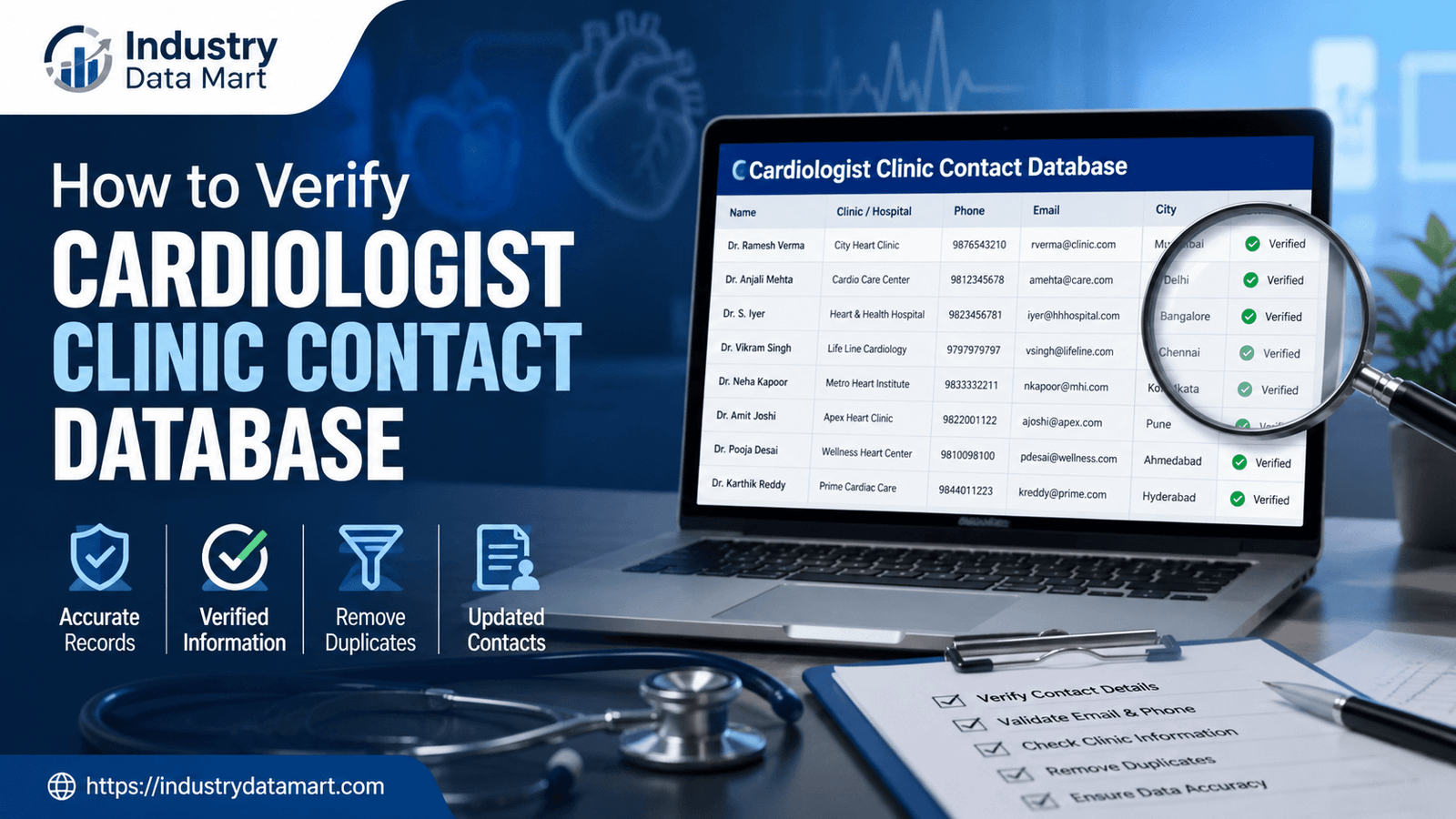
The quality of business data matters as much as the quantity.
Before purchasing or using a Cardiologist Database, companies should consider:
A database containing thousands of outdated records may provide less value than a smaller, better-maintained list.
Businesses should also use contact information responsibly and follow applicable Indian laws, regulations, and industry standards when conducting commercial communication.
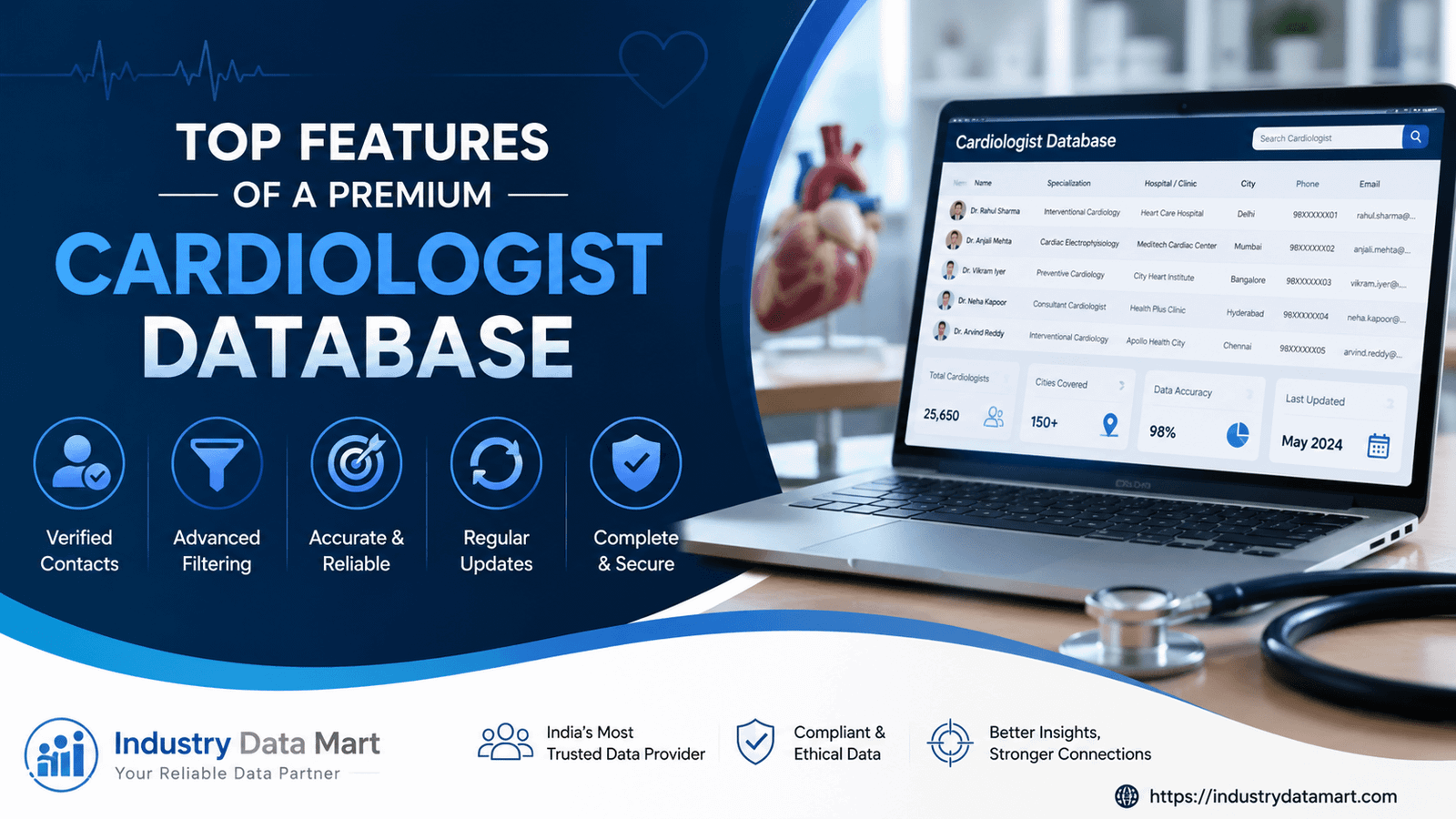
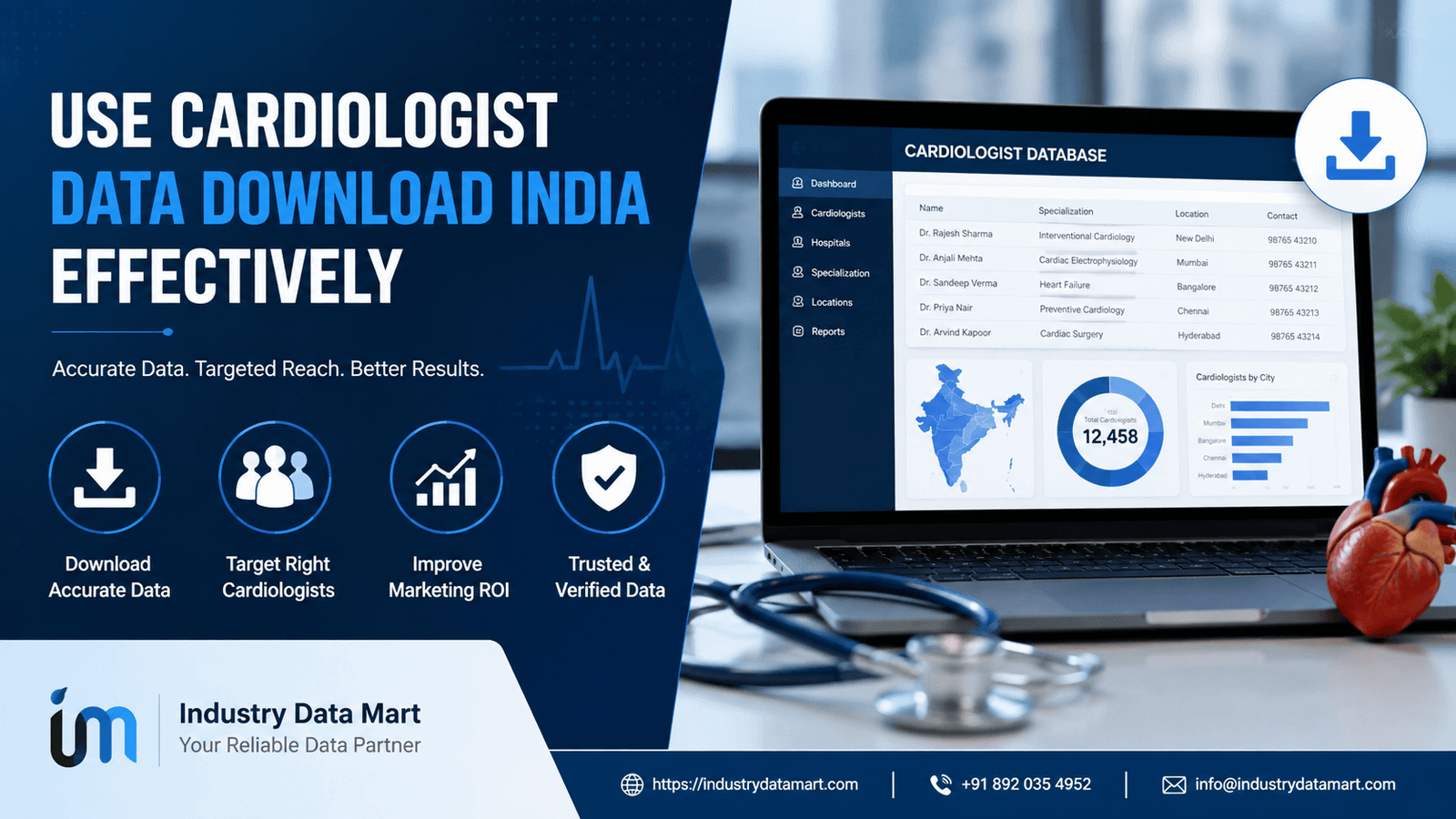
A Cardiologist Database is a structured collection of professional and business information related to cardiologists and relevant healthcare organisations. Businesses can use such information for B2B prospecting, market research, sales planning, and targeted outreach.
A Cardiologist Database can help medical equipment companies identify relevant prospects, segment markets, support product launches, find potential decision makers, and improve sales territory planning.
Cardiologist Decision Maker Contact Data refers to relevant professional contact information that can help businesses identify and communicate with individuals who may influence healthcare product or equipment decisions.
Yes. A Cardiologist Business Database India can help companies organise prospects by geography and develop city- or state-specific sales campaigns.
Businesses should look at accuracy, freshness, relevance, segmentation, duplication, and responsible usage practices before relying on any Cardiologist Database for commercial campaigns.
For medical equipment companies, success depends on reaching the right healthcare professionals and organisations at the right stage of the buying journey. A quality Cardiologist Database can provide a structured starting point for prospecting, regional expansion, product promotion, and sales planning.
At Industry Data Mart, our focus is on helping businesses make their B2B outreach more organised and targeted. If your company is looking to identify relevant cardiology professionals and build a stronger healthcare sales pipeline, explore how our data solutions can support your business growth.

Lorem ipsum dolor sit amet consectetur. Nec nunc pellentesque massa pretium. Quam sapien nec venenatis vivamus sed cras faucibus.